On this page
A closer look
"About 10 km" is the figure for top-level matches
In a study that tracked 15 referees at international matches, they covered an average of about 10.3 km per match. An analysis combining 32 studies also found an average of about 10.5 km, with referees in European competitions (about 11.2 km) covering more ground than those in South American competitions (about 9.3 km). A research review puts the range at roughly 9–13 km for elite referees.
These figures mostly come from professional and international matches, and they vary with the level of play and how a game unfolds. Also, at the start of the video we said referees run "as much as a marathon runner," but a full marathon is about 42 km, so it's really only about a quarter of that. "As much as an outfield player" would have been more accurate.
Not all sprinting: a mix of fast and slow
Most of the distance is covered at a slow pace, walking or jogging. In the international-match study, only about 2 km of the roughly 10 km was high-speed running. Even so, referees' heart rates during a match are reported to reach about 85–90% of their maximum, so it's no easy job.
One interesting detail is how much they run backward: at international matches, referees ran about 0.9 km backward per game. This is thought to let them change position without taking their eyes off the play.
Why they run: the "diagonal" system
IFAB's guidelines for match officials define the best position as "the one from which the correct decision can be made." The basic approach is for the referee to move along a broad diagonal across the pitch, keeping the play between themselves and an assistant referee. Staying on the outside of the play makes it easier to keep both the play and the assistant referee in view.
Referees are also expected not to get so close that they interfere with play, and to keep an eye on scuffles happening away from the ball. The international-match study also found that referees who did more high-speed running were able to be closer to where fouls occurred.
Older than the players, with no substitutes
According to a research review, referees are about 15–20 years older than the players, and many are not on professional contracts. And unlike players, they can't be substituted during a match. That's why training focuses on building the fitness to repeat short, all-out sprints.
VAR: accuracy over speed
VAR is limited to situations such as "clear and obvious errors" in match-changing incidents: goals, penalty kicks, direct red cards, and cases of mistaken identity in sending-offs or cautions. Under IFAB's VAR protocol, there's no time limit on a review, and accuracy takes priority over speed. The final decision always rests with the referee on the pitch.
Related reads
What the video says
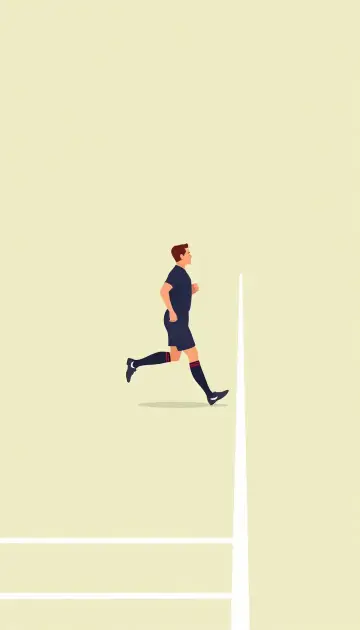
A soccer referee is said to run an average of around 10 kilometers during a 90-minute match.
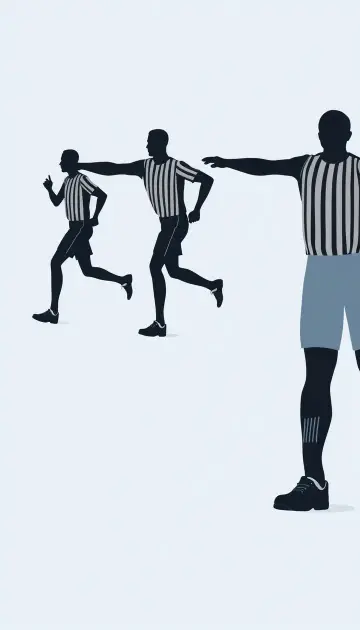
That's about the same as the average distance a player covers, and it constantly alternates between all-out sprints and slow walking, which makes it physically very demanding.
That's exactly why refereeing is a job that demands high endurance: to stay close to the play at all times and make the right calls.
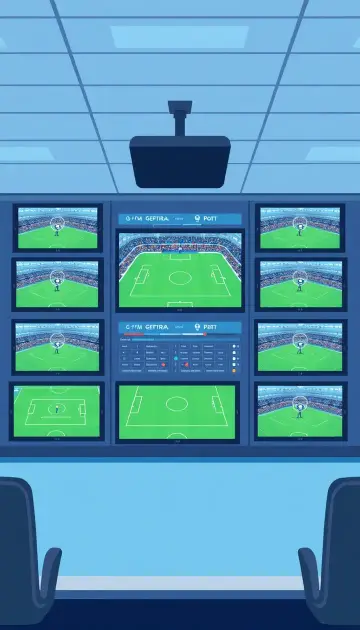
Then there's VAR, a system that uses footage from multiple cameras to check close calls. But switching between feeds and checking angles takes time, so a decision can sometimes take several minutes.
The referee's fitness and technology support each other, and together they make today's accurate soccer officiating possible.
Sources
- Activity profile and physical demands of football referees and assistant referees in international gamesKrustrup P. et al., Journal of Sports Sciences, 2009
- External Loads of Elite Soccer Referees: A Systematic Review with meta-analysisBirk Preissler A.A. et al., Research in Sports Medicine, 2023
- Physiological aspects of soccer refereeing performance and trainingCastagna C., Abt G. & D'Ottavio S., Sports Medicine, 2007
- Positioning, movement and teamwork(Guidelines for Match Officials)The International Football Association Board (IFAB)
- Video Assistant Referee (VAR) protocolThe International Football Association Board (IFAB)
Spotted a mistake in the article or the translation? Let us know.
Report an error (contact form in Japanese, opens in a new tab)