On this page
A closer look
The culprit is the air, not the stars
The Subaru Telescope's explainer sums it up in a single sentence:
The twinkling of stars is caused by fluctuations in Earth's atmosphere.
The stars themselves aren't changing their brightness every few seconds. As starlight passes through Earth's atmosphere, its path gets bent little by little. The way it bends keeps changing from moment to moment, so the amount of light reaching your eye goes up and down. That's the "twinkle."
A project description from the National Astronomical Observatory of Japan (NAOJ) describes the same thing using the term "atmospheric turbulence":
By introducing next-generation adaptive optics technology that corrects atmospheric turbulence in real time across a wide field of the sky
In other words, it's treated as something that has to be corrected.
Why is the air "uneven"?
The refractive index of air changes with temperature and density. And the atmosphere isn't uniform. The Japan Meteorological Agency's forecast glossary defines that disturbance like this:
Turbulence: Turbulent flow in the atmosphere. Usually refers to disturbances in airflow that shake aircraft in flight. It is often caused by mountain waves or cumulonimbus clouds, and at high altitudes near the jet stream, clear-air turbulence (CAT) can also occur.
The same air disturbances that rattle airplanes also shake starlight. Even on a perfectly clear night, there are many layers of air at different temperatures high above, flowing past one another. The boundaries between them act like tiny lenses that bend the path of light.
Stars near the horizon twinkle more because you're looking through a thicker stretch of air. A star directly overhead cuts through the atmosphere by the shortest route, so it looks relatively steady.
A yardstick called "seeing"
Observatories track this turbulence with numbers, not gut feeling. The Subaru Telescope's explainer includes this note:
*Seeing is an indicator of star images that shows the degree of atmospheric turbulence; the lower the number, the better the conditions.
It then describes conditions at the summit of Maunakea:
The summit of Maunakea, where the Subaru Telescope is located, has low water vapor in the atmosphere, and the upper-atmosphere airflow is stable, so it often enjoys excellent seeing of 0.5 arcseconds or less, allowing sharp images of celestial objects that can't be obtained anywhere else.
One arcsecond is 1/3600 of a degree. Blurring of less than 0.5 arcseconds counts as some of the best conditions in the world. Put the other way, no matter how big a telescope you build, as long as it's on the ground it can't see finer detail than the atmospheric turbulence allows. Telescopes are built on high mountains to cut down, even a little, on the air the light has to pass through.
There's technology to cancel out the turbulence
Astronomy takes this problem head-on. Here's NAOJ's description of its wide-field adaptive optics project:
In wide-field adaptive optics, the Subaru Telescope is fitted with a deformable secondary mirror, and multiple laser guide stars and wavefront sensors are used to measure and correct only the turbulence in the atmospheric layers near the ground.
When observing a direction with no bright star nearby, they make an artificial one:
In wide-field adaptive optics, four lasers are fired into the sky to make the upper atmosphere glow, creating artificial stars (laser guide stars). That light is used to measure and correct atmospheric turbulence.
The turbulence is measured in real time, and the mirror is reshaped in the opposite direction to cancel it out. According to NAOJ, this will "achieve a sharp field of view up to 20 arcminutes in diameter and star images of about 0.2 arcseconds in the near-infrared."
The romantic twinkle we see with the naked eye is, for the pros, something to be canceled out every night.
Related reads
What the video says
When you look up at the night sky, the stars seem to twinkle, right?

But actually, the stars themselves aren't making their light brighter and dimmer.
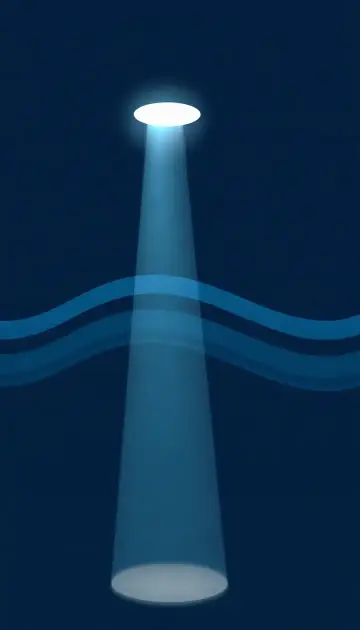
The cause is turbulence in the atmosphere that starlight passes through on its way to Earth.

The temperature and density of air vary slightly from place to place, and when light passes through, its path bends little by little.

Because this bending of light is constantly changing, the starlight looks stronger, then weaker, so it seems like the star is twinkling.
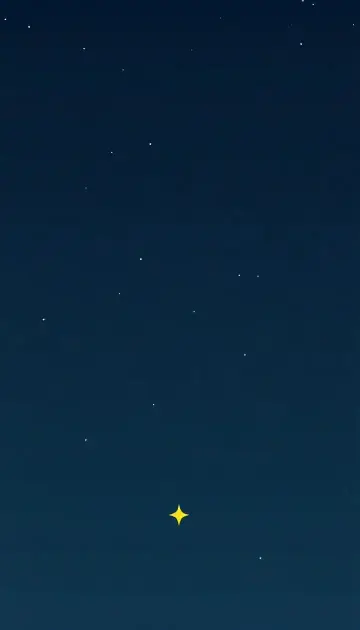
That's why stars closer to the horizon, whose light travels through more atmosphere, twinkle even more.
Sources
- 他では得られないシャープな天体像Japanese“Sharp Images of Celestial Objects Unobtainable Elsewhere”Subaru Telescope, National Astronomical Observatory of Japan
- すばる広視野補償光学プロジェクトJapanese“Subaru Wide-Field Adaptive Optics Project”National Astronomical Observatory of Japan
- 風に関する用語(予報用語)Japanese“Terms Related to Wind (Forecast Terminology)”Japan Meteorological Agency
Spotted a mistake in the article or the translation? Let us know.
Report an error (contact form in Japanese, opens in a new tab)