On this page
A closer look
At night, the ground keeps giving off heat
Even after the sun goes down, the ground keeps sending heat up toward the sky in the form of invisible infrared radiation. With no sunlight warming it, heat only flows out at night, so both the ground and the air above it cool down.
Avalanche.org, a US avalanche information site (run by the American Avalanche Association and the USDA Forest Service National Avalanche Center), explains that the snow surface constantly gives off heat, and on clear nights that heat escapes into space. The ground gives off heat the same way. That's why mornings after clear nights are especially cold.
Clouds are a "heater," not a "blanket"
When there are clouds, things change.
According to meteorology course materials from Penn State University, clouds emit far more infrared radiation than a clear sky does, and that radiation reaches the ground. The materials describe clouds as "acting like a stove (heater)." The infrared radiation from clouds makes up for part of the heat the ground loses to the sky, so it doesn't get as cold as it would on a clear night.
People often say that "clouds trap heat like a blanket," but another lesson from the same university says this comparison isn't accurate. A blanket keeps the warm air around your body from escaping, but clouds can't trap the warm air near the ground. Instead, clouds act as a "heat source" that sends infrared radiation down toward the ground.
In the video, we said that "clouds and water vapor block heat escaping from the ground." It's actually more accurate to think of it not as blocking the heat, but as clouds and water vapor themselves sending heat back down toward the ground.
Water vapor also eases nighttime cooling
Even without clouds, nights with humid air don't get as cold.
According to the Penn State materials, water vapor is the most important greenhouse gas in the atmosphere (a gas that absorbs infrared radiation and then re-emits it). Air with lots of water vapor sends more infrared radiation toward the ground, so nighttime temperatures don't drop as easily.
The materials also note that on clear, calm nights, the evening's dew point (the temperature at which water vapor in the air starts to turn into water droplets) serves as a rough guide to how low the temperature will go. On nights with dry air and a low dew point, the ground receives less infrared radiation, so the gap between incoming and outgoing heat is larger, and it tends to get much colder.
The night before snow
At the start of the video, we said that "right before snow starts to fall, the temperature can rise a little."
It isn't the snow itself that raises the temperature. The main point of the video is that when the clouds that bring snow cover the sky first, they send infrared radiation down to the ground, as we've seen, which eases the nighttime chill.
That said, it's not a rule that "it always gets warmer before snow." The video also says the temperature "can" rise. What clouds ease is specifically the chill from radiative cooling at night. Even under spreading clouds, if colder air flows in, temperatures will keep falling.
Snow on the ground makes it easier to get cold
Once snow piles up, it becomes easier for things to cool down.
According to the National Snow and Ice Data Center (NSIDC), snow cover reflects 80–90% of the sunlight that reaches it. Trees, grass, and soil reflect only about 10–30%, so ground without snow absorbs 4 to 6 times as much solar energy as ground covered in snow.
Also, fluffy fresh snow is 90–95% air and works like insulation. The soil under the snow is protected from changes in the outside temperature, but that also means warmth from inside the ground has a harder time reaching the snow's surface.
According to Avalanche.org, the snow surface constantly gives off heat toward the surrounding sky. On clear nights, that heat escapes into space and the snow cools efficiently; on cloudy nights, clouds send heat back to the snow, so it cools much less. Clear nights with snow on the ground get especially cold, and spreading clouds soften the chill, because here too, the clouds are doing their job.
Related reading
What the video says
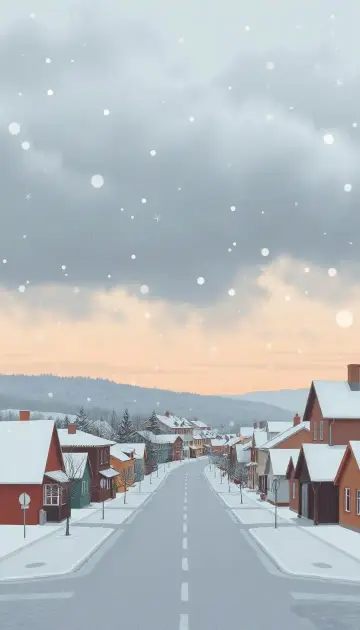
Right before snow starts to fall, the temperature can actually rise a little.

This has to do with the clouds covering the sky.

Snow forms inside cold clouds, when water vapor sticks to tiny ice particles and makes them grow larger.

Clouds and water vapor block heat escaping from the ground, helping ease the nighttime chill.

That's why cloudy nights tend to be less cold than clear ones.
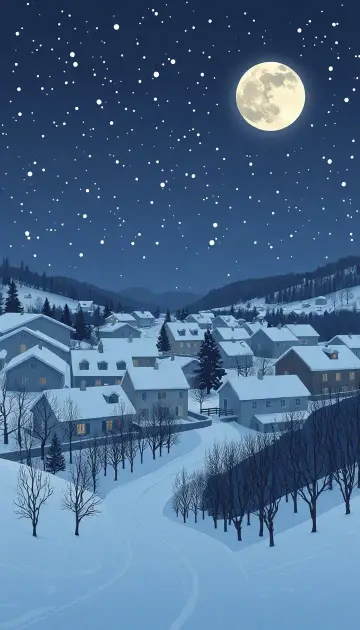
Once snow piles up, though, it reflects sunlight and loses heat, so temperatures tend to drop more.
Sources
- Clouds, Water Vapor, and Temperature(METEO 3)The Pennsylvania State University
- Clouds Do Not "Act Like Blankets"(METEO 3)The Pennsylvania State University
- Why Snow MattersNational Snow and Ice Data Center
- Radiative cooling(Avalanche Encyclopedia)Avalanche.org (American Avalanche Association / USDA Forest Service National Avalanche Center)
Spotted a mistake in the article or the translation? Let us know.
Report an error (contact form in Japanese, opens in a new tab)