On this page
A closer look
Radiative cooling happens every night
According to the Japan Meteorological Agency, radiative cooling is when something cools down by giving off (radiating) heat. Everything gives off heat: pencils, desks, the hot water in a kettle, even the Earth itself.
When weather forecasts mention "radiative cooling," they usually mean the ground losing heat and cooling down, which in turn cools the air above it. Radiative cooling itself happens every night, but the Japan Meteorological Agency explains that it gets especially cold on clear nights with light winds. That's because the ground's heat escapes to the sky without clouds blocking it, and the chilled air doesn't easily mix with the surrounding air.
That's why ponds are more likely to freeze the morning after a clear night.
Clouds are less a "lid" and more a "heater"
In the video, we said that on cloudy nights "the clouds send heat back down toward the ground."
According to meteorology course materials from Penn State University, it's more accurate to think of clouds not as mirrors bouncing back heat from the ground, but as emitting infrared radiation toward the ground themselves. Clouds are a "heat source" that sends infrared radiation down to the ground, where it gets absorbed.
The same materials also say that comparing clouds to a "blanket" is misleading. A blanket traps warm air around your body, but clouds don't have the ability to trap warm air near the ground. What actually happens is that clouds make up for some of the heat the ground loses with the infrared radiation they give off.
The less wind, the more cold air pools
Wind also affects how cold it gets.
On a clear night, the first things to cool down are the ground and the air touching it. If the wind is blowing, that cold air gets stirred together with the air above, and the chill is diluted. The Japan Meteorological Agency lists "nights with light winds" as a condition for especially cold temperatures because without wind, the chilled air doesn't mix with its surroundings and instead builds up near the ground.
A night that is both clear and windless is the night a pond is most likely to freeze.
Pond water first has to cool to 4°C
It's not just the sky that matters for pond ice; the nature of water itself plays a role too.
According to an explanation from Kyoto University, water is heaviest (densest) at about 4°C (39°F), and when it gets colder than that, it expands and becomes lighter. According to materials from the Maine Department of Environmental Protection, as the surface water cools from fall into winter, the heavier water sinks and, stirred by the wind, the water gradually cools deeper and deeper. A lake freezes only after the entire body of water, top to bottom, has reached about 4°C; only then can the surface water get cold enough to freeze.
So whether ice forms on a given morning isn't decided by the previous night alone. How far the whole pond has already cooled from the cold up to that point lays the groundwork, and then a clear, calm night gives the final push. That's why the video's phrase, "a sign that reflects how cold it got up through the night before," fits so well.
Smaller ponds freeze first
The Maine Department of Environmental Protection notes that small ponds freeze earlier than deep lakes, because there's less water to cool. On the other hand, some very deep lakes never cool all the way down to 4°C over the winter and don't freeze at all.
This is why, on the same morning, a shallow puddle can have ice on it while a big pond nearby stays unfrozen. On a winter morning walk, try comparing spots with different depths and sizes of water, and you'll see clearly how differently ice forms.
Related reading
What the video says
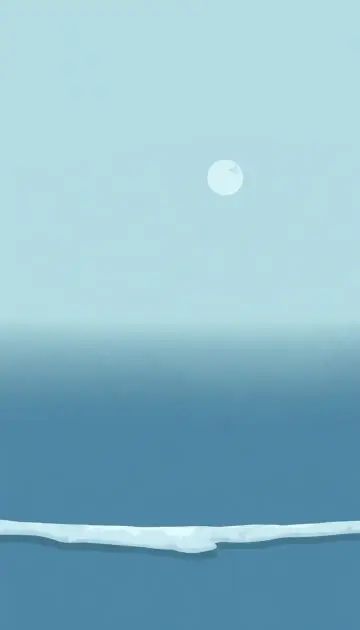
On a winter morning, whether a pond has ice on it depends a lot on whether the night before was clear.

On a clear night, there's no lid of clouds, so heat from the ground and water keeps escaping out into space.

This is called radiative cooling, and the less wind there is, the more cold air pools near the ground, making it even colder.
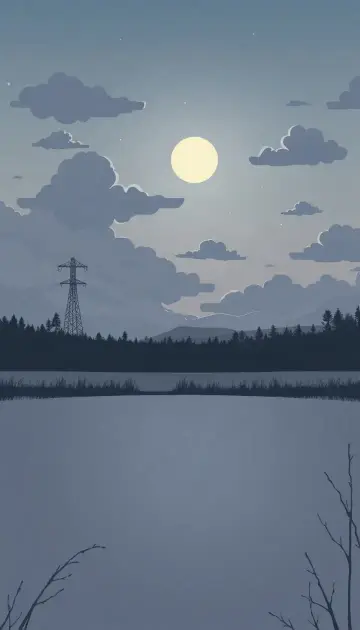
On a cloudy night, by contrast, the clouds send heat back down toward the ground, so the chill eases and ice is less likely to form.
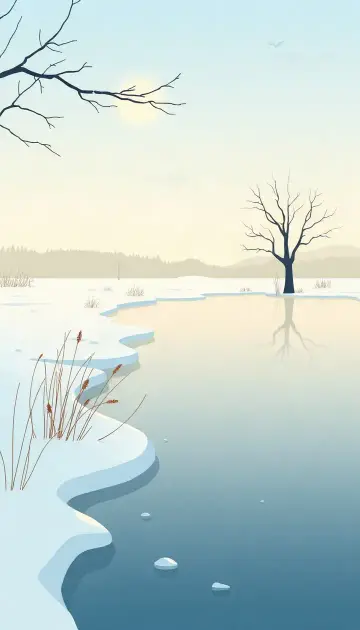
In other words, the ice on a pond is a little weather sign that reflects how cold it got up through the night before.
Sources
- 放射冷却(ほうしゃれいきゃく)って何?(はれるんランド)Japanese“What is radiative cooling? (Harerun Land)”Japan Meteorological Agency
- Clouds Do Not "Act Like Blankets"(METEO 3)The Pennsylvania State University
- Seasonal Magic: How Ice Out in Lakes and Ponds Helps Nourish LifeMaine Department of Environmental Protection
- 水と海の話(秋友和典)Japanese“Talks on Water and the Ocean (Kazunori Akitomo)”Division of Earth and Planetary Sciences, Graduate School of Science, Kyoto University
Spotted a mistake in the article or the translation? Let us know.
Report an error (contact form in Japanese, opens in a new tab)