On this page
A closer look
Light bent inside raindrops forms a 42-degree circle
According to an explanation from the U.S. National Weather Service (NWS), sunlight bends as it enters a raindrop (refraction), bounces off the inside of the drop (reflection), and bends once more as it leaves the drop before reaching our eyes. The video described this as "bends and reflects," but to be precise, the light changes direction three times, in the order refraction, reflection, refraction.
Along the way, each color bends by a slightly different amount, so the colors separate. According to the NWS, a rainbow forms bands with blue on the inside and red on the outside.
The NWS says that light coming back out of a raindrop after changing direction is strongly concentrated at a fixed angle of 42 degrees.
That's why a rainbow appears on a circle 42 degrees away from the point directly opposite the sun. That point is where the head of your shadow falls when you stand with your back to the sun. The UK's Met Office also says that to see a rainbow, the sun needs to be behind you and raindrops need to be in front of you.
The NWS explains that because the light returning from raindrops forms a circle, a rainbow is really a circle to begin with, and the ground gets in the way so we only see part of it.
When the sun is high, the rainbow sinks below the horizon
This is where the reason rainbows are easier to see in the morning and evening comes in.
The higher the sun rises, the deeper the point opposite the sun (the center of the rainbow's circle) sinks below the horizon. For example, if the sun is 30 degrees high, the center of the circle is 30 degrees below the horizon, and the top of the rainbow only reaches about 12 degrees above the horizon (42 minus 30).
The NWS says the sun must be lower than 42 degrees above the horizon, and if it's higher than 42 degrees, you won't see a rainbow. The Met Office also notes that when the sun is high, you may see only a small arc above the horizon.
On the other hand, the closer the sun is to the horizon, the closer the circle's center gets to the horizon too. According to the NWS, at sunset you'd see a semicircular rainbow whose top is 42 degrees above the horizon. That's why morning and evening rainbows look big and tall.
How high does the sun climb at midday in Tokyo?
So how high does the midday sun actually get? According to the 2026 Tokyo almanac from the Ephemeris Computation Office of the National Astronomical Observatory of Japan, the sun's height at its highest point of the day (when it crosses due south, called the meridian altitude) is 77.8 degrees on June 21, around the summer solstice. On summer afternoons the sun is far higher than 42 degrees, so rainbows stay hidden below the horizon. In summer, you can only see rainbows in the morning or evening, when the sun is low.
In autumn, the sun's path across the sky gets lower. In the same almanac, the meridian altitude is 42.0 degrees on October 26 and 41.6 degrees on October 27, so from late October the sun doesn't reach 42 degrees even at midday. The sun gets even lower heading toward the winter solstice, so in this season, as long as the rain and sunshine line up, there's a chance of a rainbow even during the day. That's what the video meant by "in seasons when the sun stays low, even in the middle of the day."
Morning rainbows are in the west, evening rainbows in the east
Since rainbows appear opposite the sun, the direction they show up in also depends on the time of day. In the morning, when the sun is in the east, rainbows appear in the western sky. In the evening, when the sun is in the west, they appear in the eastern sky.
When you're looking for a rainbow, start by turning your back to the sun and looking in the direction your shadow stretches. If it's raining over there, you might see one.
From up high, it looks even bigger
The rule that "you can't see a rainbow when the sun is higher than 42 degrees" applies when you're standing on flat ground. The Met Office notes that from a spot with a wide view, like a tall building or an airplane, you can sometimes see the entire circle of a rainbow. When you can look down below ground level, you can see the lower part of the circle that's normally hidden.
You might also like
What the video says

You can't see rainbows the same way at any time of day. In fact, they're more likely to appear when the sun is low in the sky.

A rainbow forms when sunlight enters water droplets in the air, bends, reflects, and reaches our eyes.
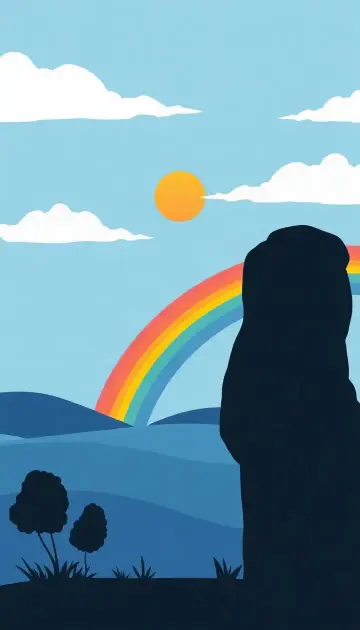
The rainbows we usually see appear on a circle at an angle of about 42 degrees, centered on the point opposite the sun.
When the sun rises higher than about 42 degrees, this angle means the rainbow ends up hidden below the horizon, so it can't be seen from the ground.
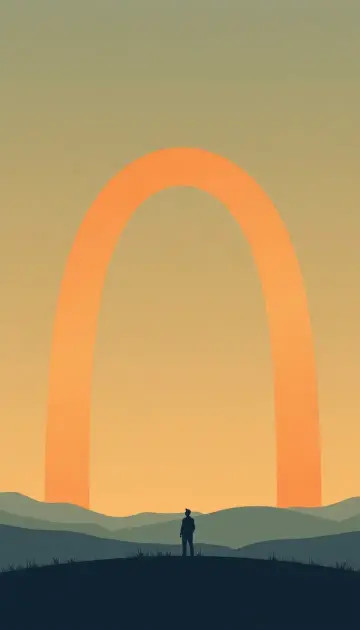
That's why you have a chance of seeing a rainbow in the morning or evening when the sun is low, and in seasons when the sun stays low, even in the middle of the day.
Sources
- How Do Rainbows Form?National Weather Service (NWS) Flagstaff Forecast Office
- Rainbows: optical wondersMet Office (UK)
- 日の出入り@東京(東京都) 令和8年(2026)06月Japanese“Sunrise and Sunset in Tokyo (Tokyo), June 2026 (Reiwa 8)”Ephemeris Computation Office, National Astronomical Observatory of Japan
- 日の出入り@東京(東京都) 令和8年(2026)10月Japanese“Sunrise and Sunset in Tokyo (Tokyo), October 2026 (Reiwa 8)”Ephemeris Computation Office, National Astronomical Observatory of Japan
Spotted a mistake in the article or the translation? Let us know.
Report an error (contact form in Japanese, opens in a new tab)