On this page
A closer look
There are two kinds of rings around the sun
The one in the video is the small ring that forms right next to the sun: a corona (in Japanese it's written two ways, 光冠 and 光環). But there's another kind of ring you can see around the sun: the halo.
According to the Japan Meteorological Agency, a halo is a ring of light that forms around the sun or moon when there are high clouds made of tiny ice particles (ice crystals). One that forms at a radius of 22 degrees from the sun is called the inner halo, and one at 46 degrees is called the outer halo.
HyperPhysics, a physics resource from Georgia State University, explains that a corona is clearly distinct from the 22-degree halo and much smaller. If it's a small ring that seems to cling to the sun, it's a corona; if it's a large ring circling the sun at a distance, it's a halo.
Next time you see a "rainbow ring around the sun," check which one it is, and you'll know what's going on up in the sky.
Coronas are made by "diffraction"
When light meets a small obstacle, it tends to bend slightly around the edges and spread out. This is called diffraction.
The UK Met Office explains that a corona is produced solely by diffraction, the bending of light around water droplets in a cloud. That's what the video means by "diffraction that happens when light passes between water droplets."
According to HyperPhysics and the Hong Kong Observatory, coronas aren't made only by water droplets; they can also be produced by small ice particles of uniform size. The video said "water droplets," but it's more accurate to think of them as "tiny cloud particles."
In its explanation of cloud coloring (iridescent clouds, covered below), the Japan Meteorological Agency notes that in diffraction by cloud particles, red light bends at a larger angle than blue light, so the colors separate.
According to HyperPhysics, blue light, which has a shorter wavelength, reinforces closer to the sun. That's why a corona is bluish on the inside and reddish on the outside. Under good conditions, you may even see several bluish-green and red rings stacked one inside another.
Comparing this with a halo reveals something interesting. According to the Japan Meteorological Agency, a halo is red on the inside and violet on the outside. The color order is the reverse of a corona's, so the sequence of colors is another clue for telling them apart.
The smaller the particles, the bigger the ring
The UK Met Office writes that the smaller the water droplets, the larger the corona. It's the opposite of what you might expect: smaller particles spread light out more widely.
Also, for a ring with clean colors, the particles need to be uniform in size. HyperPhysics says coronas are produced by small particles of "nearly the same size." Since the ring's size depends on the particle size, a mix of particles of different sizes makes it harder to get a neat, colorful ring.
Iridescent clouds are part of the same family
Sometimes the edges of clouds near the sun look tinted with rainbow colors. These are iridescent clouds.
According to the Hong Kong Observatory, iridescent clouds are often seen in altocumulus or altostratus clouds near the sun, and they form when sunlight is diffracted by small water droplets or ice particles of uniform size within the cloud. And when diffraction happens across a broad cloud layer, a corona may appear. The difference between iridescent clouds and a corona is simply whether the same mechanism happens at the edge of a cloud or in a ring surrounding the sun.
The Japan Meteorological Agency explains that particles are smallest at the edge of a cloud and get larger toward the center, so iridescent clouds appear to change color from the edge toward the middle. The differences in particle size show up directly as a pattern of colors.
Rainbows differ in both mechanism and position
As the video mentioned, a rainbow is a completely different phenomenon, formed when light is refracted and reflected inside raindrops. According to the Japan Meteorological Agency, a rainbow always appears in the direction opposite the sun, with the sun at your back. Coronas appear around the sun, while rainbows appear on the side opposite it, so to see one and then the other, you'd have to face in exactly opposite directions.
Coronas and iridescent clouds appear very close to the sun, so be careful when observing them. The Hong Kong Observatory recommends blocking the sunlight so it doesn't shine directly into your eyes, and notes that doing so also makes iridescent clouds easier to spot. Try hiding the sun behind a building and looking at the clouds around it.
You might also like
What the video says

Sometimes a blurry, rainbow-colored ring appears around the sun. A small rainbow ring right next to the sun is a phenomenon called a "corona."
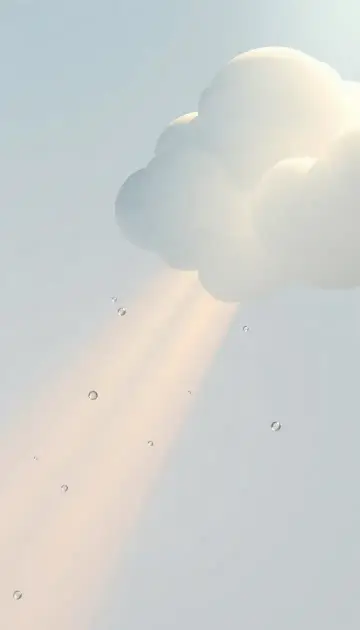
This ring is caused by "diffraction," which happens when sunlight passes between the tiny water droplets that make up a cloud.
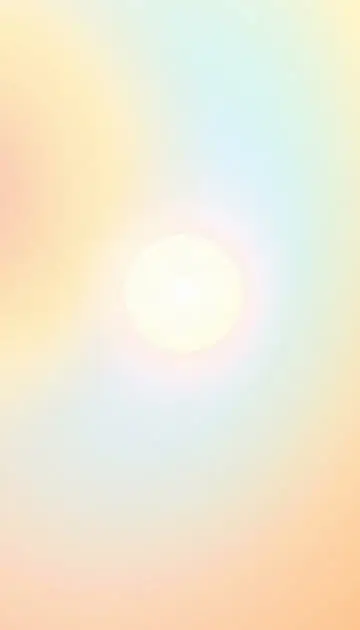
When light hits the droplets, it doesn't travel straight. It bends slightly around them and spreads out. Each color spreads at a different angle, which creates the rainbow-colored blur.

A rainbow forms when light is refracted and reflected in raindrops, but a corona forms when light is diffracted by cloud droplets. It's a completely different mechanism.

On a day with thin clouds, try gently looking at the light around the sun without looking at the sun itself. You might just spot one.
Sources
- 雲・大気現象・大気光象について(よくある質問)Japanese“About Clouds, Atmospheric Phenomena, and Atmospheric Optical Phenomena (FAQ)”Japan Meteorological Agency
- Optical effects: nature's light showMet Office (UK)
- Coronas(HyperPhysics)Department of Physics and Astronomy, Georgia State University
- Iridescent CloudYEUNG Pui-yi, Hong Kong Observatory, 2015
Spotted a mistake in the article or the translation? Let us know.
Report an error (contact form in Japanese, opens in a new tab)