On this page
- A closer look
- A mirror reverses only one direction
- So why does left and right feel backward?
- Try it and see
- Lie down and look in a mirror, and up and down flip
- "Left and right" are defined by up-down and front-back
- Mirrors form images because they reflect light uniformly
- Two mirrors make a "non-reversing mirror"
- Related reading
- What the video says
- Sources
A closer look
A mirror reverses only one direction
Let's start with the physics.
Stand in front of a mirror and raise your right hand. The image in the mirror raises its hand in the same spot. Its position in space hasn't changed.
The only thing a mirror changes is the coordinate in the direction perpendicular to its surface. Something 1 m in front of the mirror appears 1 m behind it. Move closer, and the image moves closer too. Only this direction changes sign.
The directions parallel to the mirror's surface—up-down and left-right—aren't changed by the mirror at all. So it's not that "up and down don't flip but left and right do." Neither up-down nor left-right is reversed.
So why does left and right feel backward?
Now for the main point.
When we look at the image in a mirror, we interpret it as "another person facing me." To imagine someone facing you, you have to rotate yourself 180 degrees around a vertical axis.
Compare that rotated you with the image in the mirror, and left and right appear swapped.
But the mirror didn't rotate anything. What did the rotating was the viewer's interpretation.
Try it and see
You can check this explanation with experiments.
Experiment 1: Hold a sheet of paper with writing on it up to a mirror. In the mirror, the writing looks reversed left to right. But what happens if you instead turn the paper itself around to face you? It still looks reversed left to right. This shows that the act of turning the paper around is what creates the reversal.
Experiment 2: When you turn the paper around, try rotating it around a horizontal axis instead of a vertical one (flipping it up and over, like turning a page upward). Now the writing is upside down—not reversed left to right.
In other words, "which direction gets flipped" is decided by which axis you rotated around. The mirror doesn't decide it.
Experiment 3: Write on paper thin enough to see through, and look at it from the back with light shining through. It looks just like it does in a mirror. This shows the mirror isn't doing anything special.
Lie down and look in a mirror, and up and down flip
Here's a decisive experiment.
Lie on the floor and look at a mirror while on your side (with the mirror tilted the same way). In this position, your "up and down" runs along your body's long axis, which no longer lines up with the direction of gravity.
Look at yourself in the mirror like this, and it feels like "up and down are reversed."
Why? Because when you imagine "yourself facing you" while lying down, the axis you rotate around changes. Change the axis of rotation, and the direction that feels reversed changes too.
The mirror changes nothing, yet how it feels changes. This is evidence that "left-right reversal is not a property of the mirror."
"Left and right" are defined by up-down and front-back
There's an even more fundamental explanation.
"Left and right" aren't an independent direction. They're a derived concept that only gets fixed once up-down and front-back are set.
We decide that "the direction of the head is up" and "the direction the face points is front," and from that we determine left and right. So if front and back are reversed, the definitions of left and right automatically swap.
A mirror reverses front and back. Since "front" is now reversed, the left and right that were defined from it are reversed too.
The one direction the mirror reverses ends up flipping the very concept of left and right. That's the definitional explanation for why left and right appear reversed.
Mirrors form images because they reflect light uniformly
While we're at it, let's cover how a mirror forms an image.
The difference between a mirror and a sheet of white paper is how flat the surface is. On a flat surface, incoming light bounces back with its directions kept in order (specular reflection). On a rough surface, light scatters in every direction (diffuse reflection).
An explainer from Toho University covers how materials send light back. When the directions of reflected light stay aligned, the directional information the light carried is preserved, so it can be reconstructed as an image.
A pond's surface turns into a mirror when there's no wind because that flatness makes specular reflection possible.
Two mirrors make a "non-reversing mirror"
There's a practical application.
Place two mirrors together at a right angle, and light reflects twice. Two reversals bring things back to normal, so you see an image that isn't reversed left to right.
There's a device using two mirrors called a "true mirror," and when you look into it, you see your face the way other people see it. Because it differs from the face you're used to seeing in a regular mirror, many people reportedly find it unsettling.
It works much like why your recorded voice sounds like someone else. Information about ourselves comes to us distorted in ways we can't check on our own.
Related reading
What the video says
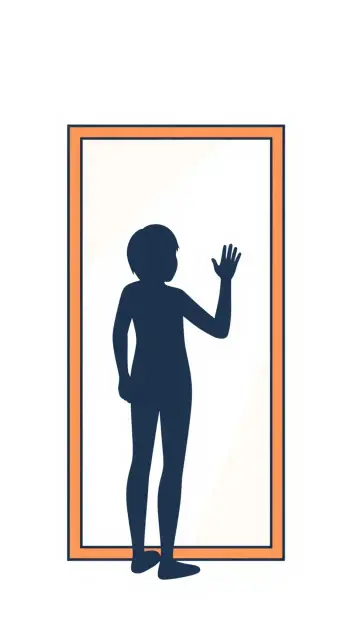
When you look in a mirror and raise your right hand, the you in the mirror seems to be raising its left hand, right?
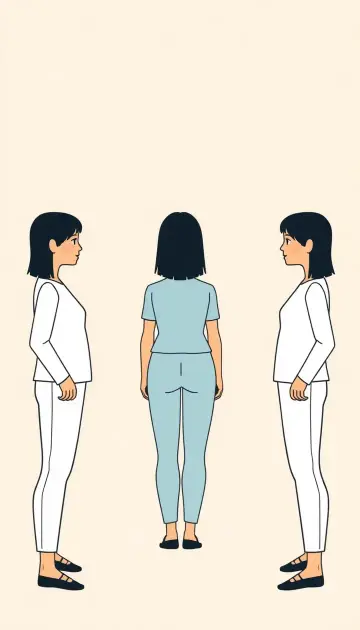
But strangely, up and down don't get flipped. Your head stays on top and your feet stay at the bottom.
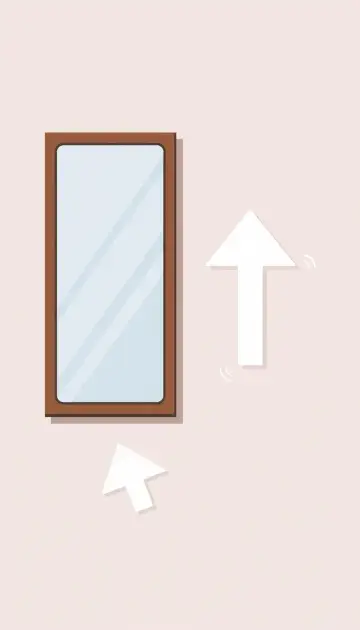
Actually, a mirror doesn't reverse left and right. It reverses front and back.
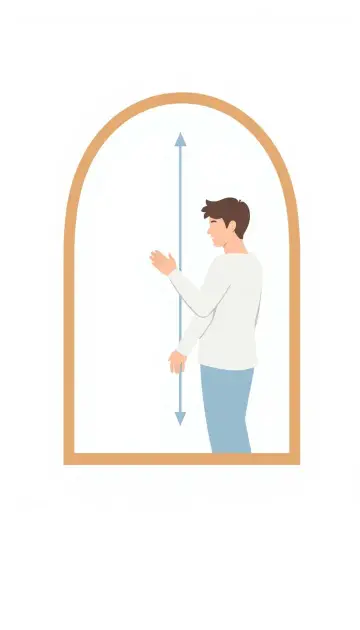
The direction going away from you comes back toward you in the mirror. As a result, when you imagine turning your body around, left and right feel swapped.

So what a mirror changes isn't left and right, but the direction of depth.
Sources
- 表面張力と濡れ性(鏡面と反射について)Japanese“Surface Tension and Wettability (on Mirror Surfaces and Reflection)”Toyo University
- 青い魚はなぜ青い-魚の体色変化の不思議を探る-(光の反射について)Japanese“Why Are Blue Fish Blue? Exploring the Mysteries of Color Change in Fish (on the Reflection of Light)”Toho University Virtual Laboratory
Spotted a mistake in the article or the translation? Let us know.
Report an error (contact form in Japanese, opens in a new tab)