On this page
A closer look
Whether the sky looks clear depends on water vapor and dust
"Harerun Land," the Japan Meteorological Agency's website for kids, says that whether the air looks hazy or clear depends on how much water vapor, dust, and similar matter it contains. In summer, temperatures are higher than in winter, and the motion of air warmed by the ground rising and mixing (convection) is also more active, so there's more water vapor, dust, and the like in the air.
The video's line "This has to do with dust-like particles in the air, and with humidity" matches this explanation.
A clear autumn day is "clear weather with dry air"
The Japan Meteorological Agency says that in weather forecasts, the phrase "sawayaka na tenki" ("crisp, refreshing weather") is, as a rule, not used in summer or winter. It's often used for clear weather when the air is dry and temperatures are comfortable, such as when autumn brings a migratory high-pressure system. A migratory high-pressure system is a high-pressure system that moves from west to east.
Let's compare some numbers, too. In the Japan Meteorological Agency's climate normals for Tokyo (averages for 1991–2020), "vapor pressure," a measure of how much water vapor is in the air, is 26.2 hPa in August, 14.7 hPa in October, and 9.6 hPa in November. The air in October holds about half as much water vapor as in August.
However, monthly average relative humidity (how much water vapor the air actually holds compared with how much it could hold at that temperature) is 74% in August and 71% in October, not much different. Autumn air isn't always dry. Sunshine hours are also shorter, at 126.7 hours in September and 129.4 hours in October, compared with 174.2 hours in August. Autumn isn't sunny every day, so it's best to think of the especially clear-looking skies as belonging to the "clear autumn days" when dry air settles over the area.
When particles absorb water and swell, the sky looks whitish
Stephen Corfidi, a meteorologist with the U.S. National Oceanic and Atmospheric Administration (NOAA), has written about the haze that dulls summer skies over the central and eastern United States.
According to him, much of the summer haze is a collection of extremely small particles made mainly of sulfates (substances formed from gases released when coal is burned, for example). These particles strongly attract water (they are highly hygroscopic), absorbing water even at relative humidity of around 60–70%, and in humid air, water collects on their surfaces and they grow larger. The enlarged particles scatter all colors of light nearly equally, so the sky looks whitish rather than blue.
That's the mechanism behind the video's line "In summer, humidity is high, so tiny particles in the air absorb moisture and swell, scattering light without much preference for color."
Humidity alone doesn't make the sky hazy
One more point to add. Corfidi writes that even when humid air flows in from the Caribbean or the western Atlantic, the sky can sometimes stay a deep blue. What makes the sky whitish isn't the humidity itself but the particles that absorb moisture and swell.
In other words, a hazy sky involves both "particles being present" and "the air being humid." The video focused mainly on differences in humidity, but Harerun Land also lists convection increasing the amount of dust and similar matter in the air in summer as one of the reasons.
What it means for blue light to "stand out"
The blue color of the sky comes from air molecules scattering short-wavelength blue light more strongly than other colors (→ Why is the sky blue?).
When particles scatter whitish light, white mixes into this blue, making the sky bright but pale. Corfidi describes this as hazy skies losing "purity" of color. On dry, clear autumn days, less white light gets mixed in, and the blue scattered by molecules reaches our eyes as is, so the blue looks deeper. That's what the video means by "the blue light scattered by air molecules stands out."
Further reading
What the video says

On clear autumn days, the sky often looks a clearer blue than it does in summer.

This has to do with dust-like particles in the air, and with humidity.

In summer, humidity is high, so tiny particles in the air absorb moisture and swell, scattering light without much preference for color.

On clear autumn days, the air is dry and the particles don't swell as easily, so the blue light scattered by air molecules stands out.
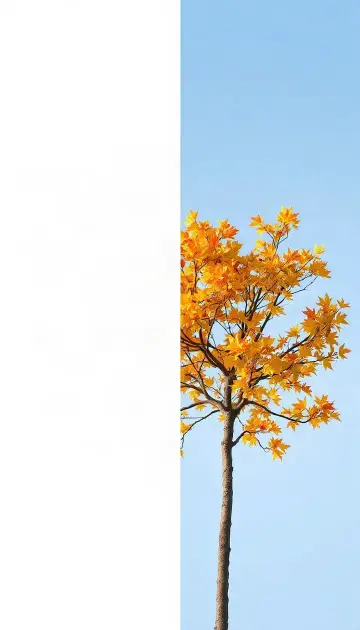
Even with the same blue sky, what's in the air differs by season, and that changes how the sky looks.
Sources
- なぜ、冬の空は夏の空より澄んで見えるの?(はれるんランド)Japanese“Why does the winter sky look clearer than the summer sky? (Harerun Land)”Japan Meteorological Agency
- 天気に関する用語(予報用語)Japanese“Weather Terms (Forecast Terminology)”Japan Meteorological Agency
- 東京 平年値(年・月ごとの値)Japanese“Tokyo Climate Normals (Annual and Monthly Values)”Japan Meteorological Agency (Historical Weather Data Search)
- Those Hazy Days of Summer: Haze over the Central and Eastern United StatesStephen F. Corfidi, NOAA/NWS Storm Prediction Center, 2019
Spotted a mistake in the article or the translation? Let us know.
Report an error (contact form in Japanese, opens in a new tab)