On this page
- A closer look
- The speed of sound changes with temperature
- When layers have different speeds, sound bends
- During the day, sound escapes into the sky
- At night, sound comes back down to the ground
- Autumn nights are a perfect fit
- Another reason insect sounds carry far
- Wind bends sound too
- The same thing happens with fireworks
- Related reads
- What the video says
- Sources
A closer look
The speed of sound changes with temperature
Here's the starting point. An explainer from the Japan Meteorological Agency gives the speed of sound:
The sound of thunder travels as vibrations in the air, moving about 340 meters per second.
That figure of 340 m/s is the value at around 15°C (59°F). Sound is vibration passed from air molecule to air molecule, so the faster the molecules are moving (that is, the higher the temperature), the faster sound travels.
It's about 331 m/s at 0°C and about 349 m/s at 30°C. The higher the temperature, the faster the sound.
When layers have different speeds, sound bends
Just as light bends at the boundary between water and glass, the same thing happens with sound.
When a sound wave enters a layer with a different speed at an angle, its direction changes. This is refraction. With sound, it bends from the faster side toward the slower side—in other words, toward the colder air.
This is where the difference between day and night comes in.
During the day, sound escapes into the sky
On a sunny day, sunlight warms the ground. The higher you go, the colder the air gets.
- Near the ground: warm = faster sound
- Higher up: cold = slower sound
Sound bends toward the colder air (upward). So sound trying to travel along the ground ends up escaping into the sky.
As a result, distant sounds have a harder time reaching you.
At night, sound comes back down to the ground
Here's the Japan Meteorological Agency's definition:
Radiative cooling: A drop in air temperature caused by heat being lost from the ground surface through radiation.
On clear, calm nights, the ground sheds its heat into space and cools quickly. But the air higher up doesn't cool down as much.
- Near the ground: cold = slower sound
- Higher up: warm = faster sound
It's the reverse of the daytime pattern. This is called a surface inversion (a ground-based temperature inversion).
Sound bends toward the colder air (downward). Even sound heading up into the sky gets bent back down partway and returns to the ground.
So instead of escaping into the sky, sound is carried a long way along the ground.
Autumn nights are a perfect fit
Autumn nights are especially likely to have all the right conditions.
| Condition | Autumn nights |
|---|---|
| Often clear | The season when migratory high-pressure systems pass through |
| Light winds | The wind dies down at night |
| Strong radiative cooling | Dry air and no clouds |
| Quiet surroundings | Less human activity than in summer |
When there are clouds, infrared radiation from the ground bounces off them and comes back, weakening radiative cooling. When it's windy, the air gets mixed and temperature layers can't form.
On clear nights from autumn into winter, both conditions line up. That's why there are nights when you can hear distant trains or far-off roads.
Another reason insect sounds carry far
With insect sounds, there are factors besides refraction.
The background noise is low. At night, human activity drops off and there's less traffic. Even at the same volume, a sound is easier to hear against a quiet background. Part of it isn't that the sound is "reaching farther" but that it's "become audible."
Insects sing at night. Bell crickets and other crickets chirp at night. If they sang at the same volume during the day, the sound would only carry as far as daytime conditions allow.
The frequencies are high. Insect sounds contain a lot of high-frequency components, and high-pitched sounds fade quickly in air. So they normally shouldn't carry very far—the fact that you can hear them means conditions are good.
In other words, the experience of "insect sounds carrying far on autumn nights" is a combination of three things: sound refraction, quiet surroundings, and the hours when insects are active.
Wind bends sound too
It's not just temperature—wind matters as well.
Downwind, the faster wind higher up bends sound toward the ground, so it carries farther. Upwind, it's the opposite: sound gets bent upward and has a harder time reaching you.
So the idea that "sounds seem different depending on which way the wind is blowing" isn't just your imagination. Downwind, you can hear distant sounds; upwind, you can't.
The same thing happens with fireworks
The same goes for the sound of fireworks. The booms from a nighttime fireworks show reach residential areas surprisingly far away because of the nighttime surface inversion.
Fireworks are launched at night so they can be seen, but as a result, they're also being set off under conditions that let the sound carry far.
If you open your window on an autumn night and hear sounds you don't usually hear, warm air is sitting on top of cold air above you. Thinking of it that way, even how things sound on a quiet night has a reason behind it.
Related reads
What the video says

There's a reason insect calls can sometimes be heard from far away on autumn nights.

Sound travels slightly more slowly where the air is colder.
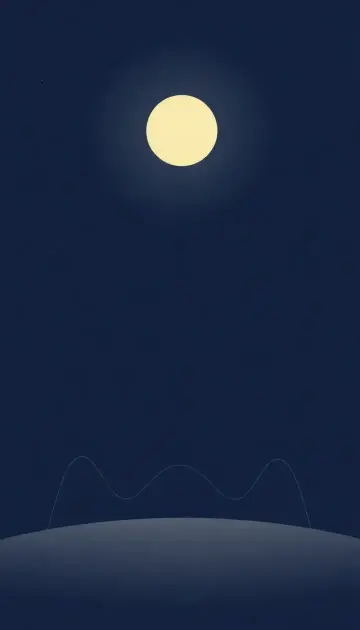
On clear, calm nights, the air near the ground gets colder than the air above it, so sound tends to bend back down toward the ground and carry farther.
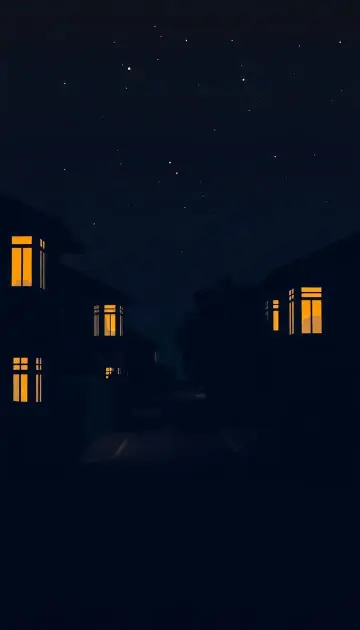
On top of that, the wind dies down at night and human activity quiets, so insect calls stand out.

So insect calls ring out on autumn nights because cold air near the ground and the quiet of night sometimes come together.
Sources
- 気温、湿度に関する用語(予報用語)Japanese“Terms related to temperature and humidity (forecast terminology)”Japan Meteorological Agency
- 雷(かみなり)が光ってから、音が聞こえるまでに差があるのはどうしてなの?Japanese“Why is there a gap between seeing lightning and hearing thunder?”Japan Meteorological Agency
Spotted a mistake in the article or the translation? Let us know.
Report an error (contact form in Japanese, opens in a new tab)