On this page
A closer look
1. Why mountain weather "turns bad in the afternoon"
On a sunny morning, mountain slopes in the sun heat up quickly, and so does the air touching them. According to the U.S. National Park Service, on sunny days this creates air currents that creep up the slopes, and especially in summer, these become the source of afternoon showers and thunderstorms. Air cools as it rises, so the water vapor it carries turns into clouds.
The Japan Meteorological Agency also explains that towering cumulus clouds (cumulonimbus) form when strong sunshine sends moist air near the ground rushing upward, and that they often appear from early afternoon into evening on hot, humid, calm summer days. The video's explanation matches this mechanism, and the hiking rule of "get moving in the morning" has a real basis.
That said, this tends to happen on days with strong sun and moist air. It doesn't mean mountain weather always turns bad every afternoon. The National Park Service also notes that it's most noticeable in summer.
2. Contrails that vanish and contrails that linger
According to a fact sheet put together by the U.S. Environmental Protection Agency, Federal Aviation Administration, and National Oceanic and Atmospheric Administration, contrails form when hot, humid engine exhaust mixes with the cold air high up. The water vapor in the exhaust first condenses into droplets around tiny particles, which then quickly freeze into ice particles. The video said "it's below freezing up there," but at the altitudes where planes fly, it can get as cold as the minus 50s °C (around −60 °F or colder).
As the video says, whether a contrail disappears quickly or lingers depends on the moisture up high.
- When the air aloft is dry: The ice particles disappear quickly, and the contrail is gone within seconds to minutes.
- When the air aloft is very humid: The ice particles grow by taking in moisture from the surrounding air, and the contrail can last for hours, sometimes even more than a day.
In other words, long-lasting contrails grow by taking in not just the water vapor from the exhaust, but also moisture that was already in the upper air. Also, humidity at ground level can be very different from humidity up high. What a contrail tells you about is only the moisture at the altitude where the plane is flying.
The idea that "a lingering contrail means the weather is going downhill" is one of the traditional sayings for predicting weather by watching the sky (known in Japan as kanten bōki). It is a sign that the upper air is moist, but you can't predict the weather from contrails alone, so it's best enjoyed alongside the weather forecast.
3. Why the sky looks high and clear
The Japan Meteorological Agency says that in autumn, sunny days when a migratory high-pressure system covers the area, the air is dry, and temperatures are comfortable are often called "refreshing weather." The crisp look of a clear autumn sky comes from this dry air.
The video said that "summer air holds a lot of water vapor, and light hits those particles and scatters," but here's a small clarification. Water vapor itself is an invisible gas. What makes the sky look whitish and hazy is the tiny water droplets and fine particles that have absorbed moisture floating in the air. In the Japan Meteorological Agency's terminology, a state where visibility is reduced by such particles is called moya (mist). These particles are much larger than air molecules and scatter light of all colors equally, so the sky looks whitish and hazy.
The blue color of the sky itself comes from air molecules strongly scattering blue light (→ Why is the sky blue?). In dry air, less of that whitish light gets mixed in, so the blue looks deeper. Also note that the sky "feeling higher" is just an impression; the sky itself doesn't actually get any higher.
4. Why fewer stars are visible on full-moon nights
According to the National Astronomical Observatory of Japan, as the Moon waxes, the lit portion grows and the Moon as a whole gets brighter. A full moon rises around sunset and sets around sunrise, so there's a bright moon in the sky all night long.
When that bright light faintly brightens the whole night sky, the light of faint stars gets lost in the background and becomes hard to see. As the video says, if you want to see a starry sky, it's better to aim for times when the Moon isn't up rather than full-moon nights. By the way, for about a day on either side of the new moon, the Moon is near the Sun and dark, so you can't see it at all.
5. Why the cycle of phases is about 29.5 days
The numbers in the video are accurate. According to the National Astronomical Observatory of Japan, the time it takes the Moon to go around Earth once (the sidereal month) is about 27.3 days, and the cycle of phases (the synodic month) is about 29.5 days. While the Moon makes one trip around Earth, Earth also moves along its path around the Sun, so the Moon has to travel that much extra before it lines up with the Sun the same way again. That "extra" takes about two days.
Note that 29.5 days is an average. The actual length of each cycle of phases varies slightly every time.
6. Why stars twinkle
According to NASA, most stars shine at a steady brightness. They appear to twinkle because air moves around in Earth's atmosphere, and starlight reaches us while being slightly bent along the way. The video's explanation matches this.
The closer a star is to the horizon, the thicker the layer of air its light passes through before reaching your eyes, so it twinkles more. This is also just as the video described.
Related reading
- Why do people say mountain weather "turns bad in the afternoon"?
- Why do some contrails disappear while others don't?
- Why does the winter sky look so high and clear?
- Why do fewer stars appear on full-moon nights?
- Why does it take 29.5 days from one full moon to the next?
- Why do stars twinkle at night?
- Why do mackerel clouds form that spotted pattern?
- Why is the sky blue? Following the question all the way to the sky on Mars
What the video says

When autumn comes and the air turns crisp, don't you find yourself looking up at the sky more often? It's the season when mornings and evenings get chilly, and the shapes of clouds and the blue of the sky look unusually sharp. Today, let's unravel six "whys" about the autumn sky, all in one go.

Among hikers, there's a saying: "Mountain weather turns bad in the afternoon." This isn't just a rule of thumb. There's a real reason behind it. Let's start with this one.

In the morning, as the sun starts warming the mountain slopes, the air touching the ground heats up more and more. Warm air becomes lighter and rises higher and higher, until it cools above the mountain and forms clouds. This builds up by the afternoon, which is the hottest time of day.
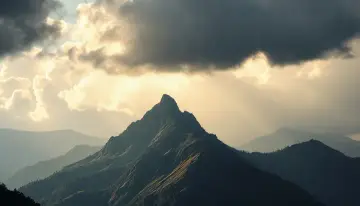
As those clouds keep growing, sudden showers become more likely. That's why the golden rule of hiking is to get moving in the morning, while the air is still stable. Behind an old saying, there turns out to be real air movement.
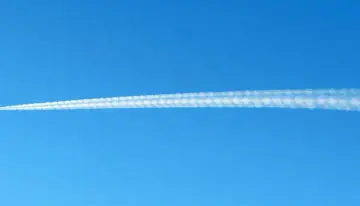
Now, it's not just mountains. The white lines that planes draw across the sky also hold clues about the weather. Next, let's look at the mystery of contrails.
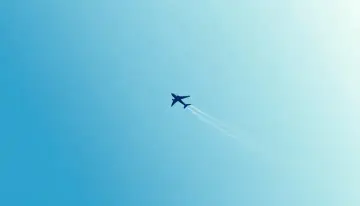
Did you know that the white line left behind by a plane disappears quickly on some days but stays in the sky for dozens of minutes on others? Those lines come from the water vapor in the engine exhaust. It's below freezing up there, so the water vapor instantly freezes into tiny ice particles.
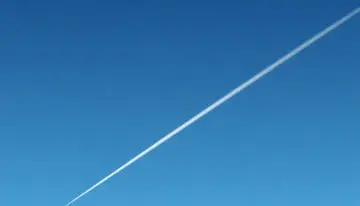
If the air up high is dry, the ice particles quickly evaporate and the cloud disappears in a few seconds. But if the air is moist, the particles keep growing and the cloud stays in the sky as a long streak. So the way a contrail fades reflects the humidity high up that day. It's like a hygrometer in the sky.

It's also said that on days when contrails linger, the weather tends to take a turn for the worse. If you look up in the morning and see long-lasting lines, it might be worth keeping an umbrella in mind.
So far, we've covered stories about changes in the weather. From here, we'll get into mysteries about how the sky itself looks, something people often talk about from autumn into winter. You could say this is the heart of today's topic.
On a clear day, you sometimes look up and the sky seems unusually high and clear, right? This actually isn't an optical illusion. It happens because what's in the air changes. Summer air holds a lot of water vapor, and light hits those particles and scatters.
That's why the summer sky looks whitish and feels low. Cold, dry air, on the other hand, has little water vapor, so light travels through more directly. As a result, the blue of the sky looks deeper and clearer, and the sky feels higher to us.
Isn't it interesting how much the impression of the same blue sky can change just from how moist the air is? Now, after how clear the sky looks, let's move on to how the night sky looks.
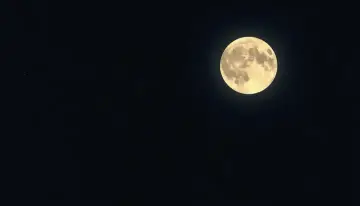
On a full-moon night, you sometimes look up and see only a scattering of stars, right? This is actually caused by the Moon's own strong light. A full moon reflects sunlight and shines much more brightly than around the new moon.
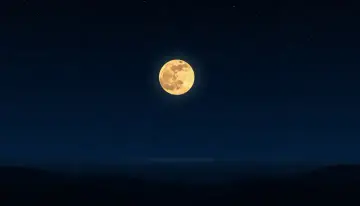
That brightness faintly lights up the whole sky and drowns out the light of faint stars. In fact, stargazers often avoid full-moon nights. Moonlight affects the whole sky more than you might think.
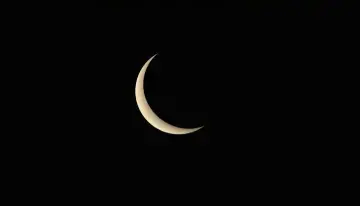
So how often does the full moon itself come around? Next, let's look at a curious number behind the Moon's phases.
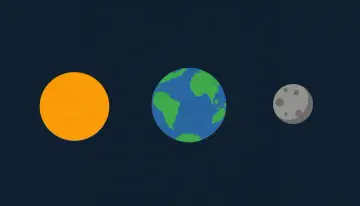
From one full moon to the next actually takes 29.5 days on average. It's an awkward number that doesn't fit neatly into a month or a multiple of a week. The reason is that two motions overlap and drift relative to each other: the Moon going around Earth, and Earth going around the Sun.
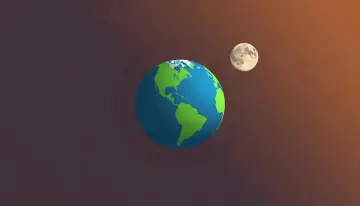
The Moon goes around Earth once in about 27.3 days. But during that time, Earth also moves a bit along its path around the Sun, so it takes a little longer for the Sun and Moon to line up the same way again. That's why the time from full moon to full moon settles at 29.5 days, a number that looks oddly uneven.
This is also why it doesn't match up with calendar months. The reason the full moon seems to fall on a slightly different day each month is the build-up of these celestial motions.
Since we've talked about the Moon's phases, let's finish with one more thing you often see in the night sky: the way stars flicker and sparkle.
When you look up at the night sky, stars seem to flicker and twinkle, right? But the stars themselves aren't actually getting brighter and dimmer. The cause is turbulence in the atmosphere that starlight passes through on its way to Earth.
The temperature and density of the air differ slightly from place to place, and when light passes through, its path bends little by little. Because this refraction keeps changing, starlight looks stronger, then weaker, so the stars seem to twinkle.
That's why stars closer to the horizon, whose light passes through more of the atmosphere, twinkle more. If you spot a star shining low in the sky, check whether it's flickering more.
So far, we've looked at why mountain weather turns bad in the afternoon, how contrails fade, why the sky looks clear in autumn and winter, why fewer stars are visible on full-moon nights, the Moon's 29.5-day cycle of phases, and why stars twinkle. All of these were created by mechanisms we don't usually think about: the temperature and humidity of the air, and the motions of celestial bodies.
Autumn is the season when the air is clear and it's easy to notice these changes in the sky. The next time you look up, pay a little attention to the shapes of the clouds, the brightness of the Moon, and the twinkling of the stars. You're sure to discover something new.
Sources
- 夏に入道雲が多いのは?(はれるんランド)Japanese“Why are there so many towering cumulus clouds in summer? (Hareurun Land)”Japan Meteorological Agency
- Clouds and FogU.S. National Park Service (Rocky Mountain National Park)
- Contrails Fact SheetU.S. Environmental Protection Agency (EPA), Federal Aviation Administration (FAA), and National Oceanic and Atmospheric Administration (NOAA)
- 予報用語「天気」Japanese“Forecast terminology: "Weather"”Japan Meteorological Agency
- 予報用語「氷、霜、霧、雷、日照時間」Japanese“Forecast terminology: "Ice, frost, fog, thunder, sunshine duration"”Japan Meteorological Agency
- 月はいつどんなふうに見える?昼間も見えるの?Japanese“When and how does the Moon appear? Can you see it in the daytime?”National Astronomical Observatory of Japan
- 暦Wiki/月の満ち欠け/周期Japanese“Koyomi Wiki / Lunar phases / Period”Ephemeris Computation Office, National Astronomical Observatory of Japan
- StarChild Question of the Month for October 2000: Why do stars twinkle?NASA Goddard Space Flight Center (StarChild)
Spotted a mistake in the article or the translation? Let us know.
Report an error (contact form in Japanese, opens in a new tab)