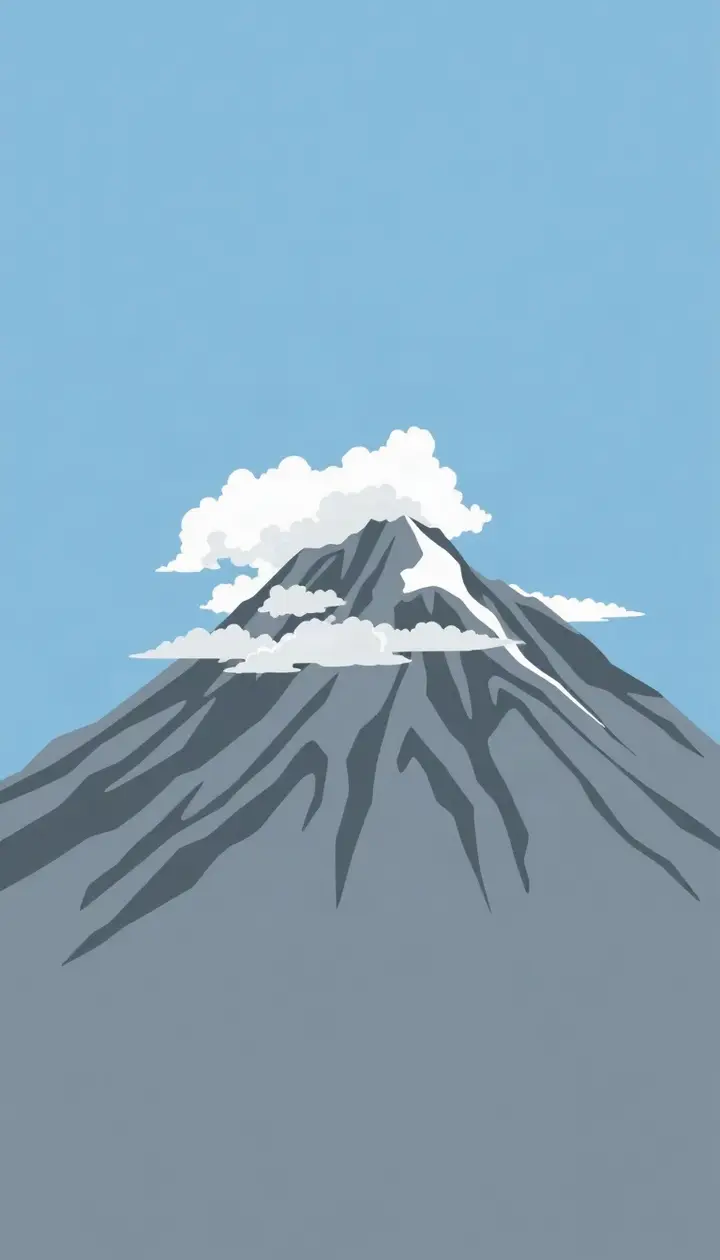
On this page
A closer look
Fog and clouds are basically the same thing
The Japan Meteorological Agency defines fog as "a condition in which visibility is less than 1 km due to tiny suspended water droplets." In other words, fine water droplets floating in the air keep you from seeing 1 km ahead. If visibility is 1 km or more, it's called "mist."
The UK's Met Office also explains that fog is essentially "cloud at ground level." Both are made of fine water droplets floating in the air; the only difference is that high in the sky it's a cloud, and touching the ground it's fog. The video's line, "Fog is really just a cloud that has formed so low it touches the ground," is exactly right.
"Upslope fog": formed when air cools as it climbs a slope
The classic example of fog on a mountainside is upslope fog (kasshō-giri in Japanese). An explainer from the City of Kobe describes it as fog that forms when moist air rises along a mountain slope and cools, adding that from below the mountain, it looks like a cloud. The U.S. National Weather Service (NWS) likewise uses the term "upslope fog" for fog that forms when moist, stable air is carried up a mountain slope.
Air cools as it rises because the surrounding air pressure is lower at higher altitudes, so the air expands. Expanding uses up the air's own heat, so its temperature drops. Once it cools to the dew point (the temperature at which water vapor starts turning into droplets), water droplets appear. That's the mechanism behind the video's line, "it gets pushed upward, cools, and turns into tiny water droplets."
The World Meteorological Organization's (WMO) International Cloud Atlas also explains that air hitting a mountain is lifted upward, and if it's moist, clouds form on the windward slope. That's why mountainous areas tend to be cloudier than the surrounding lowlands.
It looks still, but the air is flowing
The video's hook was "fog is actually a 'cloud that doesn't move,'" but to be precise, what looks stationary is the fog's location; the air and water droplets inside it are moving.
According to the WMO's International Cloud Atlas, clouds that form on the windward side thin out and disappear on the other side of the mountain (the leeward side), because the air there is descending. Descending air is compressed and warms up, so the water droplets evaporate.
So droplets keep forming at a fixed height on the slope and keep disappearing once the air crosses the mountain. The fog's shape appears to stay in the same place, but its contents are constantly being replaced. The video's line, "droplets keep forming at the same height... the fog seems to settle in and stay put," captures this well.
There are other clouds like this, too. The WMO notes that wave-shaped clouds forming downwind of mountains may look almost motionless from the ground, even though strong winds may be blowing at cloud level.
Mountain fog can form in other ways, too
Upslope fog isn't the only kind of fog you'll see in the mountains. The City of Kobe's explainer also introduces these:
- Radiation fog: Fog that forms from night into morning on clear, calm days, in air that has cooled as the ground loses its heat. It's common in basins, where cold air tends to pool, and it disappears once the sun comes up and temperatures rise.
- Advection fog: Fog that forms when warm, moist air flows over cold sea or ground. It's common at sea and can spread over a wide area.
The video's point that "when the wind dies down, the fog disappears" applies to upslope fog, which depends on wind blowing up the slope. When the wind weakens, the air is no longer lifted, and new droplets stop forming. Radiation fog in a basin, on the other hand, actually forms on calm nights and burns off in the sunshine. As you can see, where fog forms and how it disappears depend on how it forms. You can't say that "fog never moves."
If you find yourself inside the fog
Fog may look beautiful from outside, but inside it, visibility gets poor. The Japan Meteorological Agency classifies fog on land with visibility of roughly 100 m or less as "dense fog." The City of Kobe's explainer says that if fog rolls in while you're driving and you feel unsafe, you may need to decide not to push on, and instead pull over somewhere safe and wait for it to clear. On mountain roads and hiking trails, too, don't force your way forward once you're wrapped in fog.
Related reads
What the video says
Fog hanging halfway up a mountain can actually stay in place, barely moving at all.
Fog is really just a cloud that has formed so low it touches the ground.

When moist air hits a mountain slope, it gets pushed upward, cools, and turns into tiny water droplets.

As the air climbs the slope, it keeps cooling one parcel after another, so droplets keep forming at the same height. That's why the fog seems to settle in and stay put.
When the wind dies down or the humidity of the air changes, this fog quietly fades away.
Sources
- 氷、霜、霧、雷、日照時間(天気予報等で用いる用語)Japanese“Ice, frost, fog, thunder, and sunshine duration (terms used in weather forecasts)”Japan Meteorological Agency
- 秋の風物詩「霧」Japanese“Fog: a seasonal feature of autumn”City of Kobe
- What is fog?Met Office
- Glossary - Upslope FogNOAA National Weather Service
- Orographic influence on the windward sideWorld Meteorological Organization (International Cloud Atlas)
- Orographic influence on the leeward sideWorld Meteorological Organization (International Cloud Atlas)
Spotted a mistake in the article or the translation? Let us know.
Report an error (contact form in Japanese, opens in a new tab)