On this page
A closer look
It has a name: "heat thunderstorm"
The showers and thunderstorms that build in the afternoon have an official name in the Japan Meteorological Agency's forecasting terminology.
Heat thunderstorm (netsurai): Thunder and lightning that occur locally in summer due to strong solar radiation.
The key point is that two conditions are built right into the definition: "due to strong solar radiation" and "locally." It's treated as a separate category from the widespread bad weather brought by low-pressure systems.
Incidentally, the Japan Meteorological Agency classifies thunderstorms by their cause:
- Heat thunderstorm: Thunder and lightning that occur locally in summer due to strong solar radiation
- Frontal thunderstorm: Thunder and lightning that occur near a front
- Heat-frontal thunderstorm: A combination of a heat thunderstorm and a frontal thunderstorm
The thunderstorms you run into on a mountain in the afternoon are usually the first type.
Instability is "made by sunshine"
For cumulonimbus clouds to grow, the atmosphere needs to be "unstable." Here's how the Japan Meteorological Agency defines it:
An "unstable atmosphere" is a state in which there is cold air aloft and a layer of warmed air near the ground.
What's worth noticing is that, of this two-story temperature difference, the lower floor is created by sunshine. The cold air aloft doesn't change much from morning to evening, but the temperature near the ground keeps rising as the sun shines. In other words, the more the sun shines, the more instability piles up.
Temperatures peak from early afternoon into the afternoon. "Mountain weather turns bad in the afternoon" is more than a rule of thumb because the peak of instability is set by the time of day.
Why it's stronger in the mountains
The same sunshine has a stronger effect in the mountains than on flat land. Slopes tend to face the sun more directly, and they create a pathway that carries warmed air upward along the slope. On flat land, air can only rise straight up, but in the mountains it gets lifted high by tracing the slope.
And since it starts from a higher point, it reaches cloud-forming altitude sooner. That's why, even when it's "sunny today" down on the flats, clouds may be towering up only over the mountains.
The schedule is the answer
The hiking advice to "start early, finish early" is a direct response to this daily pattern. You hike before the sun has built up instability, and you're done by the afternoon when it peaks. The mechanics of the weather turn straight into the shape of your plan.
Also, the Japan Meteorological Agency says of thunder: "If you hear thunder in the distance, you are already in danger." There's nowhere to escape on a ridgeline, so the rule is to turn back or move to lower ground as soon as you hear it.
Related reading
What the video says

Hikers have a golden rule: "Mountain weather turns bad in the afternoon." And it's not just a rule of thumb.

In the morning, as the sun starts to warm the mountain slopes, the air touching the ground heats up more and more.

The warmed air becomes lighter and rises higher and higher, eventually cooling high above the mountain and forming clouds.
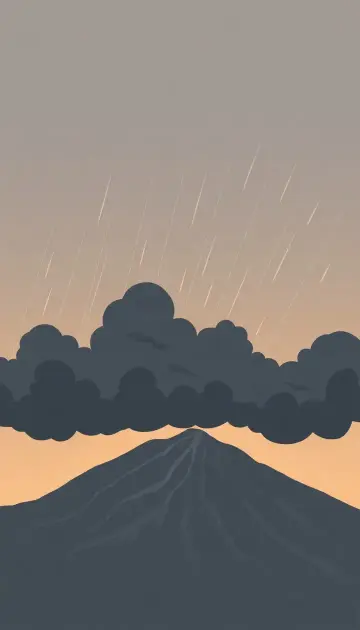
This builds up into the afternoon. Around the hottest time of day, the clouds keep growing and sudden showers become likely.
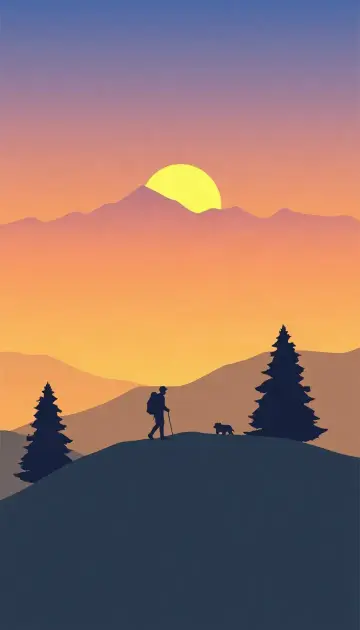
That's why the golden rule in hiking is to do your moving in the morning, while the air is still stable.
Sources
- 予報用語(氷、霜、霧、雷、日照時間)Japanese“Forecast Terminology (Ice, Frost, Fog, Thunder, Sunshine Duration)”Japan Meteorological Agency
- 積乱雲ってどんな雲?Japanese“What Kind of Cloud Is a Cumulonimbus?”Japan Meteorological Agency
- 「雷」による災害Japanese“Disasters Caused by Lightning”Japan Meteorological Agency
Spotted a mistake in the article or the translation? Let us know.
Report an error (contact form in Japanese, opens in a new tab)