On this page
A closer look
What blurs the view: "particles" in the air
Distant mountains look hazy because the air between you and the mountains gets in the way of the light.
According to the U.S. National Park Service (NPS), haze happens when sunlight hits tiny particles in the air. The particles scatter light out of the path to your eyes, scatter light into that path from the side, and absorb some of it. That's why the farther away the scenery is, the more it blurs, as if covered by a whitish veil.
The Japan Meteorological Agency also explains that whether the air looks murky or clear depends on how much water vapor, dust, and the like it contains.
The video named "less water vapor" as one of the causes. But the main direct culprit behind the haze isn't the water vapor gas itself — it's the particles floating in the air. Water vapor plays the role of "growing" those particles.
In humid air, particles absorb water and scatter more light
According to the U.S. Environmental Protection Agency (EPA), when humidity is high, some particles in the air scatter light more efficiently, which reduces visibility. In particular, ammonium sulfate and ammonium nitrate (both water-attracting particles formed from things like air pollution) are said to take up water vapor from the air when humidity is high.
The EPA says this humidity effect is "especially strong in summer." It also offers a comparison: in the eastern United States, where average annual relative humidity is 70–80%, humidity is a major cause of reduced visibility, while in the West, at 50–60%, it isn't as much of a factor.
The video's explanation — "in summer, the humidity is high, so fine dust absorbs moisture, swells up, and scatters light" — refers to this mechanism.
In winter, there's less water vapor and less dust
According to the Japan Meteorological Agency, winter is colder than summer, and convection (the up-and-down exchange of air, as air warmed by the ground rises) is weaker. As a result, there's less water vapor and dust in the air, and the sky looks clear.
Cold air simply can't hold much water vapor to begin with. If there's little water vapor for the particles to take up, they don't swell, and they don't scatter much light.
Dry seasonal winds sweeping down on the Pacific side
In Japan, winter on the Pacific side is a season of especially good visibility.
According to the Japan Meteorological Agency, in winter, dry and extremely cold northwesterly winds start blowing from Siberia and mainland China. As these winds cross the Sea of Japan, they pick up water vapor and drop snow on the regions along the Sea of Japan side. After dropping that snow, the air crosses the mountains and sweeps down the other side, so the Pacific side gets almost no snow and instead has clear skies and dry air.
In other words, the crisp winter days when you can see distant mountains are mainly a Pacific-side story. In the same season, things are different on the Sea of Japan side, where snow clouds tend to hang around. The Japan Meteorological Agency also notes that when a low-pressure system passes over the ocean south of Honshu (Japan's main island), it can snow even on the Pacific side.
Even in winter, some mornings are hazy
It's not as if you can see far away anytime in winter.
According to the NPS, trailing plumes of smoke and layers of haze lying across the sky are common in the cold winter months, when the air doesn't move much. The flat layer of gray haze you sometimes see lying over a city on a calm winter morning is one example of this.
Distant mountains look sharpest on days when dry seasonal winds are blowing and the air has little water vapor and few particles. If you head up somewhere high on a clear winter morning, try looking for mountains you can't usually see.
Related reads
What the video says
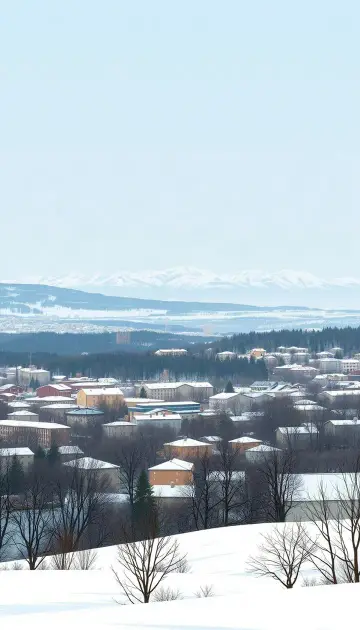
In winter, you can sometimes clearly see faraway mountains that are normally out of sight.

One reason is that there's less water vapor in the air.
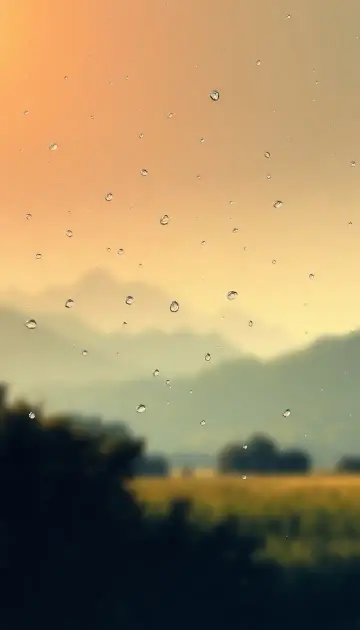
In summer, the humidity is high, so fine dust in the air absorbs moisture, swells up, and scatters light, making distant scenery look hazy.

Meanwhile, in winter on Japan's Pacific side, dry seasonal winds blow in after crossing the mountains, so there's less water vapor.

With less water vapor and dust, the air is clear, so you can see all the way to distant mountains and landscapes.
Sources
- なぜ、冬の空は夏の空より澄んで見えるの?(はれるんランド)Japanese“Why does the winter sky look clearer than the summer sky? (Harerun Land)”Japan Meteorological Agency
- 冬にはなぜ日本海側の地方で雪がたくさん降るのですか?(はれるんランド)Japanese“Why does so much snow fall on the Sea of Japan side in winter? (Harerun Land)”Japan Meteorological Agency
- Regional Haze(Report on the Environment)U.S. Environmental Protection Agency
- Air Pollution & VisibilityU.S. National Park Service
Spotted a mistake in the article or the translation? Let us know.
Report an error (contact form in Japanese, opens in a new tab)