On this page
A closer look
Friction happens in summer, too
First, let's clear up a misconception. The way static electricity is generated has nothing to do with the season.
When you rub two things together, electrons move from one to the other. The side that loses electrons becomes positively charged, and the side that gains them becomes negatively charged. This happens in summer, too.
What's different is what happens next. In summer, the charge escapes right away. In winter, it doesn't escape; it builds up. So rather than saying static is "more likely to occur in winter," it's more accurate to say it's "more likely to build up in winter."
Water is the electricity's escape route
When humidity is high, a thin film of water forms on the surfaces of objects. That's because water molecules in the air stick to those surfaces.
Water conducts electricity (strictly speaking, it's ions from impurities dissolved in the water that carry the charge). So if there's a film of water on a surface, the charge gradually escapes through that film.
Even if you build up a charge taking off a sweater, on a humid day the electricity slowly leaks away and is gone by the time you touch a doorknob. On a dry day it doesn't escape, so it all discharges at once the moment you touch something. That "snap" is the sound and light of stored-up electricity flowing all at once.
Winter air is dry in two ways
This is where the Japan Meteorological Agency's definition comes in.
Dew point temperature: The temperature at which relative humidity reaches 100% when the temperature is lowered while the water vapor pressure is held constant. The temperature at which water vapor in the air condenses to form dew.
The lower the temperature, the smaller the maximum amount of water vapor the air can hold. So even if outdoor winter air has high relative humidity, the absolute amount of water vapor it contains is far lower than in summer.
Then, indoors, heating makes things worse.
Warming air doesn't increase the amount of water vapor in it. But as the temperature rises, the maximum it can hold goes up, so the relative humidity drops.
If you take air at 20°C (68°F) and 50% humidity and warm it to 25°C (77°F) with the same amount of water vapor, the relative humidity falls to around 37%. A heater is a device that dries the air without adding anything.
As a result, indoor air in winter dries out under two conditions:
- The air coming in from outside contains little water vapor
- That air gets heated, lowering the relative humidity even further
Wind plays a part, too
The Japan Meteorological Agency's forecast terminology includes a definition for a winter wind.
Kogarashi: A (somewhat) strong northerly wind that blows from late autumn to early winter.
(Kogarashi is the Japanese name for the cold, dry wind that signals the start of winter.) Dry winds from the north also blow away the water film on the surfaces of objects. Just like the reason your skin gets dry and rough in winter, they strip away that moist surface layer.
When your skin dries out, your skin itself becomes more prone to building up charge. If there's moisture on the skin's surface, the electricity escapes, but dry skin holds on to it.
Clothing materials matter, too
There's one more factor that's unique to winter.
Sweaters, fleece, down jackets—a lot of what we wear in winter is made of synthetic fibers or wool. These materials charge up easily.
On top of that, we wear layers, so there are more surfaces rubbing against each other. Depending on the combination of materials, some pairings make it easy for electrons to transfer.
Wool and synthetics, nylon and polyester—combinations that charge up easily are exactly the kind you often end up with when layering in winter.
So the fix is to "let it escape" or "don't let it build up"
The mechanism tells us what we can do.
Raise the humidity. Use a humidifier to keep relative humidity at 40–60%. Once a water film forms on surfaces, the electricity escapes on its own.
Let it escape slowly. Before touching a metal doorknob with your bare hand, touch a wall or a wooden part first, or touch the knob through a metal object like a key. If the contact area is larger or the charge passes through a path with some resistance, the electricity flows slowly and you won't get zapped.
Choose your materials. Cotton and silk don't charge up easily. Wearing a cotton base layer reduces the charge from layers rubbing together.
Use fabric softener. The ingredients in fabric softener form a thin film on the surface of fibers that helps electricity escape. That's what the anti-static effect is.
Moisturize your skin. If your skin has moisture, the skin itself becomes an escape route for electricity.
Air that's too dry can even break machines
Static electricity isn't just about getting zapped.
Electronic components are vulnerable to static, and even a discharge too small for a person to notice can damage them. That's why factories that handle electronic components control humidity and have workers wear conductive wrist straps to let the charge escape.
The idea of providing a path for the charge to escape is exactly the same as what you do at home. When it comes to static electricity, there have always been only two things you can do: "don't let it build up" or "let it escape."
Related reading
What the video says
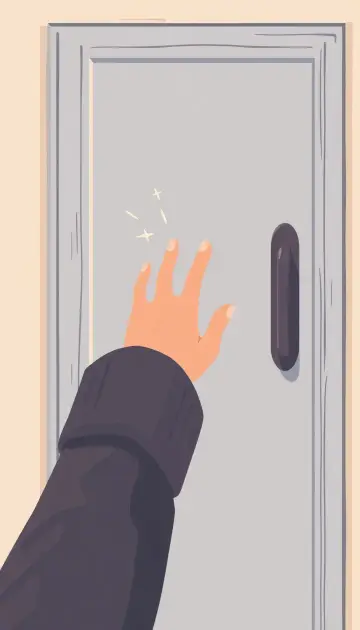
Don't you find that once winter comes, you get zapped by static more often when you touch a doorknob or a car door?

It turns out dry air has a lot to do with this. In summer there's plenty of humidity, so any charge that builds up quickly escapes through the moisture in the air.
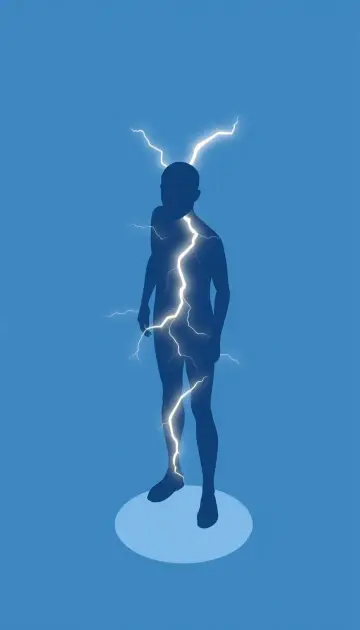
But in winter the air is bone-dry, so the charge building up in your body has nowhere to escape, and it keeps accumulating more and more.
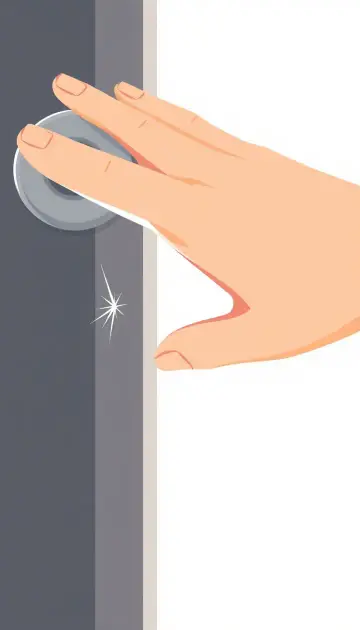
Then, the moment you touch metal, all that electricity rushes out at once, and that's the painful zap you feel.
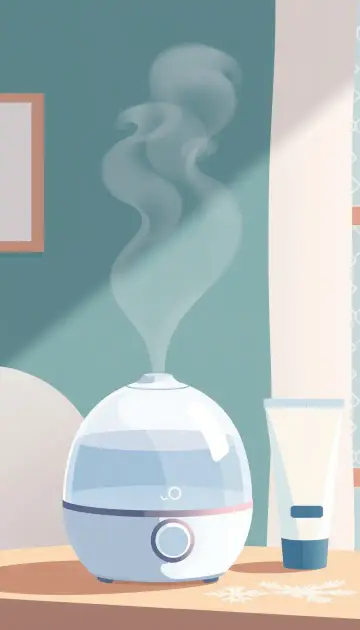
During the dry season, running a humidifier regularly and using moisturizing cream can help ease static shocks.
Sources
- 気温、湿度に関する用語(予報用語)Japanese“Terms Related to Temperature and Humidity (Forecast Terminology)”Japan Meteorological Agency
- 風に関する用語(予報用語)Japanese“Terms Related to Wind (Forecast Terminology)”Japan Meteorological Agency
Spotted a mistake in the article or the translation? Let us know.
Report an error (contact form in Japanese, opens in a new tab)