On this page
A closer look
"Taste" isn't made by the tongue alone
The society's Q&A lists the components of taste one by one.
The taste of food comes from a combination of the five basic tastes (sweet, salty, sour, bitter, and umami) along with smell, texture, temperature, color, and more. The olfactory mucosa, which detects smells, is located on the roof of the nasal cavity.
Sweet, salty, sour, bitter, and umami. Those five are the only things the tongue handles. The toasty aroma of curry, the roasted notes mixed into coffee's bitterness, the fresh zing of a mandarin orange: all of these "personalities" of flavor are smell information.
So when your nose shuts down, taste shrinks to just the five basic tastes. You can tell salty, sweet, and bitter. But you can't tell what you're tasting. That's what's really behind the feeling that food is "bland."
It has a name: "flavor disorder"
The society uses a formal term for this condition.
…odor molecules can't reach this olfactory mucosa, so first you lose your sense of smell. You then also lose your sense of taste, and food stops being enjoyable. This is called a flavor disorder. Even when food doesn't taste good, in many cases testing shows there is nothing wrong with the sense of taste itself.
Not a taste disorder, but a flavor disorder. And when tested, the sense of taste itself is often normal.
Even if it feels like your sense of taste has gone haywire during a cold, your tongue is fine. What's broken is the route aromas take from your nose to your brain.
Why smells stop getting through
The reason lies in where your smell sensors are located.
On the roof of the nasal cavity is the olfactory mucosa, the sensor that detects smells. When you catch a cold and this area becomes inflamed, or the nasal lining swells, odor molecules can't reach the olfactory mucosa and you can't smell.
The olfactory mucosa sits at the very top, on the roof at the back of the nose. When you breathe in, if some of that air doesn't make it up there, you can't smell anything. When the nasal lining swells, the airway narrows and air can't reach the roof.
There's another route, too.
Smell can also be lost when a cold virus damages the olfactory mucosa.
If congestion is the cause, your sense of smell comes back once your nose clears. But if the virus has damaged the olfactory mucosa itself, it won't come back even when your nose clears. This is a condition called "post-viral (post-cold) olfactory dysfunction."
We test how severe the smell disorder is and provide treatments such as corticosteroid nasal drops. If sinusitis (chronic sinus infection) is also present, additional oral medication may be prescribed.
Mouth breathing dulls taste, too
The "bland" taste of a cold has yet another cause layered on top.
Also, when your nose is stuffed up, you naturally start breathing through your mouth. This dries out the lining of the mouth. When it's dry, taste molecules don't dissolve well in saliva, making it hard to taste things.
To taste something, its flavor compounds need to dissolve in saliva. If your mouth is dry, the taste molecules from the food you put in your mouth never reach the sensors on your tongue.
On top of that,
Dryness can also damage the taste buds on the tongue, the parts that sense taste, leading to a loss of taste.
If the dryness continues, the taste buds themselves get damaged. This one really is a tongue problem.
In other words, the "bland" taste you get with a cold has at least three overlapping causes:
- Nasal congestion keeps odors from reaching the olfactory mucosa (flavor disorder)
- The virus damages the olfactory mucosa (post-viral olfactory dysfunction)
- Dryness from mouth breathing keeps taste molecules from dissolving in saliva and damages taste buds
Pinch your nose while eating to test it yourself
You can confirm this mechanism with an experiment. If you eat jelly beans or gummies while pinching your nose, you can tell they're sweet or sour, but you can't tell what flavor they are. The moment you let go of your nose, the flavor suddenly shows up.
What's at work here is aroma traveling from inside your mouth up to the back of your nose. Food smells reach you by two routes: one where you sniff them in through your nostrils, and one where they travel from your mouth through your throat and around to the back of your nose. While you're eating, it's the second route doing the work, which is why pinching your nose makes the flavor disappear.
If it doesn't come back after the cold is gone
There's one line worth drawing here: cases where your congestion clears up but your sense of smell or taste doesn't return. The question in the society's Q&A is exactly that kind of case.
I'm a 52-year-old homemaker. Ever since I caught a bad cold last month, I've completely lost my sense of smell. What kind of treatment is there?
If your nose is clear again but your sense of smell hasn't returned, your olfactory mucosa may have been damaged. In this case, starting treatment early is said to improve the chances of recovery. It's worth remembering that there are cases where "it's just a cold, it'll go away on its own" isn't enough.
Related reads
What the video says

Have you ever noticed that when you have a cold, food just tastes bland?

Actually, much of what we experience as "taste" doesn't come from the tongue at all. It's aroma information coming from the nose.
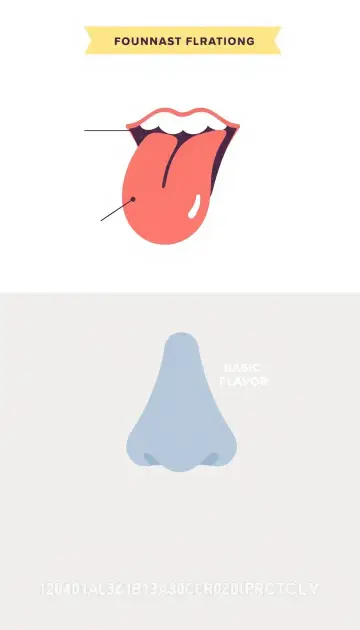
Your tongue can only pick up broad tastes like salty, sweet, and bitter. The flavors of ingredients and more complex tastes are caught by your sense of smell, deep inside your nose.

So when your nose is stuffed up, aroma information can't reach your brain, and the taste itself starts to feel fuzzy.

Next time, try eating while pinching your nose. You might see exactly how this works.
Sources
- 鼻の病気Q&A(味が分からなくなる/においが分からない)Japanese“Nasal Disease Q&A (Losing Your Sense of Taste / Losing Your Sense of Smell)”Oto-Rhino-Laryngological Society of Japan
Spotted a mistake in the article or the translation? Let us know.
Report an error (contact form in Japanese, opens in a new tab)