On this page
- A closer look
- What they share: "engineered compatibility"
- Detergent: using molecules that reach out to both sides
- Erasers: stick more strongly than paper, then carry it away
- Bandages: keeping close contact, breaking down with water
- Put the three side by side and the same blueprint appears
- This idea is used even more widely
- Related reading
- What the video says
- Sources
A closer look
What they share: "engineered compatibility"
Whether things stick together depends on the attractive forces between molecules. And how strong that attraction is changes depending on the partner.
An explanation from Toyo University sums up this "difference depending on the partner" neatly.
Also, even with the same water, the shape of a droplet changes depending on what it's placed on, and it may either be repelled or spread out and wet the surface.
The same water behaves differently depending on the surface it sits on. Some surfaces repel water, and others let it spread out.
The change in a droplet's shape is expressed by the "contact angle." (omitted) With "water repellency," where water is repelled, the contact angle is large; with "hydrophilicity," where water spreads out, the contact angle is small.
If you deliberately design for this "compatibility," you can make things stick or make them come apart. Detergent, erasers, and bandages are all products of this kind of design.
Detergent: using molecules that reach out to both sides
Here's the Japan Soap and Detergent Association's explanation.
Detergent delivers its strong cleaning power because the molecules of its main ingredient, surfactants, disperse in water and form clusters called "micelles." When the force of the washing machine is applied, these micelles surround the dirt on fibers even more effectively and pull it away.
One end of a surfactant molecule gets along with water, and the other end gets along with oil. A single molecule has two kinds of compatibility.
That lets it act as a go-between for water and oil, a "poorly matched pair." It grabs greasy dirt with its oil-loving side and floats it in the water with its water-loving side facing out.
And it also keeps the dirt from coming back.
Also, it surrounds the dirt that has come loose in the water, preventing "redeposition," where dirt reattaches to the fibers.
→ For more, see Why does detergent remove grease when water can't?
Erasers: stick more strongly than paper, then carry it away
Pencil writing is just graphite particles caught on the bumps and grooves of paper fibers. There's no chemical bond.
The material in an eraser (PVC resin + plasticizer) has a stronger affinity for graphite than paper fibers do. So when you rub, the graphite moves onto the eraser.
Then the eraser itself wears away. The surface layer holding the graphite breaks off as eraser crumbs.
This does the same job as detergent's "redeposition prevention." Detergent floats dirt in the water and washes it away; an eraser traps graphite in crumbs and drops it. Both have a second-half job: "don't put back what you removed."
→ For more, see Why does an eraser remove pencil marks?
Bandages: keeping close contact, breaking down with water
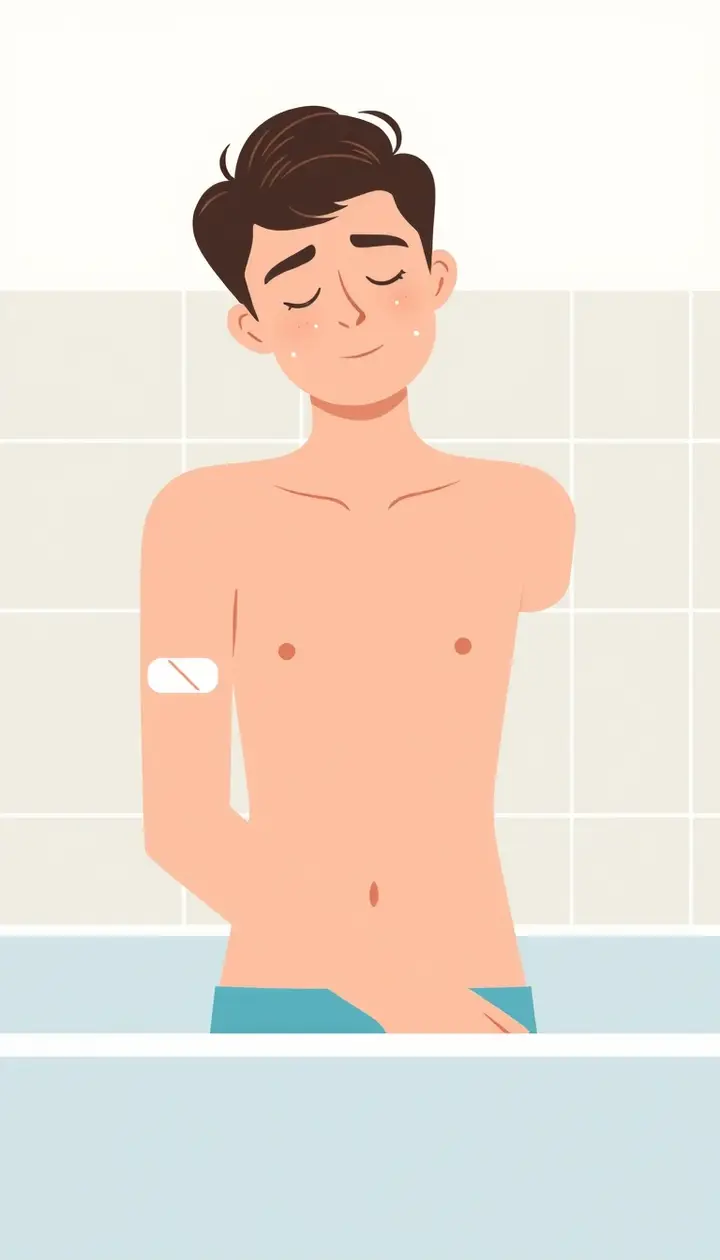
A bandage's adhesive works its way into the bumps and grooves of your skin's surface and attracts it at molecular-scale distances. It isn't hardened in place; it's simply in close contact.
That close contact breaks when another substance gets in between. If water seeps in, there's less area where the adhesive and skin touch directly, and it peels off.
What's more, soap is a substance made precisely for "removing oily things from skin." Bandages are weak in the bath because their adhesive has the same properties as the stuff soap targets.
→ For more, see Why do bandages peel off more easily in the bath?
Put the three side by side and the same blueprint appears
| What sticks to what | Force used | How to remove it | |
|---|---|---|---|
| Detergent | Dirt to surfactant | Compatibility of hydrophilic and lipophilic groups | Rinse with water |
| Eraser | Graphite to resin | Compatibility of plasticizer and graphite | Drop it along with the crumbs |
| Bandage | Adhesive to skin | Close contact via intermolecular forces | Pull it off, let water in |
Each one takes advantage of a difference in compatibility: "sticks more strongly to B than to A."
Detergent makes dirt stick more strongly to surfactants than to fibers. An eraser makes graphite stick more strongly to resin than to paper. A bandage makes adhesive stick more strongly to skin than to air.
Removing things works on the same idea, too. Either bring in a partner that sticks even more strongly, or add a substance that wedges in between.
This idea is used even more widely
If you look for things that run on the same principle, you'll find plenty around you.
- Lint rollers (sticky rollers): Move dust from the floor onto the sticky surface, then peel off and toss the sheet. Same structure as an eraser
- Dry dusting sheets: Attract dust with static electricity and trap it in the fibers
- Chromatography: A chemistry technique that separates mixtures based on differences in how strongly each substance adsorbs
- Silica gel: Adsorbs water molecules onto its porous surface. Heating releases them, so it can be regenerated
- Activated carbon in water filters: Adsorbs odors and impurities onto the surface of the carbon
"Differences in how strongly things stick" are a universal tool for separating and removing.
Chromatography, used in chemical analysis, works on almost the same principle as an eraser. A mixture is moved across a material that each substance adsorbs to with different strength, which separates them. The difference in sticking power is used to pull out only what you want.
It's a fun thought that eraser crumbs balling up and falling off and separating substances in a lab rest on the same idea.
Related reading
What the video says
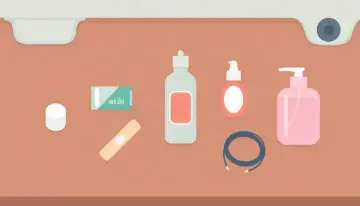
You erase pencil marks with an eraser. You keep moisture out with a desiccant. You put on a bandage. You wash off grease with detergent. You tie your shoelaces. These look like completely different tools, but they're actually connected by a single rule.

The rule is simple. Whether things stick together or come apart depends on how strongly their molecules attract each other, and on what gets in between their surfaces. Today, we'll use this one thread to connect all five tools, start to finish.
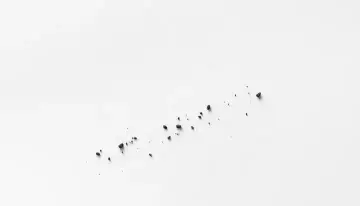
Pencil writing is just particles of a soft mineral called graphite lightly caught on the fibers of the paper. They aren't stuck on especially tightly.
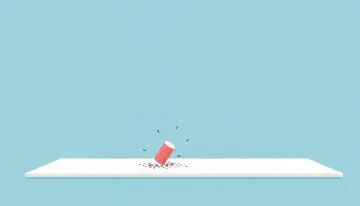
The rubber in an eraser has the property of sticking more strongly to those graphite particles than the paper does. When you rub, the graphite is drawn toward the eraser rather than the paper, and it transfers over.
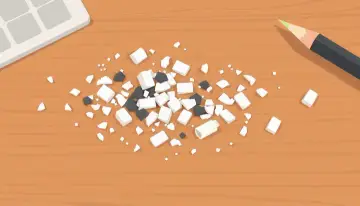
The crumbs of worn-off eraser look dark because they've trapped this graphite inside. In other words, we aren't really erasing the writing; we're just moving the graphite onto the eraser. The difference in how easily things stick is what makes it look like it disappeared.
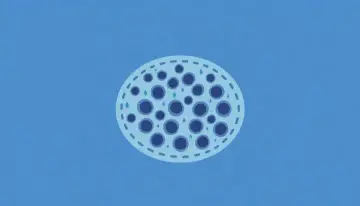
Next is another tool that uses the power of sticking: the desiccant. It's really a bead full of countless tiny pores, and those pores draw in water molecules and trap them inside.
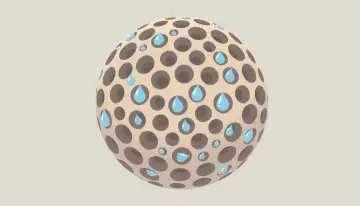
Once the pores are full of water, it can't absorb any more. That's the point where a desiccant seems to be used up.
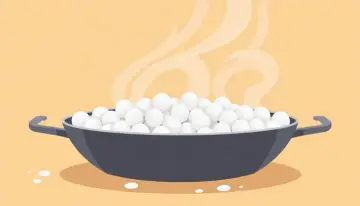
But if you heat it gently in a frying pan or an oven, the trapped water evaporates and it goes back to being empty. That's exactly why desiccants can be reused.
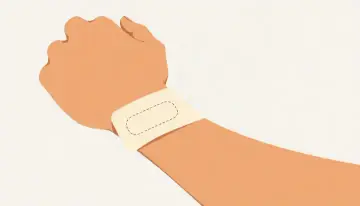
So far, we've been talking about how the power of sticking works. So what's happening when that sticking breaks down? The answer is in an everyday bandage.
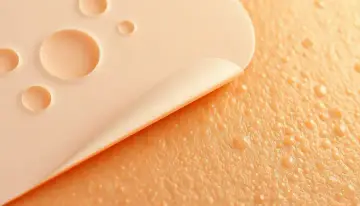
A bandage's adhesive sticks by clinging closely to your skin's oils and tiny bumps and grooves. The smaller the gap between the surfaces, the stronger the sticking force.
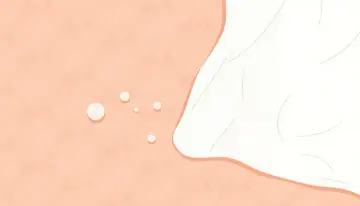
But when water gets in between, that close contact falls apart surprisingly easily. Water squeezes in as a foreign substance in the gap between the two surfaces, and the attraction can no longer reach across.

On top of that, skin itself gets soft and wrinkly when soaked in hot water, and its surface changes. That makes peeling off even easier. The power of sticking can easily lose out to just one thing that slips in between.
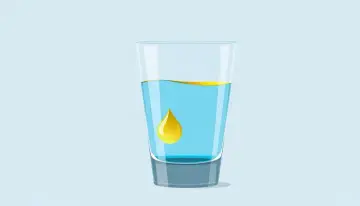
We've now seen both the power of sticking and the forces that break it. Now for the main event. There's a tool that forcibly connects two things that would never stick together on their own: water and oil. It's detergent.
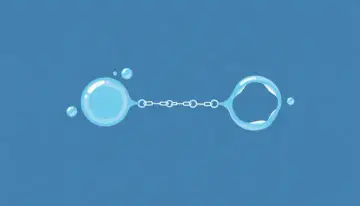
Water and oil never mix at the molecular level. This comes from the difference in the shapes of their molecules.

The molecules in detergent and soap have a slightly unusual shape. One end gets along easily with water, and the other end gets along easily with oil.

The oil-loving end wraps around the grime, turning it into tiny particles that float in the water. The water and oil still aren't mixing directly. But with detergent stepping in as a go-between, only the grime gets carried off into the water.

The last one is a little different. It's a tool that comes undone not through molecular attraction but through accumulated force: the shoelace.

Every time you take a step, two forces act on the knot. The impact of your foot hitting the ground loosens the knot slightly, and swinging your foot forward tugs the laces slightly.

Each step loosens it only a tiny bit, but repeated over hundreds of steps, the knot gradually loosens until it finally comes undone. Double knots are harder to untie because they have more margin against this repetition.
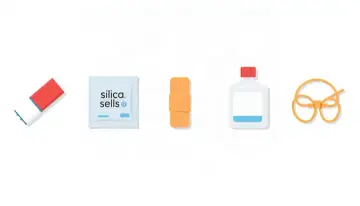
We've now looked at five tools. Erasers and desiccants take advantage of differences in how easily things stick. Bandages are an example of close contact breaking down when water gets in between. And detergent connects two very different things, water and oil, through the shape of its molecules.

Shoelaces alone weren't about molecules; they came from a different angle, the buildup of small forces. But in the sense of how much force keeps acting on a point of contact, the knot, they're tied to the same single thread.

Whether things stick or come apart depends on how strongly molecules attract each other and on what gets in between. Next time you use an eraser or put on a bandage, try recalling this rule. The ordinary things around you should look a little different.
Sources
- 小ワザ裏ワザ(洗たくの基本)Japanese“Handy Tips and Tricks (Laundry Basics)”Japan Soap and Detergent Association
- 表面張力と濡れ性Japanese“Surface Tension and Wettability”Toyo University
Spotted a mistake in the article or the translation? Let us know.
Report an error (contact form in Japanese, opens in a new tab)