On this page
A closer look
Sticking comes down to "close contact"
First, why does a bandage stick at all?
Adhesive is a substance with properties somewhere between a liquid and a solid. When you press it down, it flows just a little and works its way into the tiny bumps and grooves on the surface of your skin. Then the molecules of your skin and the molecules of the adhesive attract each other at extremely close range (intermolecular forces).
It doesn't harden the way glue does. It's just in close contact. That's why you can peel it off.
For that close contact to work, two conditions are needed:
- Nothing else sits between the adhesive and the skin
- There's enough contact area
Water breaks both of them.
Water squeezes into the gap
Here's an explanation from Toyo University:
Changes in the shape of a water droplet are described by the "contact angle." The contact angle is the angle formed between the surface of a droplet and the surface of a solid where the droplet touches it. On "water-repellent" surfaces that shed water, the contact angle is large; on "hydrophilic" surfaces where water spreads out, the contact angle is small.
Because skin sweats, it isn't completely water-repellent. Water spreads out across its surface.
When water gets in from the edge of a bandage, it spreads as a thin layer between the adhesive and the skin. The area where the adhesive directly touches the skin shrinks, and the close contact is lost.
What's more, the adhesive on typical bandages is acrylic- or rubber-based and doesn't mix with water. Since the adhesive repels water, once water gets in, a "film of water" stays trapped between the adhesive and the skin. Its water-repelling nature actually works against it.
The outer skin layer swells and changes shape
There's another change happening on the skin's side.
The outermost layer of skin, the stratum corneum, swells when it absorbs water (this is called swelling). That's why your fingertips get wrinkly after a long soak.
The adhesive is molded to the shape your skin had when you put the bandage on. When the skin swells and changes shape, the surfaces that were in contact shift, and the bandage comes loose.
And once the skin takes on water and softens, the surface of the stratum corneum crumbles more easily. Bits of that outer layer stay stuck to the adhesive and pull away from the skin—another reason bandages come off.
Hot water makes it even worse
In the bath, it isn't just about water.
It's hot. Adhesives get softer and flow more easily as the temperature rises. Softened adhesive stretches when pulled and peels off more easily.
There's soap. The action of surfactants described by the Japan Soap and Detergent Association works in the opposite direction here.
Detergents get their strong cleaning power from molecules of their main ingredient, surfactants, which disperse in water and form clusters called "micelles."
Surfactants are substances that slip into the boundary between water and oil. If surfactant gets between the adhesive and your skin, it works to pull the adhesive off your skin as if it were "dirt." Soap is literally designed to lift oily stuff off your skin.
There's rubbing. You scrub your body, dry off with a towel, and the flow of water hits you. Physical force is added.
Water, heat, surfactants, mechanical force. That's almost the same combination as the four elements of laundry. In the bath, your bandage is basically going through the wash.
What's different about waterproof bandages?
Waterproof bandages are designed differently in two ways.
The edges. The edges of the adhesive side are made thin and wide to eliminate gaps where water could get in. A thin polyurethane film is used so the edge of the film blends in with the skin.
The choice of adhesive. They use adhesives that don't lose much stickiness when they touch water—such as highly water-resistant acrylic adhesives.
That said, in principle they can't completely keep water out. They're no match for long baths or waterlogged skin.
Why it won't stick if you reapply it
If you peel off a bandage and try to stick it back on, it won't hold properly.
That's because the surface of the adhesive is now covered with skin oils, skin cells from the outer layer, and dust. The adhesive can no longer touch your skin directly.
It's similar to how an eraser picks up graphite and wears away. The sticky side gets dirty with use and stops working. An eraser exposes a fresh surface as it wears down, but a bandage's sticky side is single-use.
Some say wounds heal better "moist"
As a bonus: thinking about wound care has changed.
It used to be said that "wounds should be kept dry," but now the idea that keeping an appropriately moist environment helps them heal faster (moist wound healing) has become widespread.
"Healing"-type bandages made with materials like hydrocolloid absorb fluid from the wound, turn into a gel, and keep the environment moist.
But this means "the wound surface stays moist," which is different from "the sticky part being soaked in water." The adhesive part has to stay dry, or the bandage won't stay on.
Related reads
What the video says
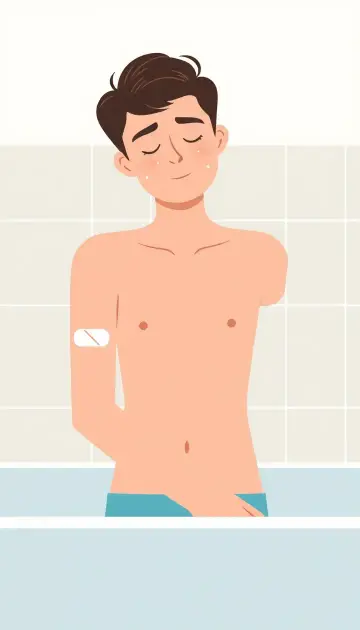
Bandages protect our cuts, but they start peeling off as soon as you get in the bath, right?
It turns out that adhesive becomes much weaker once it takes on water.
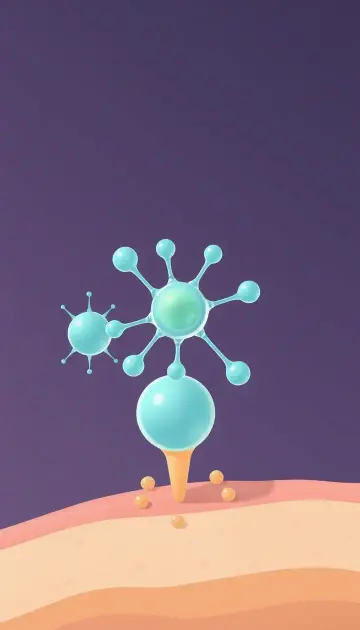
Normally, the adhesive sticks by clinging tightly to the oils and tiny bumps on your skin.
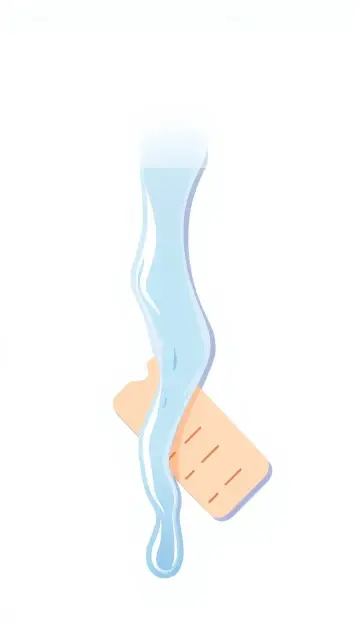
But when water gets in, that tight contact breaks down, and the stickiness drops off fast.
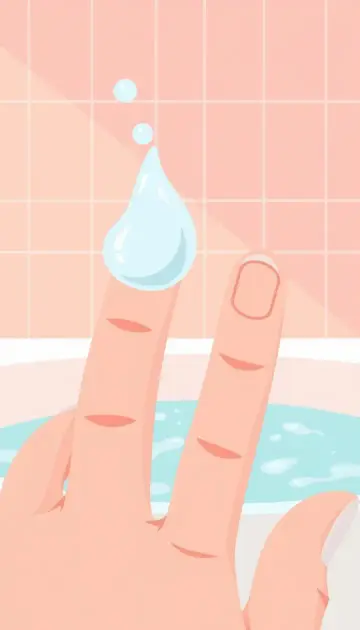
On top of that, the skin itself gets waterlogged in hot water, which makes peeling even easier.
Sources
- 表面張力と濡れ性Japanese“Surface Tension and Wettability”Toyo University
- 小ワザ裏ワザ(界面活性剤と汚れの引きはがしについて)Japanese“Handy Tips and Tricks (On Surfactants and Lifting Off Dirt)”Japan Soap and Detergent Association
Spotted a mistake in the article or the translation? Let us know.
Report an error (contact form in Japanese, opens in a new tab)