On this page
A closer look
The brown comes from floating particles
When sugar or salt dissolves in water, it disappears and the water stays clear. A river looks muddy after heavy rain not because soil has dissolved, but because soil particles too small to see are floating in the water without dissolving.
The U.S. Environmental Protection Agency (EPA) calls particles floating in water suspended sediment, and describes them as mainly clay and silt, usually smaller than 0.063 millimeters. Silt is finer than sand but coarser than clay.
The water looks cloudy because these particles absorb light and scatter it in many directions. The EPA describes how cloudy water is (its turbidity) in terms of how much the floating particles change the way light passes through it.
Where does the soil come from?
The video focused on soil being stirred up from the riverbed and banks. Here, we'll add one more important entry point.
The EPA's materials list surface runoff from rain and stormy weather first among the natural causes of turbidity. Rainwater that doesn't soak into the ground flows across it, carrying soil along, and eventually enters the river. Erosion of riverbanks putting soil into the water, and land use causing soil to erode and be carried into rivers with rainwater, are also listed as causes.
Materials from the Kyushu Regional Development Bureau of Japan's Ministry of Land, Infrastructure, Transport and Tourism also list causes of turbidity such as these:
- Rising water levels wash out fine particles left on the riverbanks
- Places where hillsides have collapsed release muddy water every time it rains
- Unstable riverbeds tend to release fine particles
The EPA likewise groups the sources of sediment into three types: erosion of farm fields and bare ground, erosion of riverbanks, and movement from the riverbed. The brown in a river comes not only from within the river itself but also from the land across the whole watershed.
When rain makes the water stronger, the soil starts to move
When heavy rain falls, the amount of water flowing into rivers jumps all at once.
Chiba Prefecture's waterworks bureau explains: "When heavy rain falls, such as during a typhoon, rainwater flows into the rivers. The river's flow then increases suddenly, mud on the riverbed gets stirred up, and the river water becomes muddy." The EPA also notes that during storms, flow increases and the water gets more powerful, so a lot of sediment is carried along with it. It has also been observed that the more water there is, the cloudier it tends to get.
The finer the particles, the slower they sink
When the current slows down, heavy sand sinks quickly. Fine particles, however, take a long time to settle.
According to an explainer from North Carolina State University, sand and coarse silt settle in about 24 to 48 hours, but clay and fine silt settle very slowly, and even water held in storage can stay cloudy for days to weeks.
According to materials from Miyazaki Prefecture, cloudiness from rain usually lasts only a few days. In dam reservoirs, however, extremely fine particles averaging about 2 micrometers (1/500 of a millimeter) can stay suspended for a long time, prolonging the cloudiness. On the Hitotsuse River, four episodes of turbidity lasting more than 100 days have been recorded.
Cloudiness is measured in numbers
River turbidity isn't judged just by how it looks; it's also measured with numbers.
According to the EPA's materials, turbidity is measured with a device called a turbidimeter. It shines light into the water and measures how much light bounces off the particles and scatters to the side. The results are expressed in a unit called "NTU."
In Japan, the amount of soil in water is sometimes expressed by weight. Miyazaki Prefecture's materials define 1 ppm as 1 milligram of soil (the source of the cloudiness) per liter of water. On the Hitotsuse River, water above 10 ppm is counted as "turbid water."
Recording these numbers every day makes it possible to compare afterward how cloudy the water got after rain and how many days it took to return to normal.
Turbidity affects fish and tap water too
A muddy river isn't just a matter of appearance.
The EPA notes that particles floating in water can clog or damage fish gills. Miyazaki Prefecture's materials also state that long-lasting turbidity affects fish and other fishery resources, as well as crops, scenery, and wildlife.
It matters for tap water, too. According to Chiba Prefecture's waterworks bureau, when muddy water reaches a water treatment plant, extra chemicals (coagulants) are added to make the fine particles stick together into larger clumps that then settle out. Otherwise, the sand used to filter the water would clog up, and the plant couldn't keep producing tap water.
A brown river after heavy rain is a snapshot of rain from the sky scouring soil from the ground and riverbanks and carrying fine particles along. When the water clears up a few days later, it's a sign that those particles have finally settled or been carried away.
Related reads
What the video says

When a river turns muddy brown after heavy rain, it's not because soil has dissolved in the water.
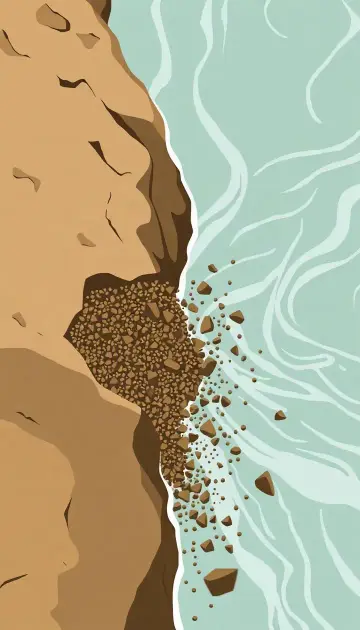
What you're actually seeing is extremely fine soil particles carried in from the surrounding ground and the riverbed.
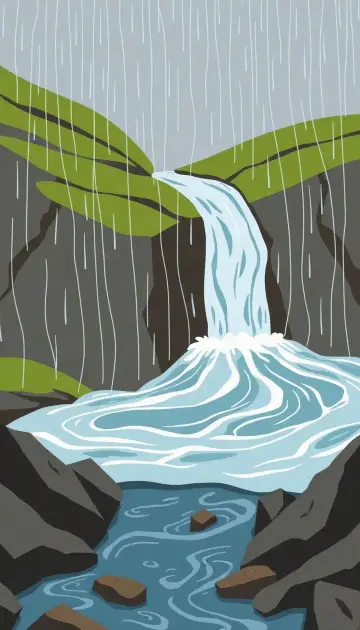
When rain falls hard, the amount of water pouring into the river jumps all at once, and the current gets much stronger.

That force churns up fine soil from the riverbed and banks and keeps it drifting in the water.

The particles are so tiny that they hardly sink, so they ride along with the current. Those brown soil particles scatter and absorb light, and that's why the water looks cloudy and brown.
Sources
- Sediments(CADDIS Volume 2)U.S. Environmental Protection Agency, 2026
- Factsheet on Water Quality Parameters: TurbidityU.S. Environmental Protection Agency, 2021
- 天候や季節による水源水質の変化ってどんなことがあるの?Japanese“How does source water quality change with the weather and seasons?”Chiba Prefectural Waterworks Bureau, 2026
- Q2:川に堆積した土砂と濁りの発生は関係あるのですか?Japanese“Q2: Is sediment deposited in rivers related to the occurrence of turbidity?”Kyushu Regional Development Bureau, Ministry of Land, Infrastructure, Transport and Tourism (Japan)
- 一ツ瀬川濁水軽減対策計画書(二次改訂) 第3章 濁水長期化の現状Japanese“Hitotsuse River Turbid Water Reduction Plan (Second Revision), Chapter 3: Current State of Prolonged Turbidity”Miyazaki Prefecture
- Chemical Turbidity Control in Pumped Construction Site WaterNorth Carolina State University Extension, 2025
Spotted a mistake in the article or the translation? Let us know.
Report an error (contact form in Japanese, opens in a new tab)