On this page
A closer look
The enzyme and its raw material normally live in separate rooms
The browning of cut surfaces is called "enzymatic browning." The main players are polyphenol oxidase (PPO), a copper-containing enzyme, and polyphenols, which are its raw material.
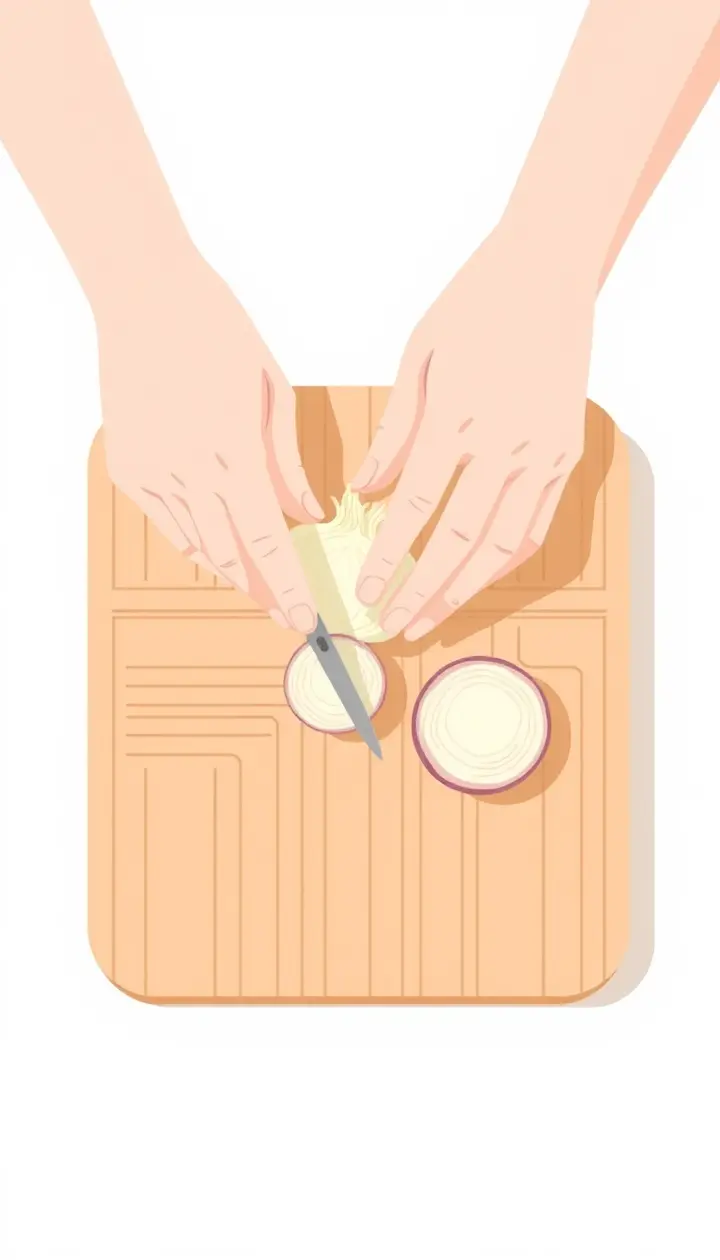
In a living cell, PPO is stored in "plastids" such as chloroplasts, while polyphenols are kept in a sac called the "vacuole"—each tucked away separately. When the cells are broken by slicing with a knife or grating, these partitions disappear, the two meet, and once oxygen from the air joins in, the reaction begins.
The video said that "enzymes start working the moment they're exposed to air," but more precisely, the trigger is the cells breaking so that the enzyme and its raw material meet, with oxygen acting as an essential partner in the reaction.
The brown color is "melanin"
PPO oxidizes polyphenols and turns them into substances called "quinones." Quinones are highly reactive, and even without help from the enzyme they keep linking up with one another to form a brown pigment (melanin) that doesn't dissolve easily in water.
Lettuce "makes the raw material after it's cut"
The cut surface of lettuce doesn't turn brown right away; it browns slowly over time. There's a reason for this.
Research at the University of California reported that when romaine lettuce leaves are cut, a "wounded" signal spreads, and in cells within about 2 cm of the cut, an enzyme that makes polyphenols (PAL) is newly produced and polyphenols build up. In another study of cut iceberg lettuce stored in the refrigerator, what was strongly linked to how easily it browned was the increase in PAL and similar enzymes, while PPO activity barely changed after cutting.
In other words, in lettuce a slow process is at work: it responds to being cut by making extra raw material, which then gets oxidized and turns brown.
Is it really a "defense response"?
PPO often increases when a plant is wounded or attacked by pests or pathogens, and it's thought to help protect the plant. For example, there are studies in which potatoes high in PPO were more resistant to pests, and tomatoes engineered to have more PPO became more resistant to pathogens. Proposed mechanisms include the resulting quinones being harmful to microbes and insects, or linking with proteins and other molecules to form a physical "wall."
However, even among researchers, exactly how it provides protection is still being debated. The video stated flatly that it's "a defense response meant to seal the wound and keep germs from getting in," but it's probably best to take that as "a leading theory."
Why does lemon juice work?
Lemon juice contains vitamin C (ascorbic acid) and citric acid.
- Vitamin C: Turns quinones that have already formed back into the original polyphenols. But once the vitamin C is used up, browning starts again. That's why it's said to "delay" browning rather than "stop" it.
- Citric acid: Makes the liquid acidic so PPO has a harder time working (PPO works best at around pH 5–7 and is suppressed below pH 3). It also captures the copper the enzyme needs.
Other methods have been studied too, such as briefly dipping produce in hot water. One report found that treating the thick ribs of iceberg lettuce leaves at 50°C (122°F) for 60 seconds effectively suppressed browning during refrigeration. However, it's also noted that this may soften the tissue.
You might also like
What the video says

If you cut lettuce or an apple and leave it for a while, the cut surface slowly turns brown, right?

That's because enzymes inside the vegetable start working the moment it's cut and exposed to air.

Compounds inside the damaged cells combine with oxygen and turn into pigments, which is why it looks brown.

Originally, this is the plant's defense response, meant to seal the wound and keep germs from getting in.

And lemon juice slows down the discoloration because it holds back this reaction.
Sources
- Polyphenol Oxidases in Crops: Biochemical, Physiological and Genetic AspectsTaranto F. et al., International Journal of Molecular Sciences, 2017
- Recent Trends in Controlling the Enzymatic Browning of Fruit and Vegetable ProductsMoon K.M. et al., Molecules, 2020
- Involvement of putative chemical wound signals in the induction of phenolic metabolism in wounded lettuceCampos-Vargas R. & Saltveit M.E., Physiologia Plantarum, 2002
- Effect of mild heat treatment on browning-related parameters in fresh-cut Iceberg lettuceVanden Abeele C. et al., Journal of Food Biochemistry, 2019
Spotted a mistake in the article or the translation? Let us know.
Report an error (contact form in Japanese, opens in a new tab)