On this page
A closer look
The teardrop is really a "faucet drip"
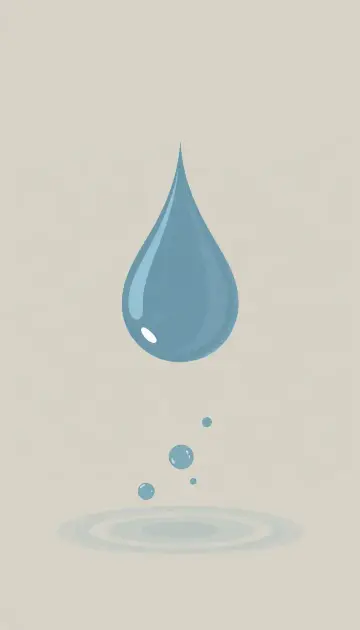
The raindrop icons on weather forecasts and in picture books are almost always drawn as teardrops: pointed at the top and bulging at the bottom.
Educational materials from NASA's Global Precipitation Measurement mission (GPM) call this shape a "common misconception." According to their explanation, what people are picturing is a tear rolling out of an eye, or the long, stretched-out drip falling from a leaky faucet, and weather illustrations reinforce that misconception.
The U.S. Geological Survey (USGS) also writes that "everyone thinks raindrops are teardrop-shaped, but they actually aren't." About the only time a real raindrop looks anything like a teardrop is when it hits a windowpane and streams down the glass, and by then it's no longer really a "raindrop."
Small drops are almost perfect spheres
According to the USGS, raindrops with a radius smaller than 1 millimeter are spherical. NASA's GPM also says that drops less than 1 millimeter in size keep a round shape thanks to surface tension.
Surface tension is the force that tries to make the surface of water as small as possible. For a given amount of water, the shape with the smallest surface is a sphere. In small drops, this force is stronger than the force of the air they fall through, so they stay nearly round all the way down. Fine rain like drizzle is made up mostly of these round drops.
At 2 to 3 millimeters, the bottom starts to flatten
According to NASA's GPM, once drops reach about 2 to 3 millimeters, they start to be affected by the air pushing on them as they fall.
The bigger a raindrop is, the faster it falls. And the faster it falls, the harder the air hits its underside. Because the pressure on the bottom is greater than on the top, the bottom gets squashed flat. NASA compares this shape to the top half of a hamburger bun: round on top, flat on the bottom.
If the squashing is even stronger, the center of the bottom can dent inward, giving the drop a shape like a fava bean or kidney bean. Whatever the size, the top stays round.
A certified weather forecaster at the Japan Weather Association also explains that falling raindrops are "manju-shaped" (like a Japanese steamed bun) and that they "don't come down in a teardrop shape."
Drops that get too big turn into parachutes and burst
When a drop grows even larger, surface tension can no longer hold its shape together.
According to NASA's GPM, drops larger than 4.5 millimeters distort into a parachute-like shape as they fall and eventually break apart into smaller drops. The USGS likewise explains that the dent in the bottom suddenly grows, the drop becomes a bag-like shape with a ring of water around its rim, and then it breaks into smaller drops.
Those smaller drops become round again thanks to surface tension. That's why there's an upper limit to the size of raindrops that reach the ground. No matter how heavy the rain, you'll never see golf-ball-sized blobs of water falling from the sky.
Note that sources describe drop sizes in slightly different ways. The USGS gives a radius of roughly 4 to 4.5 millimeters, while NASA's GPM says "4.5 millimeters" without specifying radius or diameter. The Japan Weather Association forecaster says drops become manju-shaped at around 5 millimeters in diameter, and fall as round drops at around 0.5 millimeters in diameter. Either way, the overall pattern is the same: small drops are round, larger drops get flattened, and drops that are too big break apart.
Knowing a raindrop's shape tells you how much rain is falling
The shape of raindrops is more than just a fun fact.
NASA's GPM is a satellite mission that observes rain from space. The satellite's radar can measure the size of raindrops from orbit. The script for a NASA video says that understanding how raindrops fall "means more than just correcting the teardrop myth."
Even with the same amount of rain, the nature of the rain differs depending on whether it's a few large drops or lots of small ones. Knowing the size and shape of raindrops also provides clues for estimating how much water is falling from the sky.
Related reading
What the video says
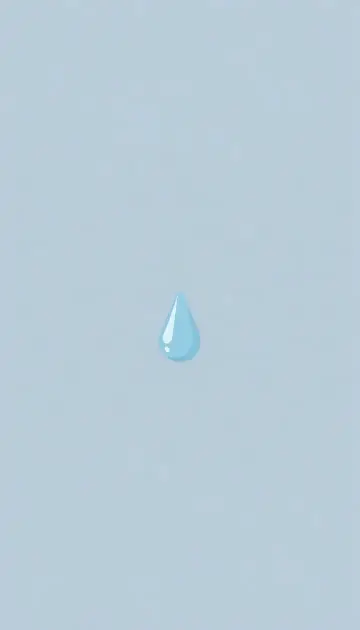
People tend to think raindrops look like teardrops, but large drops are actually shaped more like a steamed bun.
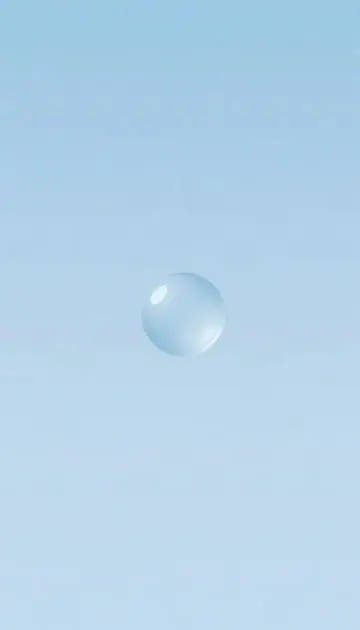
Small raindrops stay almost perfectly spherical, thanks to surface tension.
But as a drop gets bigger, it falls faster, and the air pressure pushing up from below gets stronger.

That air pressure squashes the bottom, turning the drop into a bun or hamburger-bun shape.
If it grows even larger, the bottom caves in and the drop splits apart. At no stage does it ever take on a teardrop shape with a tail.
Sources
- The Anatomy of a RaindropNASA Precipitation Measurement Missions (GPM)
- Are Raindrops Shaped Like Teardrops?U.S. Geological Survey, Water Science School, 2018
- Anatomy of a Raindrop(ナレーション原稿)Japanese“Anatomy of a Raindrop (Narration Script)”NASA Goddard Scientific Visualization Studio
- 映画「天気の子」醍醐虎汰朗&森七菜が日本気象協会にやってきた~気象予報士に色々聞いてみよう~Japanese“"Weathering With You" Stars Kotaro Daigo and Nana Mori Visit the Japan Weather Association: Asking a Weather Forecaster All Kinds of Questions”Japan Weather Association (tenki.jp), 2019
Spotted a mistake in the article or the translation? Let us know.
Report an error (contact form in Japanese, opens in a new tab)