On this page
A closer look
The smell comes from bacterial byproducts
The smell of indoor-dried laundry isn't the smell of detergent or tap water. It's a substance made by bacteria.
Research by Kao identifies a fatty acid called 4-methyl-3-hexenoic acid (4M3H) as a main component of the musty "damp laundry" smell. It also reports that bacteria of the genus Moraxella are heavily involved in producing this compound.
Moraxella bacteria are found widely around us, including on human skin and in the mouth. They're nothing unusual.
Bacteria grow on nutrients left in your laundry
This is where an explanation from the Japan Soap and Detergent Association comes in.
Laundry carries dirt and odors such as skin oils, sweat, food spills, mud, and cosmetics.
Skin oils and sweat. These become food for bacteria.
To thoroughly remove these various kinds of dirt in a single wash, it's important to combine four things in the right balance: (1) the washing machine (mechanical action), (2) water, (3) the laundry, and (4) detergent (surfactants).
When those four get out of balance, dirt is left behind. The leftover skin oils become food for bacteria.
However, when the machine is overloaded, there's also more dirt, so there aren't enough surfactant molecules. As a result, not enough micelles form in the water, and cleaning power drops.
Overloading the washer works in favor of creating the cause of the smell.
Slow drying gives bacteria more time to work
This is the heart of the indoor-drying problem.
It takes time for bacteria to multiply and produce odor compounds. The longer laundry stays wet and warm, the longer the bacteria can stay active.
- Drying outdoors (sunny, breezy): dries in 1–3 hours
- Drying indoors (no air movement, fairly humid): can take half a day or more
That difference determines how much smell you get.
So the number one fix is "dry it fast." The fact that laundry dries faster on windy days translates directly into odor prevention.
- Blow air on it with a fan or air circulator
- Use a dehumidifier
- Hang items with space between them
- Use a bathroom dryer (a ventilation-and-heating system common in Japanese bathrooms)
Simply raising the room temperature can sometimes backfire. Bacteria are more active when it's warm, so "warm and humid" is the worst possible condition.
Why rewashing doesn't get rid of it
Sometimes, even after you rewash clothes that picked up that indoor-drying smell, the smell comes back.
Kao's research has made a discovery that helps explain why. In a 2022 announcement, it reported finding clumps of bacteria (biofilms) stuck to towel fibers. Moraxella bacteria, which are commonly found on clothing with that damp-laundry smell, were reportedly detected at a high rate.
A biofilm is a state in which bacteria gather inside a film-like structure they produce themselves. It's the same kind of thing as dental plaque or the slime in a drain.
When bacteria are covered by this film, it's hard for detergent and water to reach them. So a normal wash doesn't fully remove them, and the remaining bacteria produce the smell again the next time the fabric gets wet.
A 2024 announcement reported that odor compounds remaining on towels after washing are linked to the amount of biofilm, with an especially strong correlation for fatty acids.
Fixing it means reducing the bacteria
Once a biofilm has formed, a regular wash isn't enough.
Methods generally considered effective include:
Use an oxygen bleach. Dissolve sodium percarbonate in hot water and soak. Bleach breaks down odor compounds and also acts on bacteria.
Raise the temperature. Above a certain temperature, bacteria can't multiply. But you need to stay within your clothes' heat tolerance.
Clean the washing machine drum. Biofilms form on the back side of the drum too. If bacteria are being supplied from there, treating only the clothes won't help.
Avoid leftover bathwater and long soaks. (In Japan, many people reuse leftover bathwater for laundry.) Any time spent sitting wet becomes time for bacteria to be active.
Prevention is the surer bet
It's easier to keep a biofilm from forming than to remove one that's already there.
- Get the skin oils fully out (don't overload the washer, use the right amount of detergent, use warm water if needed)
- Shorten the time laundry stays wet (don't leave it sitting in the washer, hang it right away)
- Dry it fast (air flow, dehumidifying, spacing)
These three steps each deny bacteria one of the things they need: "nutrients," "time," or "water." The idea isn't to add something, but to cut back on what the bacteria need.
By the way, some point out that drying laundry in the sun in hopes of UV sterilization has limited effect. The fast drying itself is thought to make the bigger difference.
Related reads
What the video says

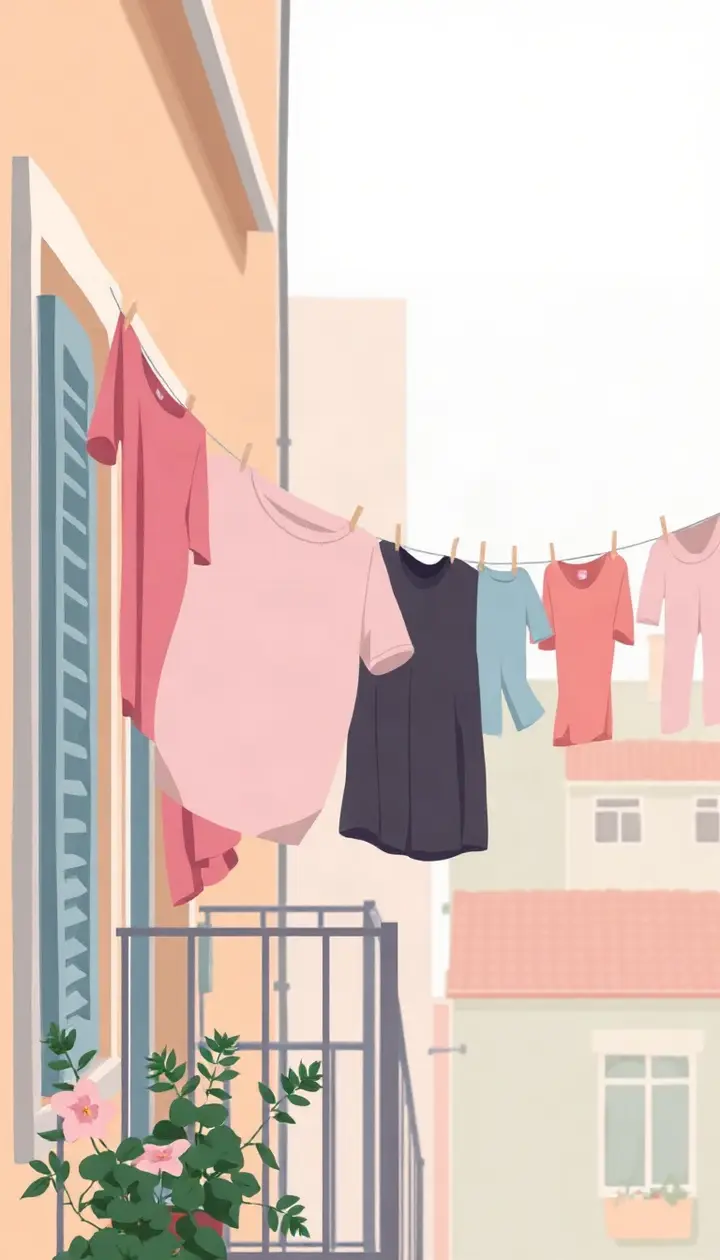
When you dry laundry indoors, that distinctive unpleasant smell tends to show up more than when you hang it outside on a sunny day, right?

It turns out this happens because bacteria left in the fibers feed on the moisture and keep multiplying.

Outdoors, thanks to UV rays and wind, the water evaporates quickly, so the laundry dries before the bacteria can multiply.
But indoors, the wind and UV rays are weak, so the laundry stays damp longer, and the bacteria keep multiplying.
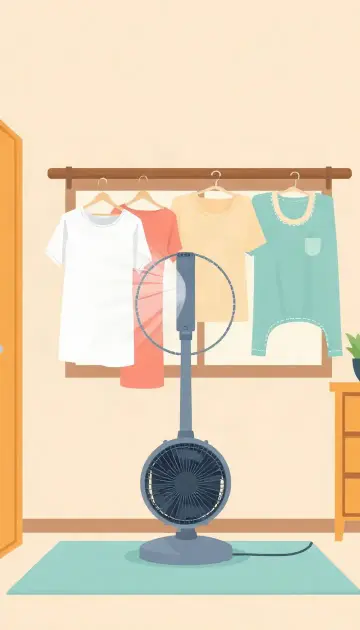
So the trick to drying indoors is to dry things as fast as you can. Just getting some air moving with a fan or a vent fan can cut down the smell a lot.
Sources
- タオル繊維に付着する菌のかたまり(バイオフィルム)を発見Japanese“Discovery of bacterial clumps (biofilms) attached to towel fibers”Kao Corporation
- 洗っても落ちないタオルの嫌なニオイはバイオフィルムとともに局在Japanese“Unpleasant towel odors that won't wash out are localized together with biofilms”Kao Corporation
- 小ワザ裏ワザ(洗たくの基本)Japanese“Handy tips and tricks (laundry basics)”Japan Soap and Detergent Association
Spotted a mistake in the article or the translation? Let us know.
Report an error (contact form in Japanese, opens in a new tab)