On this page
A closer look
The brakes weaken while the gas pedal gets pressed
The Ministry of Health, Labour and Welfare's e-health net explains this phenomenon in a single sentence.
To give one example, it is known that even in healthy people, compared with days when they slept enough, just a few days of sleep deprivation reduces the secretion of leptin, a hormone that suppresses appetite, and conversely increases the secretion of ghrelin, a hormone that stimulates appetite, resulting in increased appetite.
Two hormones move in opposite directions at the same time.
| Hormone | Role | When sleep-deprived |
|---|---|---|
| Leptin | Suppresses appetite | Decreases |
| Ghrelin | Stimulates appetite | Increases |
The brakes loosen and the gas pedal gets pushed down. Because both happen at once rather than just one or the other, appetite reliably goes up.
Pay attention to the conditions: "even in healthy people" and "just a few days." This isn't about people who were already in poor health, or about something that went on for weeks. It's a change that's already underway after an all-nighter, or by the second half of a week when you've been short on sleep for two or three days.
It's not just hormones; the autonomic nervous system shifts too
e-health net notes that the effects reach even further.
Chronic sleep deprivation not only causes declines in mental function such as sleepiness, reduced motivation, and poorer memory, but also has a major impact on hormone secretion and autonomic nervous function.
And following the point about appetite, it also touches on how the body handles sugar.
It has also been shown that the action of insulin secreted by the pancreas becomes less effective (insulin resistance), so blood sugar rises higher even when eating the same meal.
This is where the combination of sleep loss and sweets gets a little tricky. You crave sweets, and on top of that, eating the same amount raises your blood sugar more easily. Increased appetite and poorer sugar handling happen at the same time.
Blood pressure is mentioned as well.
Furthermore, during sleep deprivation, cardiovascular function also changes, such as blood pressure staying high when it would normally drop at night.
There are reasons besides hormones that you "want sugar"
The video also explains that the brain senses an energy shortage and seeks sugar. e-health net doesn't include a specific statement on this part.
What can be said for certain is that two hormones, leptin and ghrelin, push appetite up. Official explanations don't go so far as to state why it's "sweets in particular."
Still, the tendency can be explained. Ghrelin boosts appetite in general, but when you're sleep-deprived, your ability to make judgments and rein in impulses also drops. You're more likely to reach for something close at hand that works fast, in other words, sweets and carbs. This can be read not as "sugar being specially called for," but as the result of a combination: "appetite increases across the board, and your self-control doesn't kick in."
Either way, this isn't about weak willpower. Part of the reason e-health net goes out of its way to say "even in healthy people" is to emphasize exactly that.
Short-term sleep loss and chronic sleep loss are different stories
There's one more distinction worth knowing. e-health net lists the risks when sleep loss becomes chronic.
It is known that short sleep (sleep deprivation) due to long working hours or a night-owl lifestyle, irregular sleep rhythms due to shift work, and sleep disorders such as insomnia and obstructive sleep apnea increase the risk of developing lifestyle-related diseases and also worsen their symptoms.
It also gives the example of sleep apnea.
For example, in patients with sleep apnea, frequent pauses in breathing at night advance the precursor states of lifestyle-related diseases, such as "hypoxemia and sympathetic nervous tension (vasoconstriction)," "oxidative stress and inflammation," and "metabolic abnormalities (leptin resistance and insulin resistance)"
The term "leptin resistance" shows up here. This is a state in which leptin is being released but doesn't work as well. When sleep loss goes on for a long time, it moves beyond the stage of leptin decreasing, toward a point where even the leptin that remains stops working well.
So sleep first, before trying to resist sweets
e-health net's conclusion is stated plainly.
In daily life, sleep time tends to be the thing that gets sacrificed. However, as introduced here, continuing sleep deprivation over the long term or leaving sleep disorders untreated seriously harms our health. Sleep problems quietly but steadily erode physical and mental health.
Resisting sweets the day after a short night only deals with the result, not the cause. There's only one way to restore your hormone balance: sleep.
The fact that it tips after just a few days also means, conversely, that there's a good chance it will recover after a few days of decent sleep.
Don't ignore problems with your sleep habits or sleep disorders. If you have doubts about your sleep, try consulting your regular doctor or a sleep specialist.
Related reading
What the video says
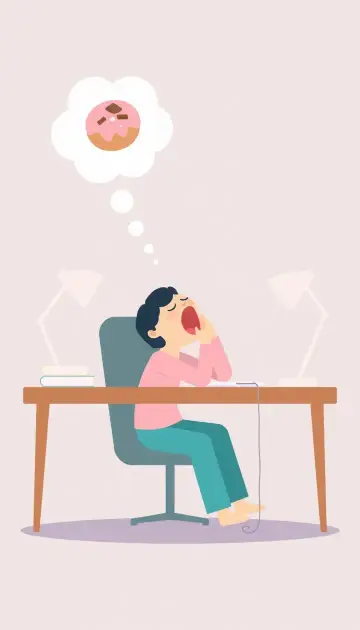
Ever wake up after a short night and find yourself desperately craving something sweet?
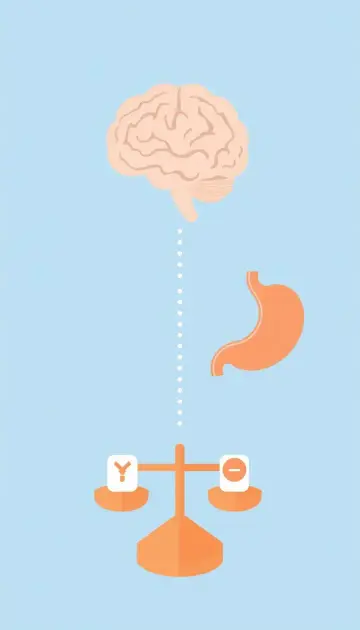
It turns out that when you don't get enough sleep, leptin, a hormone that suppresses appetite, goes down, while ghrelin, which boosts appetite, goes up.
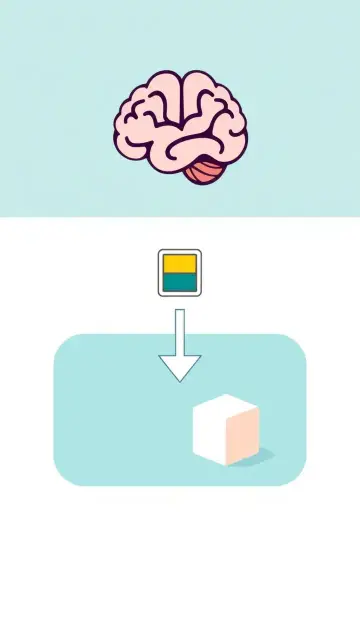
On top of that, when your brain senses it's low on energy, it sends signals asking for a quick hit of sugar.
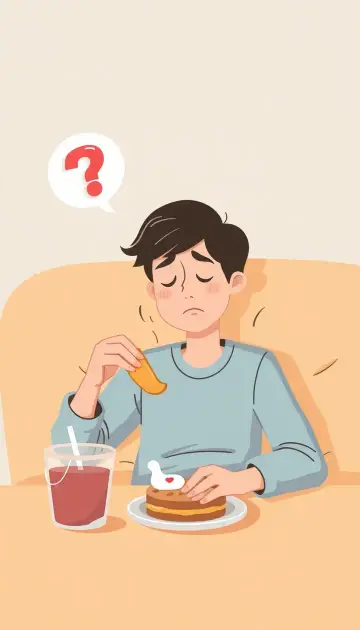
That's why the less you've slept, the easier it is to give in to the temptation of sweets.
Next time you're worn out, it might be a good idea to put sleep first instead of reaching for something sweet.
Sources
- 睡眠と生活習慣病との深い関係(e-ヘルスネット)Japanese“The Close Relationship Between Sleep and Lifestyle-Related Diseases (e-health net)”Ministry of Health, Labour and Welfare (Japan)
Spotted a mistake in the article or the translation? Let us know.
Report an error (contact form in Japanese, opens in a new tab)