On this page
A closer look
The clock lives in the brain's "suprachiasmatic nucleus"
The body clock itself is a small cluster of nerve cells deep in the brain called the suprachiasmatic nucleus. It gets its name because it sits just above the spot where the optic nerves from the left and right eyes cross (the optic chiasm).
Inside the cells of the suprachiasmatic nucleus, "clock genes" are at work, making nerve activity rise and fall on a cycle of about 24 hours. Its signals give many of the body's functions a roughly daily rhythm, not just sleepiness but also body temperature, blood pressure, heart rate, hormone release, and more. This rhythm is called the circadian rhythm.
According to e-Health Net (a health information site run by Japan's Ministry of Health, Labour and Welfare), even when people live somewhere like a cave with no clues about the time of day, their sleep still shows up regularly on a cycle of about 24 hours. In other words, we don't get sleepy just because of alarm clocks or school schedules.
A day is a bit longer than 24 hours, so morning light sets the clock
The video described it as "a cycle of roughly 24 hours." That's true, but to be more precise, most people's body clocks don't run exactly 24 hours. They run a little long.
When an American research group (Czeisler et al., 1999) measured the body clocks of healthy people in a lab with carefully controlled lighting, the average cycle was 24.18 hours (about 24 hours and 11 minutes). e-Health Net also puts the average at around 24 hours and 10 minutes, for both white and Japanese people. People used to often say that "the human body clock runs about 25 hours," but this study points out that this longer figure came from the effects of light that participants were exposed to during experiments.
If this gap were left alone, your bedtime and wake-up time would drift a little later every day. That's where light helps. When light enters your eyes, the signal travels from the retina through the optic nerve to the suprachiasmatic nucleus, and the clock gets adjusted.
What matters is when you get that light. Using the example of someone who goes to bed around midnight and gets up around 7 a.m., e-Health Net explains that light from dawn to around noon shifts the body clock toward going to bed and waking up earlier, while light from evening into late night shifts it toward staying up later. So the video's "morning light resets the clock" is more precisely the idea that "morning light nudges a clock that tends to run late a bit earlier, lining it up with 24 hours."
The Ministry of Health, Labour and Welfare's "Sleep Guide for Health Promotion 2023" also recommends letting in morning sunlight when you wake up and getting as much light as you can during the day. Getting light of 1,000 lux or more during the day is said to increase melatonin at night and help you fall asleep more easily.
Melatonin is the signal that "night has arrived"
Melatonin is a hormone released by the brain's pineal gland, and it helps promote sleep. Its level in the blood is low during the day and high at night.
The video said that "when it gets dark, that same hormone rises again and sleepiness comes on naturally," but there's a small addition to make. What decides when melatonin is released isn't darkness itself but the body clock. According to e-Health Net, rhythm signals from the suprachiasmatic nucleus are sent to the pineal gland and regulate melatonin release.
Light, on the other hand, has the power to suppress melatonin. Strong daytime sunlight sharply lowers melatonin release, and even at night, bright lighting entering your eyes reduces it. So the relationship looks like this:
- When it's released: decided by the body clock (it starts about 1 to 2 hours before your usual bedtime)
- Whether it can be released: depends on brightness (bright light suppresses it)
The sleep guide also warns that exposure to strong light from smartphones or room lighting after melatonin has started to rise can delay your sleep rhythm and make it harder to fall asleep.
The other system behind sleepiness: "sleep need"
The video wrapped up with "That's why you get sleepy at the same time every day," but sleepiness isn't decided by the body clock alone. Researchers think sleepiness is determined by a combination of two systems (the "two-process model" proposed by Borbély and colleagues in Switzerland in 1982).
The first is sleep need (sleep pressure). It grows stronger the longer you stay awake and drops quickly once you sleep. That's why even people who usually have trouble falling asleep can nod off right away after pulling an all-nighter. Adenosine is known as one of the substances behind sleep need. In experiments with cats (Porkka-Heiskanen et al., 1997), adenosine in the brain was confirmed to increase during waking hours, increase even more with prolonged wakefulness, and gradually decrease during sleep.
The second is the alerting force (the force that keeps you awake) coming from the body clock. According to e-Health Net, this alerting force strengthens throughout the day, overpowering the building sleep need and keeping us awake. It peaks a few hours before your usual bedtime, then drops off suddenly around the time melatonin starts to be released. That's why you can feel wide awake after dinner and then suddenly get sleepy as bedtime approaches.
The question from the start, "Why do I sometimes wake up before my alarm?", also becomes easier to understand with these two systems. Toward dawn, on orders from the body clock, adrenocortical hormones that promote waking start to be released, brain temperature rises, and your body gets ready to wake up. When that overlaps with reduced sleep need after a good night's sleep, it's thought that you can wake up naturally before your alarm goes off.
The discovery of clock genes and the 2017 Nobel Prize
The 2017 Nobel Prize in Physiology or Medicine went to work revealing how the body clock runs inside cells. The winners were three Americans: Jeffrey Hall, Michael Rosbash, and Michael Young.
According to the official Nobel announcement, the three used fruit flies to isolate one of the clock genes, "period," in 1984. The protein made from this gene (PER) builds up in cells during the night and is broken down during the day. The accumulated PER suppresses the activity of the very gene that makes it, and when it decreases, it gets made again. This repeating loop turned out to be the "gears of the clock" that produce the roughly 24-hour rhythm. This clock mechanism is known to work on the same principle in the cells of many other living things, including humans.
The same announcement also notes that when the body clock gets out of sync with the outside time, as with jet lag, it affects how you feel, and that a long-lasting mismatch between your lifestyle and your body clock appears to be linked to the risk of various diseases.
If you keep having trouble falling asleep, wake up many times during the night, or find daytime sleepiness getting in the way of daily life, don't try to handle it all on your own; talk to a medical professional. There are sleep disorders caused by disruptions to the body clock, and e-Health Net recommends consulting a sleep specialist, since treating them requires specialized knowledge.
You might also like
What the video says
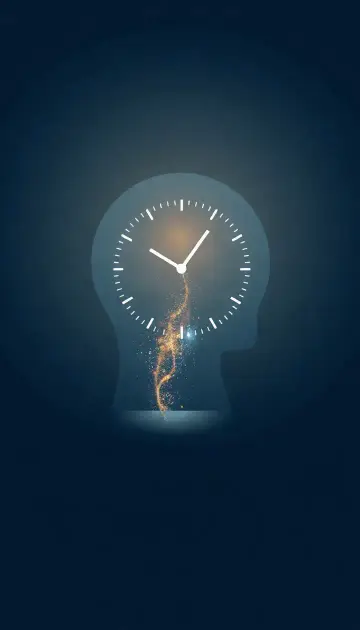
Our brains come with a tiny clock that keeps track of time.
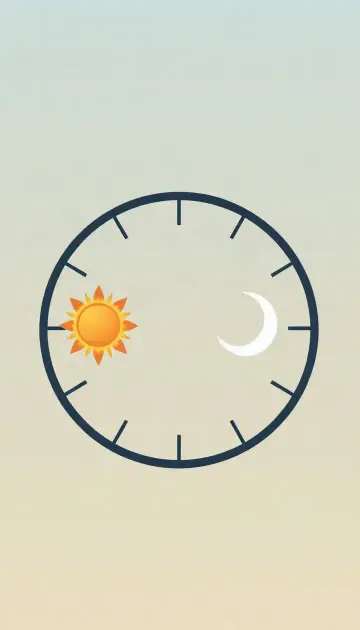
This is your body clock, and it controls sleepiness and hormone release on a cycle of roughly 24 hours.
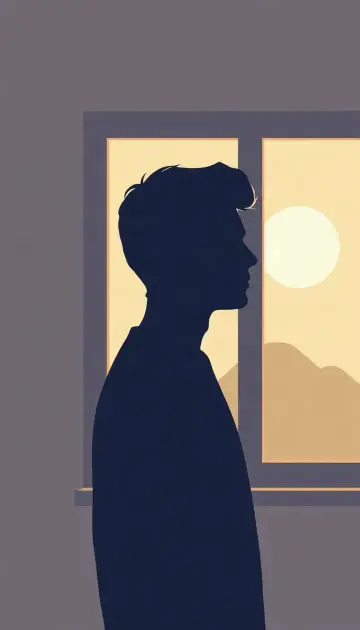
In the morning, when light enters your eyes, that signal travels to your brain and resets your body clock.
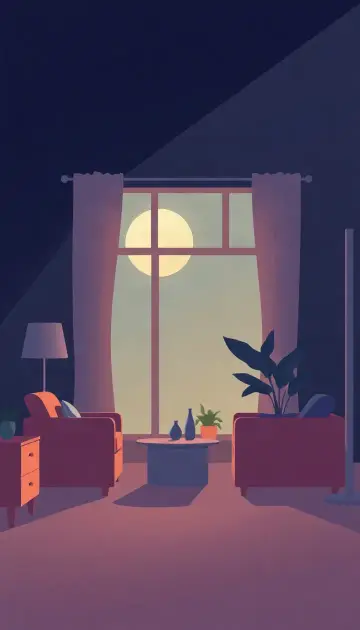
That shuts off the hormone that makes you sleepy, and your body switches into active mode.

Then, when night falls and it gets dark, that same hormone rises again and sleepiness comes on naturally. That's why you get sleepy at the same time every day.
Sources
- 健康づくりのための睡眠ガイド 2023Japanese“Sleep Guide for Health Promotion 2023”Ministry of Health, Labour and Welfare (Japan) (Study Group on the Revision of the Sleep Guidelines for Health Promotion, 2024)
- 眠りのメカニズムJapanese“The Mechanism of Sleep”e-Health Net, Ministry of Health, Labour and Welfare (Japan) (Kazuo Mishima)
- 概日リズム睡眠・覚醒障害Japanese“Circadian Rhythm Sleep-Wake Disorders”e-Health Net, Ministry of Health, Labour and Welfare (Japan) (Kazuo Mishima)
- メラトニンJapanese“Melatonin”e-Health Net, Ministry of Health, Labour and Welfare (Japan)
- Stability, precision, and near-24-hour period of the human circadian pacemakerCzeisler C.A. et al., Science, 1999
- Adenosine: a mediator of the sleep-inducing effects of prolonged wakefulnessPorkka-Heiskanen T. et al., Science, 1997
- The two-process model of sleep regulation: a reappraisalBorbély A.A. et al., Journal of Sleep Research, 2016
- The Nobel Prize in Physiology or Medicine 2017 - Press releaseThe Nobel Assembly at Karolinska Institutet (NobelPrize.org)
Spotted a mistake in the article or the translation? Let us know.
Report an error (contact form in Japanese, opens in a new tab)