On this page
A closer look
A square cover can fall into the hole
Asahikawa City's explainer sums up the reason in a single sentence.
That's because with a square shape, the cover could fall inside if it slipped out of place.
Why would it fall? It comes down to geometry.
Imagine a square hole and a square cover of the same size. If you tilt the cover diagonally, it can slip right through, because the hole's diagonal is longer than the cover's side.
For a square with 1 m sides, the diagonal is about 1.41 m. Tilt the cover 45 degrees, and its 1 m width passes through the 1 m hole.
This can't happen with a circle. A circle's width is the same as its diameter no matter which direction you measure it from. You can't draw a line inside a circle that's longer than its diameter. So a round cover can't pass through a round hole of the same size, however you tilt or turn it.
The circle's property of "having the same width in every direction" is what keeps the cover from falling in.
50 kg of iron coming down
The explainer spells out the safety stakes in concrete terms.
A manhole cover weighs about 50 kg. If a cover fell in while someone was working inside the manhole, they could be seriously injured. That's why covers are round, so they won't fall in even if they slip.
50 kg. Picture an iron plate weighing close to as much as an adult dropping onto the head of someone working several meters below. Imagine that, and you can see the choice of shape is a serious matter.
People go down into manholes to work. While the cover is off, a passing car or someone bumping into it could shift it. A shape that won't fall in at that moment is directly tied to the workers' lives.
The National Diet Library's Collaborative Reference Database also notes that a children's book states, in effect, that covers are made round so they won't be knocked in during construction work or when vehicles pass over them.
Other advantages of being round
Preventing falls is the main reason, but being circular comes with some side benefits too.
No need to line it up. A square cover only fits if you match it to the orientation of the hole. A round one fits at any angle. That saves work.
No corners to chip. When an iron plate has corners, force concentrates there and they chip easily. It's the same stress-concentration issue behind why airplane windows are round. A circle has no corners, so force doesn't pile up at one point.
It rolls. If you have to move a 50 kg iron plate by hand, rolling it is easier than lifting it.
It handles pressure well. A circle is the strongest shape against force pressing evenly from outside. For the same reason arches and domes use curves, it's less likely to bend when a car drives over it.
It's set by standards
In Japan, manhole covers are specified by the Japanese Industrial Standards (JIS A 5506, Manhole Covers for Sewerage). The dimensions of the manhole itself are set by the Japan Sewage Works Association's standards.
Because the dimensions are standardized, covers of the same size can be used anywhere in the country. Each municipality may have its own design, but the fitting dimensions are the same. Those local-themed decorative manhole covers Japan is known for are possible precisely because the standards are shared.
Square covers exist too
By the way, square manhole covers do exist. You'll find them on underground facilities for electricity and telecommunications, on inspection openings for drainage channels running across roads, and so on.
In these cases, either no one goes underneath the cover, or the cover sits on a stepped rim (a frame) that keeps it from falling in even when tilted. If there's no risk of it falling, a square cover is fine.
Put the other way, round covers are round because of one condition: "this is a hole people go into." When you remember that the word manhole literally means a "hole" for a "man," the reason for the shape makes sense.
The circle isn't the only shape with constant width
Here's a bonus fact. In math there's a category called "shapes of constant width": shapes that measure the same width from any direction. There are more of them than just the circle. The best-known example is the Reuleaux triangle.
In theory, a Reuleaux triangle cover wouldn't fall into its hole either. In fact, manhole covers in this shape have been used in some countries.
Still, a circle is easier to make, fits without worrying about orientation, and has no corners. In practice, the circle is the best answer.
Related reading
What the video says

Manhole covers are everywhere you walk in town. And almost all of them are round.

If a cover were square, turning it diagonally would make it narrower than the hole, and it would fall right through.
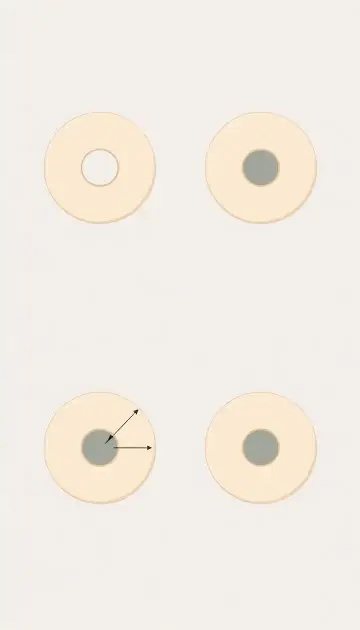
But a round cover is the same width no matter how you turn it, so it can never fall into the hole.
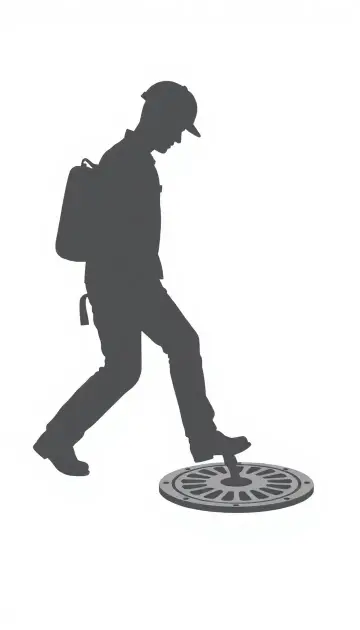
Plus, a round cover can be lifted and rolled along, which makes the job easier for the workers.

Even a shape we see every day is packed with clever ideas: it won't fall in, and it's easy to move.
Sources
- 水のはなし(下水道編その10) マンホールの蓋はなぜ丸い?Japanese“Water Talk (Sewerage, Part 10): Why Are Manhole Covers Round?”Asahikawa City
- マンホールのふたが丸い理由がわかる本はあるか。Japanese“Is there a book that explains why manhole covers are round?”Collaborative Reference Database (National Diet Library)
Spotted a mistake in the article or the translation? Let us know.
Report an error (contact form in Japanese, opens in a new tab)