On this page
A closer look
Air is the worst heat conductor of all
Line up the thermal conductivity values (W/m·K) listed in material from Osaka Kyoiku University, and you can see just how unusual air is.
| Substance | Thermal conductivity |
|---|---|
| Copper | 403 |
| Aluminum | 236 |
| Iron | 83.5 |
| Water (10°C) | 0.582 |
| Dry wood | 0.15–0.25 |
| Dry air (0°C) | 0.0241 |
The same material also describes a general trend by state of matter:
Thermal conductivity increases in the order of gases, liquids, and solids.
Gases are the lowest. And the gas all around us is air.
In other words, if you want to insulate something, air is your best bet.
Wool's crimp is built to trap air
Wool fibers have a natural waviness called crimp. Instead of being straight, they zigzag.
Because of this crimp, the fibers can't pack tightly against each other. Countless tiny gaps form between them, and air fills those gaps.
On top of that, the surface of wool is covered in scale-like structures that make the fibers tangle together easily. So spun wool yarn ends up fluffy and bulky, holding plenty of air.
Most of a sweater's weight is fiber, but most of its volume is air. And it's the air that's doing the job of keeping you warm.
What matters is "still air"
There's a catch: the trapped air has to stay put.
If air can move freely, warmed air rises and cold air flows in. That's convection. When convection happens, heat gets carried away on the moving air, and you lose the insulation.
That's why insulating materials have to do more than just "contain lots of air." They also have to "break the air into small pockets so it can't move."
- Wool: spreads air out and traps it in the gaps between crimped fibers
- Down: fine branching filaments divide air into tiny compartments
- Styrofoam: traps air in separate, closed bubbles
- Glass wool: holds air in a tangle of fine fibers
They all use the same strategy. What these materials really are is "air holders."
That's why it stops being warm when it gets wet
When a sweater gets wet, you suddenly feel cold. The numbers explain why.
Air's thermal conductivity is 0.0241. Water's is 0.582. That's 24 times higher.
When the air in the gaps between fibers is replaced by water, those spaces become filled with something that conducts heat 24 times better. What used to be insulation turns into a pathway for heat.
On top of that, when water evaporates, it pulls heat from your body as heat of vaporization. Wet clothing is dangerous because of this double whammy.
When hikers and climbers say "getting wet can kill you," it's because you don't just lose insulation, you actively lose heat.
Wool's strength: it resists getting soaked
That said, wool behaves differently from cotton.
The surface of wool fibers repels water, and moisture gets absorbed into the inside of the fiber. So even if the surface gets wet, the layer of air between the fibers tends to stick around relatively well. With cotton, water gets right into the gaps between fibers, so the air layer disappears all at once.
That structural difference is why people say "wool stays warm even when wet." Wool definitely loses insulating power when it gets wet, but it drops off more gradually than cotton does.
Wool also has a property of releasing heat as it absorbs moisture (known as heat of absorption). When the fibers take in water vapor, they give off a small amount of heat.
It's not "what you wear" but "how you hold air"
Here's the practical takeaway.
Layering thin clothes is warmer than wearing one thick piece. That's because layers of air form between each piece of clothing, too.
Slightly loose clothes are warmer than tight-fitting ones, because they keep air between your body and the fabric. But if they're too loose, that air starts moving around through convection.
Scarves and gloves also do less of "keeping you warm" and more of "shielding your air layer from the wind." When the wind blows, it strips away the layer of air at the surface, and the insulation is gone.
Why metal feels cold while wood feels warm and how a thermos keeps things hot both come down to the same thermal conductivity table. More often than not, the real secret behind warmth is air.
Further reading
What the video says
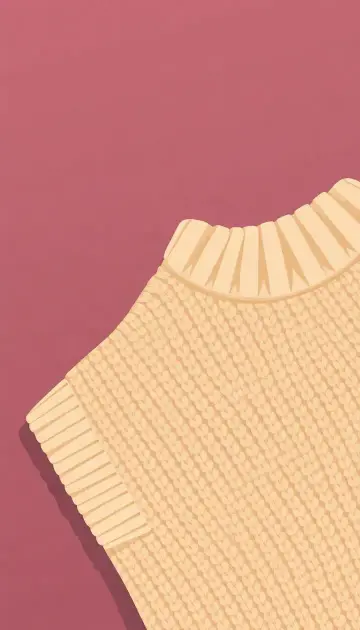
Lots of people reach for a wool sweater when winter rolls around. And even compared with clothes of the same thickness, wool feels much warmer than other materials.

It turns out wool fibers aren't straight. They're curly and crimped. That crimp traps lots of air between the fibers.
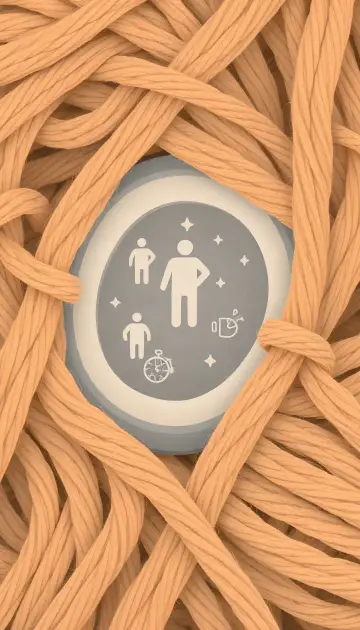
Air doesn't conduct heat well, so the layer of air trapped between the fibers acts like an invisible blanket, keeping your body heat from escaping.
So wool is warm not because sheep's wool is hot in itself, but because its crimped fibers are built to hold lots of air.
Sources
- 熱伝導率(熱の伝わる速さ)Japanese“Thermal Conductivity (How Fast Heat Travels)”Osaka Kyoiku University
Spotted a mistake in the article or the translation? Let us know.
Report an error (contact form in Japanese, opens in a new tab)