On this page
- A closer look
- In the Northern Hemisphere, the sun crosses the southern sky
- Shadows stretch away from the sun
- In the Southern Hemisphere, it's reversed
- Mechanical clocks inherited the sundial's reading
- The word "clockwise" itself came later
- Counterclockwise clocks do exist
- All three hands turn the same way
- The sun's motion has another mismatch
- You might also like
- What the video says
- Sources
A closer look
In the Northern Hemisphere, the sun crosses the southern sky
The starting point is the sun's apparent motion.
Seen from Japan, in the Northern Hemisphere, the sun rises in the east, passes through the southern sky, and sets in the west. It reaches its highest point of the day at meridian transit (culmination), when it sits due south.
The FAQ of the National Astronomical Observatory of Japan includes an entry on the time of meridian transit. Meridian transit is the moment the sun crosses due south.
This "passing through the south" is what determines which way shadows turn.
Shadows stretch away from the sun
Stand a stick in the ground, and its shadow points in the direction opposite the sun.
| Time | Sun's position | Shadow direction |
|---|---|---|
| Morning | East | West |
| Noon | South | North |
| Evening | West | East |
The shadow moves in the order west → north → east.
Looking down from above with the stick at the center, that order is a turn to the right (clockwise): from west to north, then north to east.
This became the way a sundial's face is read.
In the Southern Hemisphere, it's reversed
In the Southern Hemisphere, the sun rises in the east, passes through the northern sky, and sets in the west.
| Time | Sun's position | Shadow direction |
|---|---|---|
| Morning | East | West |
| Noon | North | South |
| Evening | West | East |
The shadow goes west → south → east. Seen from above, that's counterclockwise.
So if you build a sundial in Australia or Argentina, its markings run counterclockwise.
Clocks turn clockwise not because of a law of physics, but because of the latitude where they were invented.
Mechanical clocks inherited the sundial's reading
Mechanical clocks are said to have first been built in Europe around the 13th to 14th centuries. That's the Northern Hemisphere.
So how did people decide which way the hands should move? The natural choice was to match the way sundials, already in use for thousands of years, were read. That way, people used to sundials wouldn't be confused by the new device.
If clocks had been invented in the Southern Hemisphere back then, counterclockwise would have become the standard. And the word "clockwise" would refer to the opposite direction from what it means today.
The word "clockwise" itself came later
What's interesting is the order in which things happened.
First came the direction of the sundial's shadow, then mechanical clocks copied it, and only after that did "clockwise" catch on as a general term for a direction of rotation.
Today, "clockwise" and "counterclockwise" are used everywhere: which way to turn a screw, the order of slices in a pie chart, the direction runners go around a track (which, by the way, is counterclockwise).
Trace it back, and it all comes from the movement of a stick's shadow in the Northern Hemisphere.
Counterclockwise clocks do exist
There are exceptions.
In the Southern Hemisphere, counterclockwise clocks are sometimes made for tourists. They show off the local character, "the same direction as a Southern Hemisphere sundial."
A few old churches in Europe also still have clocks with counterclockwise faces. This suggests that in the early days of mechanical clocks, the direction hadn't yet been standardized.
There are also cases where reversed clocks are used on purpose, like barber poles.
All three hands turn the same way
While we're at it, here's one thing about how clocks are built.
The second hand, minute hand, and hour hand all turn in the same direction. A combination of gears slows the rotation down to 1/60, and then further to 1/12.
In terms of the sun's movement, the hour hand going around twice a day is the result of splitting the day into two halves of 12 hours each. A sundial can only measure time while the sun is out, so its face covered 12 hours. Mechanical clocks keep running through the night, so they ended up going around the same face twice.
The 24-hour clock faces still used in some places are partly an attempt to fix this awkward "twice around" setup.
The sun's motion has another mismatch
There's a way in which sundials don't line up with modern clocks.
The National Astronomical Observatory of Japan's FAQ has an entry explaining that the time of meridian transit changes from day to day. The time the sun crosses due south isn't constant throughout the year. That's because Earth's orbit is an ellipse and its axis is tilted.
As a result, a sundial's reading and clock time drift apart over the course of the year. This difference is called the "equation of time," and it can reach as much as ten-plus minutes.
Mechanical clocks average out this uneven solar motion and are built to advance at a constant rate. They kept only the original rule, the direction of the shadow, while their pace became independent of the sun. The history of clocks is also a history of breaking away from the sun.
You might also like
What the video says
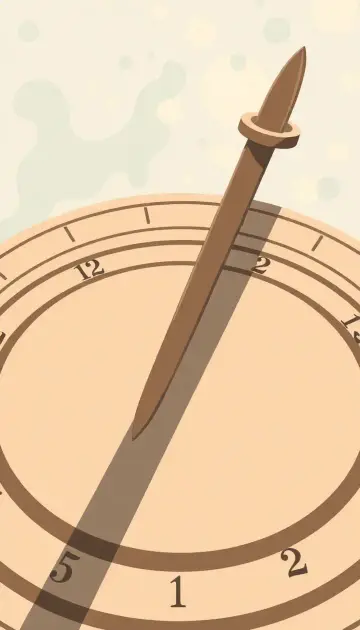
We take the way clock hands move for granted. But this direction of rotation was actually copied straight from the movement of a certain ancient tool.
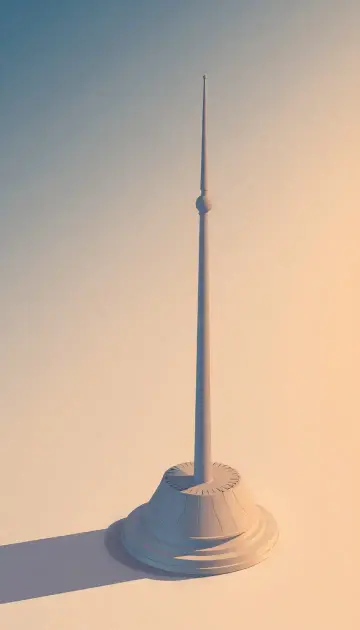
Watch a sundial in the Northern Hemisphere and you'll see the sun's shadow stretch toward the west in the morning, then swing toward the east from midday into evening, moving around from left to right.

The first mechanical clocks made their hands follow the movement of the sundial's shadow. That's why today's clocks still turn the same way: clockwise.

If civilization had developed in the Southern Hemisphere, shadows would move the other way, so clock hands might have turned counterclockwise instead.
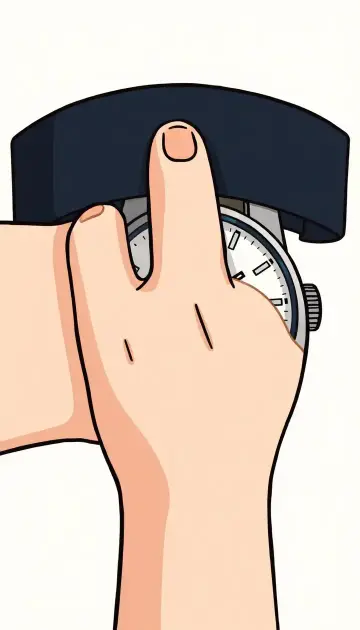
So even the direction of the hands we glance at every day has a reason behind it, born from the sun and its shadows.
Sources
- 質問1-7)太陽の南中時刻は日によって変わるの?(よくある質問)Japanese“Question 1-7) Does the time of the sun's meridian transit change from day to day? (FAQ)”National Astronomical Observatory of Japan
- 暦Wiki/日の出入りと南中/南中時刻は変化するJapanese“Koyomi Wiki / Sunrise, Sunset and Meridian Transit / The Time of Meridian Transit Changes”Ephemeris Computation Office, National Astronomical Observatory of Japan
Spotted a mistake in the article or the translation? Let us know.
Report an error (contact form in Japanese, opens in a new tab)