On this page
A closer look
Which animals have it, and which don't
The tapetum is often thought of as something only nocturnal animals have, but when you look at which species actually have one, the picture is a bit more complicated.
According to a 2004 review in comparative morphology, the animals that lack a tapetum include primates, squirrels, birds, red kangaroos, and pigs. All of them are mainly active during the day. Humans fall into this group too.
Among the animals that do have one, the tapetum comes in four types depending on its structure:
- Retinal tapetum: teleost fish, crocodilians, marsupials, fruit bats
- Choroidal guanine tapetum: elasmobranchs (sharks and rays)
- Choroidal tapetum cellulosum (cellular): carnivores, rodents, cetaceans
- Choroidal tapetum fibrosum (fibrous): cattle, sheep, goats, horses
Cats and dogs have the third, "cellular" type. The surprise is the fourth type: cows and horses have a tapetum too. It's not just predators that need to see in dim light; prey animals do as well.
Why the glow color varies from animal to animal
When it comes to what the reflective material actually is, descriptions vary depending on the source.
An explainer by a veterinary ophthalmologist at the University of Tennessee says the reflective substance in a cat's tapetum is riboflavin (vitamin B2), which amplifies the wavelengths of light cats see best. In dogs and ferrets, on the other hand, zinc has been reported, and older research describes the carnivore tapetum as made of crystals of a zinc-cysteine complex.
According to the same explainer, the glow ranges from yellow-green to yellow-orange, and it varies from individual to individual, much like iris color. That's why the eyeshine you see on a dark street isn't always the same color.
The price of seeing well
The tapetum has a downside that rarely gets mentioned.
In exchange for letting the eye use light twice, the reflected light gets scattered. As a result, the image the animal sees is slightly blurred. The explainer mentioned above says that in bright light, a cat would need to get about seven times closer to see something as sharply as a person does.
You can't have both the sensitivity to see in dim light and the resolution to see crisply. The tapetum is the result of a trade-off that favors sensitivity.
Human eyes don't glow, but they do turn red
So what about humans? Since we don't have a tapetum, our eyes don't glow green or yellow when hit by a camera flash in the dark. What happens instead is red-eye.
Without a reflective layer, the light hits the retina itself, which is full of blood vessels, and bounces back. That's why the color is blood red. A cat's eyes glowing green and a person's eyes showing up red in photos are both "reflections from the back of the eye"; the difference comes down to whether there's a reflective layer or not.
Related reading
What the video says
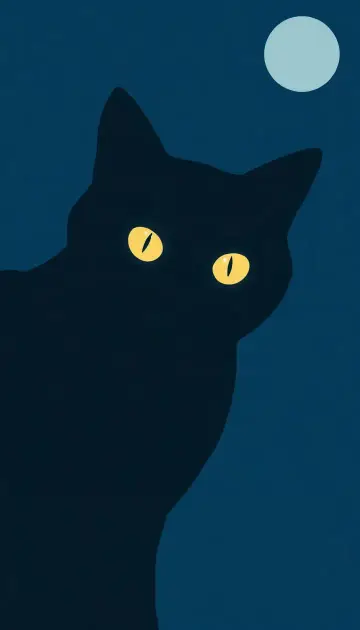
You've probably seen a cat's or dog's eyes glow green or yellow on a dark street when car headlights hit them.
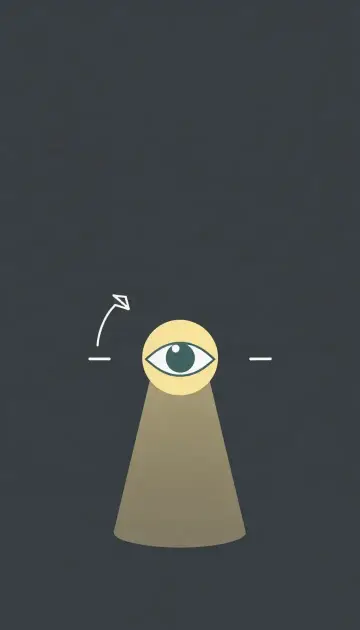
But here's the thing: the eyes aren't actually producing that light themselves.
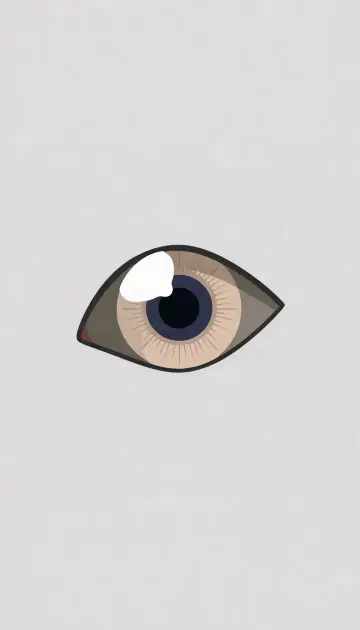
At the back of dogs' and cats' eyes is a mirror-like reflective layer called the "tapetum," which bounces incoming light back.
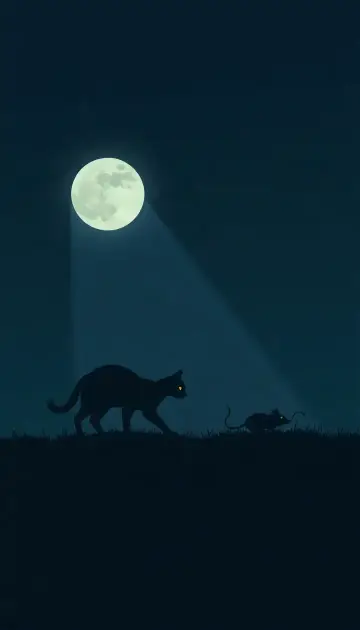
By using the little light available twice, they can efficiently pick up even faint light in dark places.
It's a clever feature of animal eyes that evolved to help them find prey even in the dark.
Sources
- Comparative morphology of the tapetum lucidum (among selected species)Ollivier F. J. et al., Veterinary Ophthalmology 7(1):11-22, 2004
- Why do cats' eyes glow in the dark?Braidee Foote (Veterinary Ophthalmology, University of Tennessee), The Conversation, 2022
Spotted a mistake in the article or the translation? Let us know.
Report an error (contact form in Japanese, opens in a new tab)