On this page
A closer look
What the rulebook says
Soccer's rules (the Laws of the Game) are set by the International Football Association Board (IFAB), and in Japan the Japan Football Association (JFA) publishes a Japanese edition. Under Law 4, "The Players' Equipment," the section on "Colours" roughly says three things:
- The two teams must wear colors that distinguish them from each other and from the match officials.
- Each goalkeeper must wear colors that distinguish them from the other players and the match officials.
- If both goalkeepers' shirts are the same color and neither has another shirt to change into, the referee allows the match to be played.
As the video explained, the goalkeeper's distinct color is clearly set out in the rules.
Why do they need to stand out?
What makes the goalkeeper special is that they can handle the ball inside their own penalty area. Once they step outside it, they're subject to the same restrictions on using their hands as everyone else.
In other words, when the ball touches someone's hand, whether it's a foul depends on who touched it and where. There are also keeper-only rules, such as opponents not being allowed to challenge for the ball while the goalkeeper is controlling it with their hands. Distinguishing the keeper by shirt color lets the referee make the call in an instant, even from a distance.
One note: the video described the goalkeeper as "the only position allowed to use their hands," but field players also throw the ball in with their hands on a throw-in. To be precise, it's better to think of it as "the goalkeeper is the only one who can handle the ball during play, and only inside their own penalty area."
There's no single required color
The rules only require that the keeper be distinguishable; they don't specify the color itself. Yellow, green, black, pink, and so on are chosen match by match so they don't clash with the opposing team or the referees.
Also, a goalkeeper may be substituted during a match, or a field player may swap places with the goalkeeper (a swap is done while play is stopped, after informing the referee). In those cases, the player who becomes the new keeper changes into a shirt that distinguishes them from the other players and the referees.
Related reads
What the video says
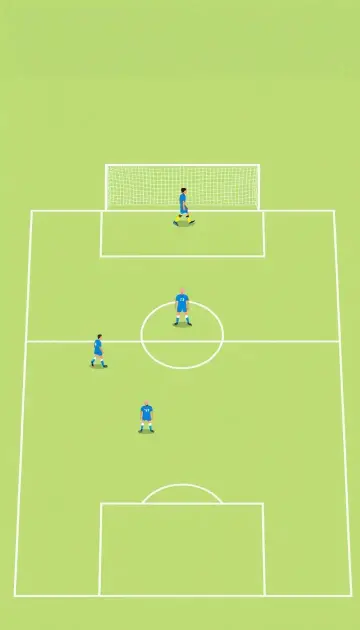
When you watch a soccer match, you'll notice the goalkeeper is the only one wearing a different-colored uniform.
It turns out this is a clear rule, designed so referees and field players can tell the keeper apart instantly.
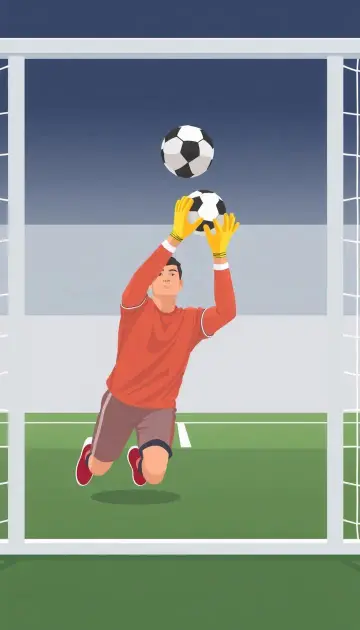
The goalkeeper is the only position allowed to use their hands. That's exactly why they need a color you can spot at a glance, even from far away.

The official rulebook actually states that goalkeepers must wear colors that can't be confused with other players or the referees.
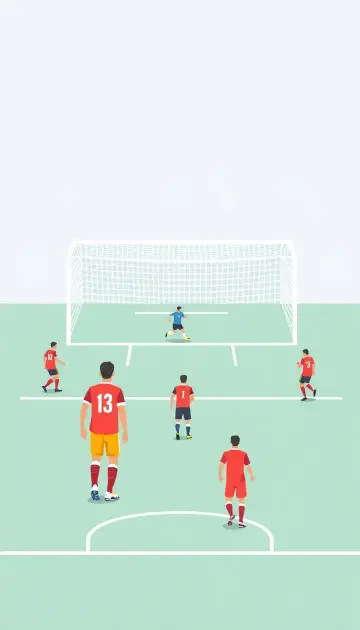
So that eye-catching uniform is really a clever way to avoid mix-ups with teammates, opponents, and referees.
Sources
- Law 4 - The Players' EquipmentThe International Football Association Board (IFAB)
- Law 12 - Fouls and MisconductThe International Football Association Board (IFAB)
- Law 3 - The PlayersThe International Football Association Board (IFAB)
- サッカー競技規則2025/26Japanese“Laws of the Game 2025/26 (Japanese edition)”Japan Football Association (JFA)
Spotted a mistake in the article or the translation? Let us know.
Report an error (contact form in Japanese, opens in a new tab)