On this page
A closer look
The ball reaches the goal in 0.2 to 0.3 seconds
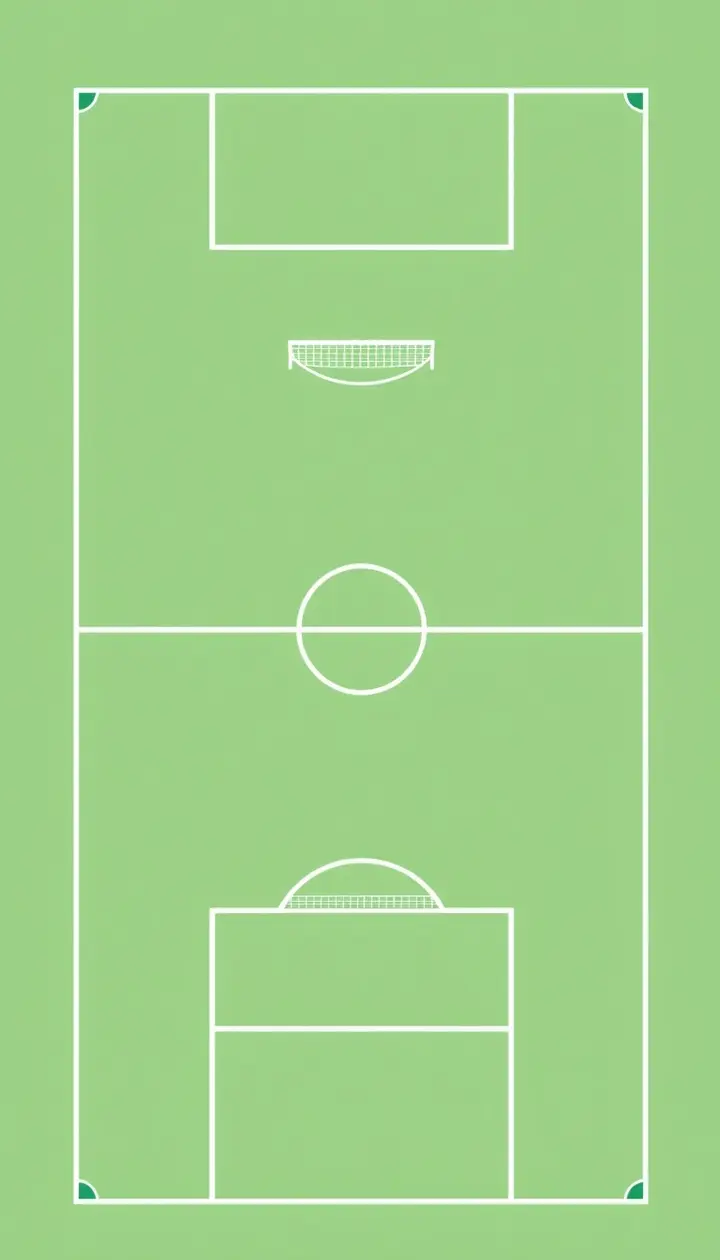
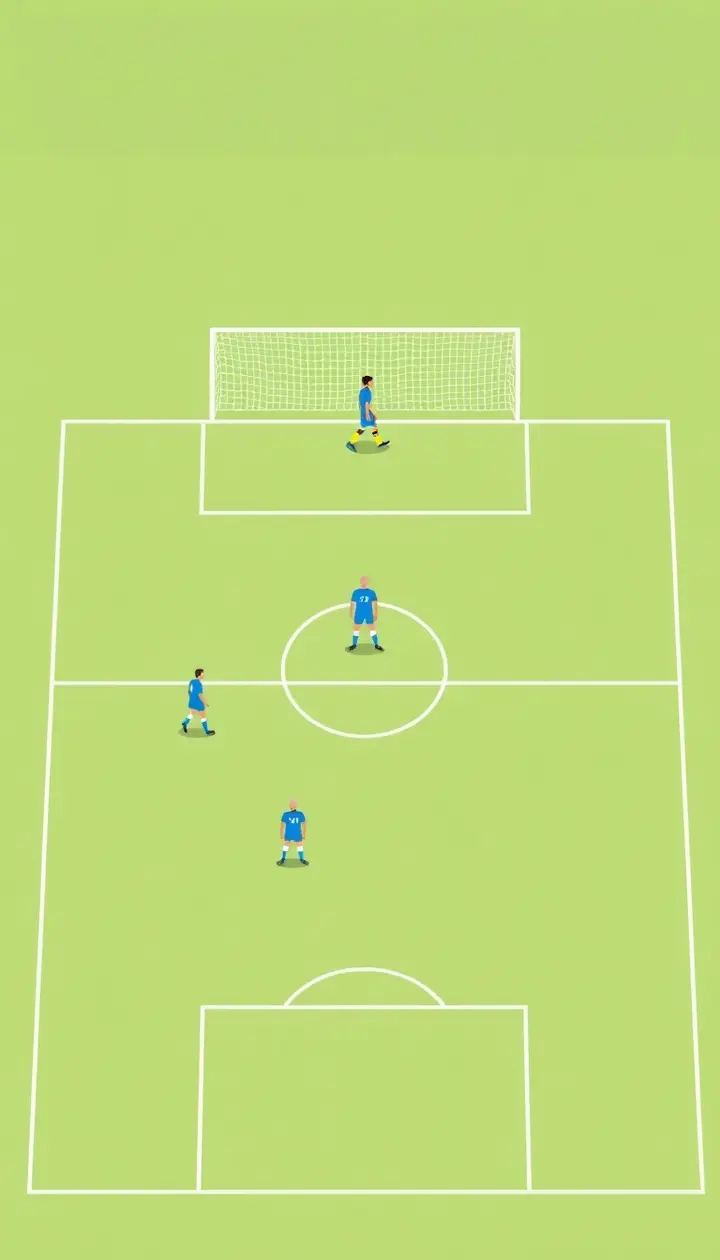
During a penalty kick, the goalkeeper has to stand on the goal line, facing the kicker, until the ball is kicked. The Laws of the Game (IFAB Law 14) require that at the moment of the kick, at least part of one foot must be touching the goal line, or be level with or behind it. The keeper can't rush forward to close the distance.
A paper by Bar-Eli and colleagues examining goalkeepers' decisions cites earlier research saying it takes the ball "only about 0.2 to 0.3 seconds" to travel from the penalty mark to the goal. The video's "about 0.3 seconds" falls within that range. That said, the actual time varies depending on how hard the ball is kicked.
Another paper by British researchers also explains that in penalties the ball often moves too fast for the keeper to react after seeing it, so they have no choice but to predict the direction and dive early.
Keepers move before the ball is kicked
A study of 330 penalties from shootouts at the World Cup, the UEFA Champions League, and other competitions found that keepers started moving, on average, 0.22 seconds before the ball was kicked. In other words, keepers begin their dive before they can see where the ball is going.
Their clues include the kicker's run-up, body angle, and where they plant their standing foot (the non-kicking foot). A Dutch study found that the better the keeper, the more closely they timed their dive to the moment the kicker's standing foot landed beside the ball.
But this kind of "reading" isn't easy. In the 330-penalty study mentioned above, more than 700 people, ranging from those with no soccer experience to professionals, watched penalty footage that was stopped 0.4 seconds before the kick and were asked to guess left or right. They were correct 55 to 64% of the time, only slightly better than a random guess (50%).
Even when the guess is right, keepers stop just under 30%
Bar-Eli and colleagues analyzed 286 penalties from top leagues around the world and other competitions (excluding kicks that missed the frame of the goal). Dividing the goal into left, center, and right, they found the following:
- When the keeper dived the same way the ball went, they stopped 29.6% of shots on the left and 25.4% on the right.
- When they dived the opposite way, there were 0% saves.
- Across all kicks, keepers stopped 14.7%.
The video said keepers "stop the ball only about 30% of the time even when they dive the right way," but according to this data, it's more precisely just under 30%. The point that "guess wrong, and there's almost no chance of a save" does match the data.
This study had one more interesting finding. Keepers dived left or right on more than 90% of kicks, but when they stayed in the center, they stopped 33.3% of shots, a higher rate than when they dived. However, there were only 18 cases of keepers staying in the center. The paper suggests that keepers may dive more than necessary because they want to avoid being scored on while standing still (action bias, a tendency to feel you should do something).
Also, the end of the video called it "a scientifically unfavorable rule," but it's probably better to think of the disadvantage as coming not from the rule itself, but from a combination of distance, ball speed, and the limits of human reaction. Kickers are battling pressure too: a study of 409 penalties from shootouts at major tournaments found that the more important the kick, the less likely it was to go in.
The "order" disadvantage is about the team that kicks second, not the keeper
A word on the "order" mentioned in the title. Under Law 10 of the Laws of the Game, the team that wins the coin toss chooses whether to kick first or second, and the two teams then take turns, five kicks each.
In 2010, economists Apesteguia and Palacios-Huerta studied 129 shootouts and reported that the team kicking first won about 21 percentage points more often than the team kicking second (roughly 60% of the time). The idea is that the team kicking second is more likely to feel the pressure of "miss and we lose." In 2017, IFAB also said "there is evidence that the team taking the first kick has an advantage" and called for trials of a format in which the order switches as "A-B-B-A..." (the ABBA format).
However, when Kocher and colleagues later re-examined the question using a larger sample of 540 shootouts, they could not clearly confirm a first-mover advantage. At its November 2018 meeting, IFAB also decided not to pursue the ABBA format as a future option, saying the procedure was complicated and lacked strong support.
The "order disadvantage" being discussed here is about the team that kicks second, and it's a separate matter from the goalkeeper's disadvantage. Please understand the video as being about "ball speed and the keeper's prediction," not about the order.
Related reading
What the video says
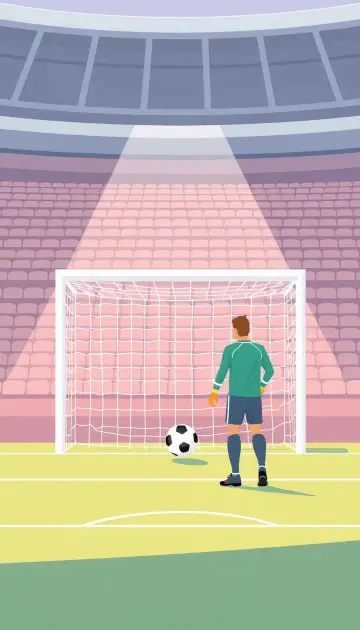
Did you know that in a soccer penalty shootout, the goalkeeper is actually at a huge disadvantage compared to the kicker?
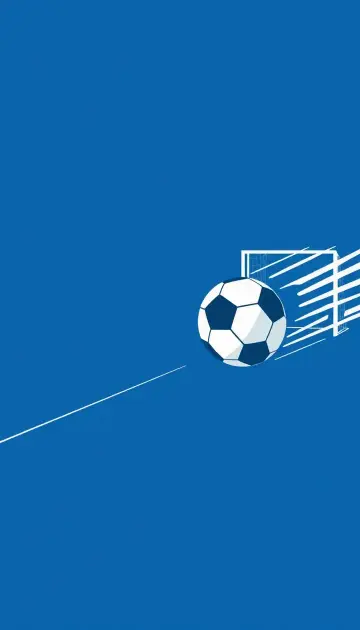
The ball takes only about 0.3 seconds to reach the keeper. That's too fast for a person to react and move.
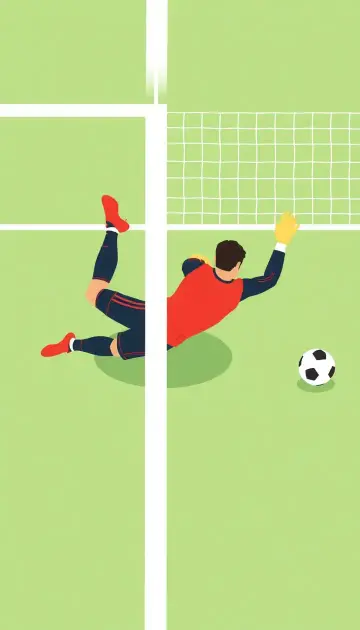
So before the ball is even kicked, the keeper reads the kicker's run-up and body angle, predicts whether to dive left or right, and moves first.

Real data shows that even when the keeper dives the right way, they stop the ball only about 30% of the time. Guess wrong, and there's almost no chance of a save.

Penalty shootouts may look like pure luck, but they're actually a scientifically unfavorable rule for keepers, shaped by the limits of prediction and reaction speed.
Sources
- Law 14 - The Penalty KickThe International Football Association Board (IFAB)
- Law 10 - Determining the Outcome of a MatchThe International Football Association Board (IFAB)
- Action bias among elite soccer goalkeepers: The case of penalty kicks(著者公開版)Japanese“Action bias among elite soccer goalkeepers: The case of penalty kicks (author's version)”Bar-Eli et al., Journal of Economic Psychology, 2007
- Asymmetric predictability and cognitive competition in football penalty shootoutsMisirlisoy & Haggard, Current Biology, 2014
- Anticipating the Direction of Soccer Penalty Shots Depends on the Speed and Technique of the KickHunter et al., Sports (Basel), 2018
- Goalkeeping in the soccer penalty kick: The dive is coordinated to the kicker's non-kicking leg placement, irrespective of time constraintsZheng et al., Human Movement Science, 2021
- Kicks from the penalty mark in soccer: the roles of stress, skill, and fatigue for kick outcomesJordet et al., Journal of Sports Sciences, 2007
- Psychological Pressure in Competitive Environments: Evidence from a Randomized Natural ExperimentApesteguia & Palacios-Huerta, American Economic Review, 2010 (RePEc/IDEAS bibliographic page)
- Psychological Pressure in Competitive Environments: New Evidence from Randomized Natural ExperimentsKocher et al., Management Science, 2012 (RePEc/IDEAS bibliographic page)
- Circular no. 10(2017年6月13日)Japanese“Circular no. 10 (June 13, 2017)”The International Football Association Board (IFAB)
- IFAB's 133rd Annual Business Meeting recommends fine-tuning Laws for the benefit of the gameThe International Football Association Board (IFAB)
Spotted a mistake in the article or the translation? Let us know.
Report an error (contact form in Japanese, opens in a new tab)