On this page
A closer look
"Football" splits in two
In 19th-century Britain, people played versions of "football" with different rules depending on the school or club. In October 1863, representatives from about a dozen clubs around London got together and formed the Football Association (FA), an organization meant to unify the rules.
According to the FA's own history, early in the discussions they also considered some use of the hands, such as the "fair catch," where a player catches the ball with their hands. The biggest fight was over "hacking" (kicking an opponent in the shins). Some clubs wanted to keep it, but the rules finalized in December did not allow hacking.
The video described association football as the game "that allowed only kicking," but the earliest rules apparently weren't as strictly "no hands" as today's. Clubs that preferred a style of play where you carry the ball in your hands went on to form the Rugby Football Union (RFU) in January 1871, with 21 clubs.
And so Britain ended up with two "footballs" side by side: "association football," played under FA rules, and rugby-style "rugby football."
"soc" + "-er" = soccer
The American Heritage Dictionary explains that soccer comes from "an alteration of assoc., abbreviation of association football." Dictionary.com likewise says it's "soc" from association plus "-er," with the first recorded use around 1890–95.
A 2014 paper by University of Michigan sports economist Stefan Szymanski also presents the theory that rugby football got shortened to "rugger" and association football to "soccer." However, the paper itself describes this origin as a "plausible" explanation and doesn't state it as fact. It also says the words are thought to have come from the slang of students at Oxford and Cambridge.
The idea that "adding -er was trendy among students" also shows up in a reader's letter sent to The New York Times in 1905. That letter spells it "socker," which shows the spelling hadn't settled yet in the early days.
Also, the video said that "sokkā" shifted into "sakkā" (the Japanese word for soccer), but there's no record of such a change happening in English. It makes more sense to think of "sakkā" simply as the way Japanese writes the English word soccer.
In Britain, it caught on—then faded
The video said that "football" became the established name in Britain, but the data in Szymanski's paper tells a slightly different story.
- Among articles in the British newspaper The Times that mentioned either "football" or "soccer," less than 1% used soccer in the first half of the 20th century (excluding articles about America).
- Soccer grew after World War II, averaging 8.5% from 1967 to 1980. In the 1960s and '70s, soccer often appeared in the titles of players' and managers' autobiographies, too.
- From 1981 to 2008, the average dropped to 5.7%. In two other newspapers, The Guardian and The Independent, the share of soccer fell from 18% in 1984 to under 4% in 2012.
Meanwhile, in America's New York Times, the share of soccer grew from about 5% in the 1900s to about 33% in the 2000s. So the picture closer to reality is this: in Britain, "football" was always the official name, soccer was used as a casual alternative, and it started declining around 1980. The paper speculates that the reason may have been a backlash against soccer's spread in America.
It's not just about "is there another football?"
Szymanski's paper says that soccer spread early in America to distinguish the sport from Americans' own "football" (American football). The video's point about "whether there was another football game" is one major reason.
But that alone doesn't decide it.
- The American governing body was called the "U.S. Football Association" when it was founded in 1913. "Soccer" didn't enter its name until 1945.
- In Australia, even though Australian rules football is hugely popular, the national body changed its name from "Australian Soccer Association" to "Football Federation Australia" in 2005.
- Japan's association calls itself "Nihon Sakkā Kyōkai" (Japan Soccer Association) in Japanese, but its English name is "Japan Football Association."
It seems fair to say that which name gets used depends not only on whether other football games exist, but also on each country's history and the thinking of its organizations.
You might also like
What the video says
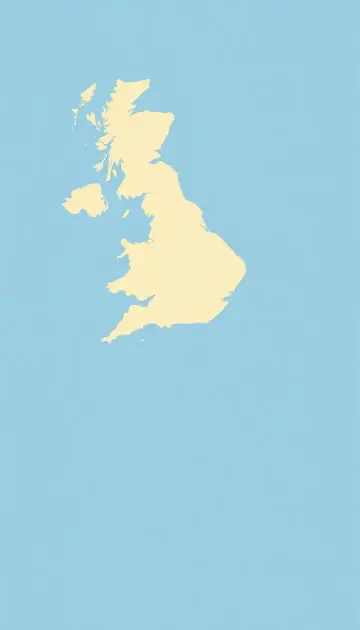
It's the same sport, but in Britain they call it "football," and in America they call it "soccer." Here's the thing: the word "soccer" wasn't actually born in America.

In 19th-century Britain, there were two different games played with a ball: "rugby football," which started at Rugby School, and "association football," which allowed only kicking.

Students back then loved shortening words. The story goes that they played on the "soc" in "association" to get "sokkā," which then shifted into "sakkā," the Japanese word for soccer.

In other words, "soccer" started out as British slang. But later, "football" became the established name back in Britain, while "soccer" survived in countries like the US that had their own kind of football.
So which name a country uses came down to whether it had another football game of its own.
Sources
- It’s Football not Soccer(ミシガン大学が公開した論文のアーカイブ)Japanese“It's Football not Soccer (archive of the paper published by the University of Michigan)”Szymanski S., University of Michigan, 2014
- soccerThe American Heritage Dictionary of the English Language
- soccerDictionary.com
- A history of the FAThe Football Association
- The History of Wimbledon RFCWorld Rugby Museum
- HistoryU.S. Soccer Federation
- FootballAustralian Sports Commission (Clearinghouse for Sport)
- JFAの概要Japanese“Overview of the JFA”Japan Football Association (JFA)
Spotted a mistake in the article or the translation? Let us know.
Report an error (contact form in Japanese, opens in a new tab)