On this page
A closer look
It started with a "disallowed goal"
The goal net was the idea of John Alexander Brodie, a civil engineer from Liverpool, England. According to the University of Liverpool's School of Engineering, Brodie is said to have come up with the net after seeing a goal by Everton, the team he supported, wrongly disallowed. Brodie is also known as the engineer who designed the road tunnel running under the River Mersey (the Queensway Tunnel).
The video says the net was invented "in 1891," but the university's account dates the invention to 1889. Also, the line about "huge arguments at nearly every match" was a strong way of describing the fact that such refereeing disputes happened; there are no records confirming it was actually every match.
What does a net make easier to see?
A goal without a net is just a "frame" made of two posts and a crossbar. When the ball flies past right next to a post, it becomes hard to judge whether it went inside the frame or just grazed the outside.
If a net is strung behind the goal, a ball that passes inside the frame is caught by the net and stays in the goal. You can tell the result just by looking at where the ball is, so the decision became easier to understand not only for referees but also for players and spectators.
What do today's rules say about nets?
The modern rules of soccer (the Laws of the Game) are set by the International Football Association Board (IFAB). Law 1, "The Field of Play," says the following about nets:
- Nets may be attached to the goals and the ground behind the goal
- Nets must be properly supported
- Nets must not interfere with the goalkeeper
The wording is "may be attached," so putting up a net is not actually written as a requirement. Law 1 also states that goals themselves must be securely anchored to the ground, and that advertising is not allowed on goals or nets.
It's the "line," not the net, that decides a goal
It may come as a surprise, but the net doesn't determine whether a goal is scored. Law 10 states that a goal is scored when the whole of the ball passes over the goal line (between the posts and under the crossbar). Even if the net ripples, it's not a goal if the ball just hit the side netting from the outside.
In other words, the net is a "helper" that makes it easier to see whether the ball crossed the line. Today, the Laws of the Game also permit goal-line technology, which uses machines to assist even further with that call.
Related reading
What the video says

That moment in a soccer match when the ball gets sucked into the goal. The net behind it actually wasn't there from the start.

In 19th-century soccer, there were no nets. A goal was just two posts and a bar.
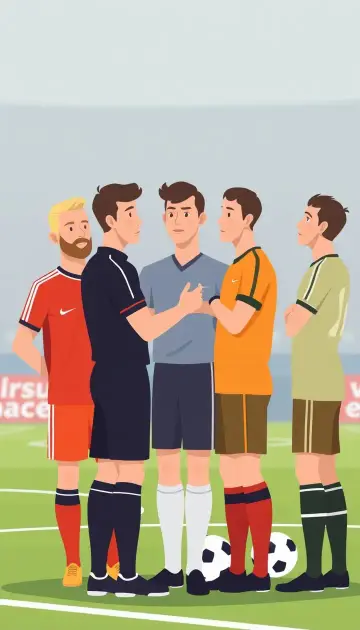
So what happened? Neither the referee nor the spectators could tell whether the ball had missed or gone in, and there were huge arguments at nearly every match.
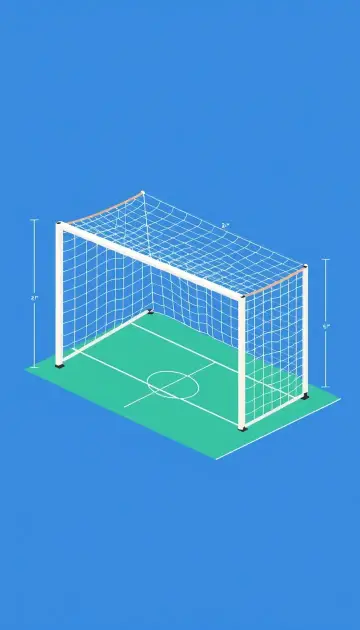
To solve this problem, in 1891 an engineer came up with the net. It made goal decisions clear to anyone at a glance.
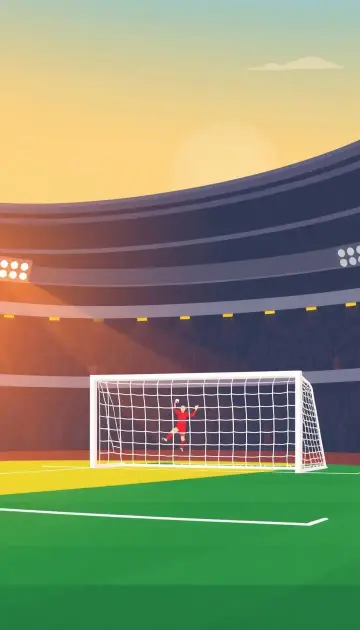
In other words, the goal net wasn't created for design. It was born for "fair decisions that anyone can see."
Sources
- About us | School of EngineeringUniversity of Liverpool
- Law 1 - The Field of PlayIFAB (International Football Association Board), Laws of the Game
- Law 10 - Determining the Outcome of a MatchIFAB (International Football Association Board), Laws of the Game
Spotted a mistake in the article or the translation? Let us know.
Report an error (contact form in Japanese, opens in a new tab)