On this page
A closer look
What the rulebook says
The rules of soccer (the Laws of the Game) are set by the International Football Association Board (IFAB), and in Japan the Japan Football Association (JFA) publishes a Japanese edition. According to Law 11, a player is in an "offside position" when both of the following are true:
- Any part of the head, body or feet is in the opponents' half (excluding the halfway line).
- Any part of the head, body or feet is nearer to the opponents' goal line than both the ball and the second-to-last opponent.
Hands and arms aren't counted (and that goes for goalkeepers too). Also, a player who is level with the second-to-last opponent is not in an offside position. In other words, you can't be offside when you're in your own half, when you're behind the ball, or when you're level with the opponent.
The "second" player doesn't have to be the goalkeeper
"Second-to-last" is often explained as "two players, counting the goalkeeper." That's because the goalkeeper is usually the player farthest back, so in practice the reference point is often the last defender.
But the actual wording of the rule is "the second-to-last opponent," and it doesn't matter whether that player is the goalkeeper. If the goalkeeper has come rushing out, the reference point becomes the second outfield player, counting from the goal line outward.
Just being in that position isn't an offense
The video said "you're offside if you're ahead of the ball and ahead of the second-to-last opponent," but the rules state clearly that "it is not an offense to be in an offside position."
It becomes an offense only if you're in an offside position at the moment a teammate plays (touches) the ball, and you then become involved in play, for example by playing the ball or interfering with an opponent. Also, there is no offside offense if you receive the ball directly from a goal kick, throw-in or corner kick.
From "three" to "two"
According to IFAB materials, offside is probably the most frequently amended law, and originally any player ahead of the ball was offside.
Looking at the historical rulebooks published on IFAB's official website, the 1924–25 edition says a player is offside unless "at least three" opponents are between them and the goal, but the 1925–26 edition changes this to "at least two." That's where today's "second-to-last" rule began.
By the way, the story told in the video, that an ambush tactic was rampant in the 19th century and offside was introduced to stop it, is a commonly repeated explanation, but we couldn't find a clear record of it in official sources. Offside certainly works to keep players who just wait in front of goal from gaining an advantage, but it's probably best to treat its origin as a story with several competing explanations.
Related reading
What the video says
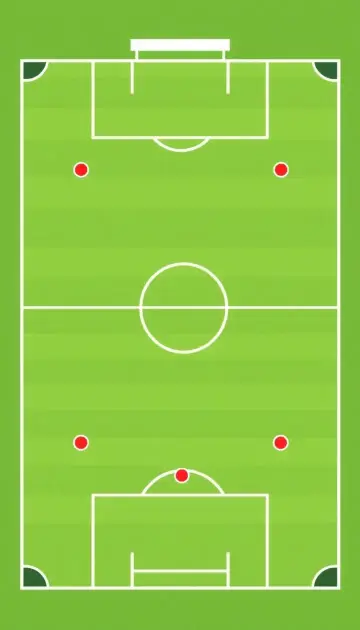
Offside is one of the most hotly debated calls in soccer. But this rule isn't just about penalizing players. It was actually created to solve a specific problem.
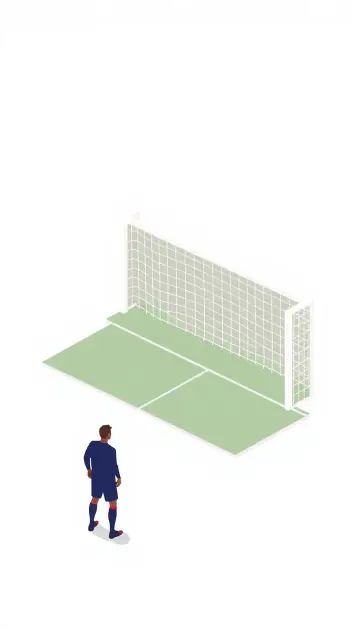
In 19th-century Britain, an "ambush" tactic was rampant: teams would park a player right in front of the opponents' goal.
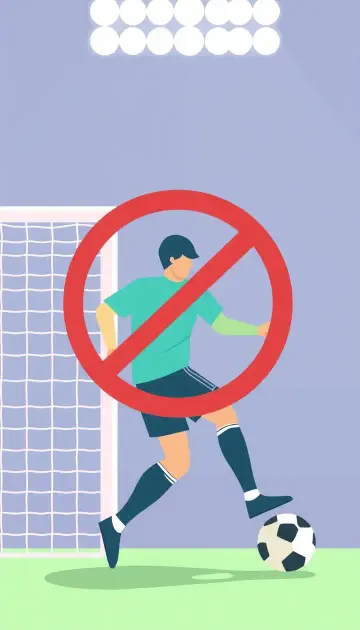
That made the game monotonous. So a rule was introduced: you can't lie in wait close to the opponents' goal.
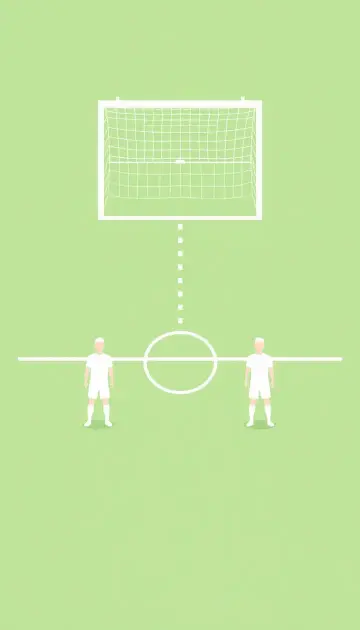
Under today's rules, you're called offside if you're ahead of the ball and also ahead of the second-to-last opponent.
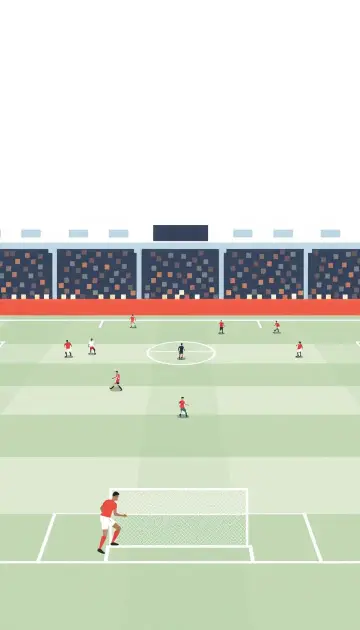
Because of this rule, players have to outwit each other with clever passes and positioning. Soccer's depth comes from a humble rule like this one.
Sources
- Law 11 - OffsideThe International Football Association Board (IFAB)
- サッカー競技規則2025/26Japanese“Laws of the Game 2025/26 (Japanese edition)”Japan Football Association (JFA)
- Laws of the Game 1924/25The Football Association (published in the archive on IFAB's official website)
- Laws of the Game 1925/26The Football Association (published in the archive on IFAB's official website)
- Laws of the Game 2016/17The International Football Association Board (IFAB)
Spotted a mistake in the article or the translation? Let us know.
Report an error (contact form in Japanese, opens in a new tab)