On this page
A closer look
Chapter 1: The Invisible Rules on the Pitch
Offside exists to ban "goal-hanging"
Offside is a rule that makes it a foul when a player receiving a pass is ahead of the second-to-last opponent. Since the goalkeeper is usually the farthest back, the reference point is effectively the last outfield player.
Without this rule, the attacking side could score just by keeping a player parked in front of goal. The very idea of defending would fall apart. So offside is a mechanism that makes the battle of wits between attack and defense possible.
→ Why is offside decided by the "second-to-last" player?
The 11 m penalty distance is just 12 yards restated
The 11 m penalty mark is also a number that comes from yards. Twelve yards is 10.9728 m, rounded to 11 m. It was set more than 100 years ago, balancing the limit of what a goalkeeper can react to against a distance from which the kicker can reliably aim.
Goalkeepers are said to have to react within about 0.3 seconds of the ball being kicked, and if they wait to see the kicker start moving, they're too late. So they end up betting on reading the kicker's preliminary movements and guessing.
→ Why is the ball in a penalty shootout placed about 11 m from the goal? and Why is the shootout order a disadvantage for goalkeepers?
Cards were born to cross the language barrier
Here's the Japan Football Association's Q&A:
The yellow card is shown by referees when they "caution" a player who has committed a serious foul or unsporting behavior, but until the 1960s, referees delivered "cautions" verbally. The yellow card was first introduced at the 1968 Mexico City Olympics.
Verbal warnings don't get through at international tournaments where players speak different languages. On top of that, spectators and the benches can't follow them, so a system like "sent off after a second card" can't really work. A color, on the other hand, is understood by anyone instantly.
Note that sources differ on the year of introduction: the Japanese encyclopedia Nihon Daihyakka Zensho gives the 1970 World Cup in Mexico, while Britannica says the idea came about in 1976.
→ Why were yellow and red cards created?
Chapter 2: The 90 Minutes and the Players' Roles
The 90 minutes started with one match in 1866
The Japan Football Association's explanation of this is wonderfully specific:
The Football Association (The FA) was founded in England in 1863, and the first rules of football were set, but even these did not specify the length of a match. In 1866, before a match between an FA side and a Sheffield side, it was decided that "play shall begin at 3 p.m. and end at 4:30 p.m.," and this is where "90 minutes" finally appears, though there was still no such thing as halftime.
From 3 p.m. to 4:30 p.m. The 90-minute length wasn't based on science; it was simply the gap between the times set for one particular match.
After that, it gradually became formalized:
Then, in 1871, the FA Cup rules stated: "The duration of the match shall be one and a half hours. The interval at halftime shall not exceed five minutes, except where specially permitted by the referee." In 1897, it was codified in the Laws of the Game: "The duration of the match shall be 90 minutes unless otherwise mutually agreed. The interval at halftime shall not exceed five minutes except with the consent of the referee."
The 90 minutes that appeared in 1866 was written into the Laws of the Game in 1897. That took 31 years. Halftime, too, was originally just five minutes.
Today, the rule is that "the half-time interval must not exceed 15 minutes."
→ Why is soccer two 45-minute halves, 90 minutes in total?
The captain's armband designates a single negotiator
It's there to make clear who the representative is that can deal with the referee during a match. If it's unclear who the negotiator is, confusion results, so this makes responsibility clear.
The Japan Football Association also explains "Captains Only," which takes this idea further:
This is the concept that, on the condition that they conduct themselves respectfully and appropriately during the match, only the captain may ask the referee questions about decisions and the like. It was formally approved by the International Football Association Board (IFAB) in 2024 and trialed at UEFA EURO 2024, organized by the Union of European Football Associations (UEFA).
→ Why can only one player wear the captain's armband in soccer?
"Volante" is Portuguese for steering wheel
It took root in Japan (pronounced "boranchi") as the term for a midfielder who controls the flow of the game, like the one steering a car.
The name "soccer" itself also has its reasons in the history of the word. It was British student slang that shortened "Association" from the official name, Association Football. Even in Britain, the sport's homeland, it was in ordinary use until the mid-20th century, and from around the 1980s people began avoiding it, mistakenly believing it was American English.
→ Why does the soccer term "volante" mean steering wheel? and Why the same sport is called both "soccer" and "football"
Chapter 3: Behind the Scenes at the Stadium
The stripes on the grass come from mowing direction
The grass isn't a different type. When you change the mower's direction on each row, the direction the grass blades lean changes, and so does the way light reflects. It's an optical illusion.
The stripes are also said to help players as markers for judging distance and speed.
→ Why does the grass on soccer fields have stripes?
Goalkeepers wear different colors so they can be identified
Only goalkeepers have the special rule allowing them to use their hands. To make foul calls quickly, a visual distinction is essential.
→ Why do only goalkeepers wear a different-colored uniform?
Pentagons and hexagons get flat pieces close to a sphere
It's an arrangement for combining flat pieces into a shape as close to a sphere as possible. Twelve pentagons and 20 hexagons form a solid called a truncated icosahedron.
→ Why do soccer balls have a pentagon and hexagon pattern?
Referees run 10 km to get a good viewing angle
The accuracy of a call is directly tied to the referee's distance and angle from the play. That's why referees keep changing their position to follow the players' movements.
Referees assigned to J.League (Japan's professional soccer league) matches can't officiate unless they pass a fitness test: six 40 m sprints, each completed within 6 seconds, plus 40 interval runs.
→ Why do soccer referees run about 10 km during a match? and How do soccer referees keep running for 90 minutes without getting tired?
What They All Have in Common
Line up all 12 facts, and they fall into two categories.
Things that were designed: offside, the penalty distance, the card colors, the captain's armband, the goalkeeper's colors, the ball's pattern. Each was intentionally created for the sake of "fairness" or "clarity."
Things that accumulated: the 90 minutes, "volante," the name "soccer," the stripes on the grass. Rather than being decided by someone, these are customs or coincidences that took hold.
The 90 minutes is the most telling example. The gap between start and end times set for a single match in 1866 became a rule over 31 years, and 160 years later it's the standard the whole world uses. It's a case of coincidence becoming institution.
Next time you watch a match, try asking whether what you're seeing was "designed" or "accumulated." It might look a little different.
Further Reading
What the video says
Why is offside determined by the "second-to-last player"? Few people can answer that. But unpacking just this one rule reveals the design philosophy behind the whole sport of soccer.
Today we're bringing you soccer trivia that makes watching the game more fun, split into three chapters: the invisible rules on the pitch, the 90 minutes and the players' roles, and the stadium behind the scenes. The more you know, the more differently you'll see the next match you watch.

Offside is a rule that makes it a foul when a player receiving a pass is nearer the opponents' goal than the second-to-last opponent. Because the goalkeeper is usually the farthest back, "second-to-last" effectively means you can't be ahead of the last outfield player.
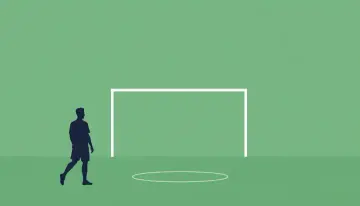
The reason for this rule is simple: to stop attackers from camping in front of goal and waiting, so-called "goal-hanging." Without offside, the attacking side could score easily just by keeping a player parked in front of goal at all times, and defending would no longer work.

Offside is the rule that keeps the battle of wits between defense and attack alive at all times. That same tension, as it happens, also lurks in the kicking order of a penalty shootout.
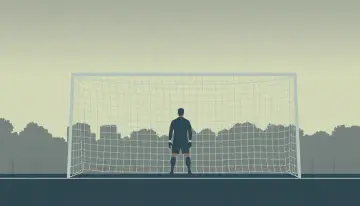
In penalty shootouts, there's a known statistical tendency for the team that kicks first to have the advantage. This is thought to be because psychological pressure weighs more heavily on the second team's kickers, but beyond that, the goalkeeper is structurally at a disadvantage to begin with.
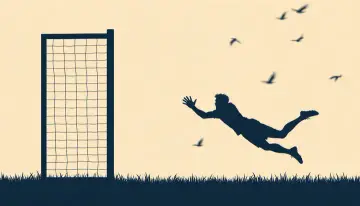
A goalkeeper has to react within about 0.3 seconds of the ball being kicked, and it's said that waiting to see the kicker move before reacting is too late. That's why keepers have no choice but to bet on instinct and on reading the kicker's slight preliminary movements.
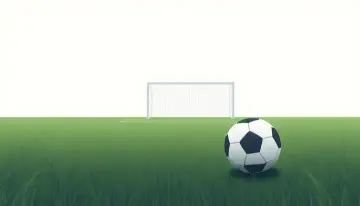
The ball in a penalty shootout is placed about 11 meters from the goal. This distance was set more than 100 years ago, balancing the very limit of what a goalkeeper can react to against a distance from which the kicker can reliably aim.

In this way, soccer's rules are built to protect a fair contest between players, and there's clever design in how referees communicate that fairness too: the yellow card and the red card.
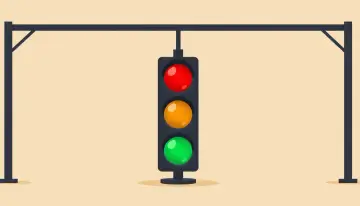
The card system was born because referees used to give warnings and send players off verbally or with gestures, which led to frequent misunderstandings at international tournaments where people spoke different languages. By using colors that anyone can understand instantly, a system was created that crosses the language barrier.

The rules on the pitch were made for invisible strategy and for fairness. Next, let's look at the framework of the match itself: the 90 minutes and the players' roles.
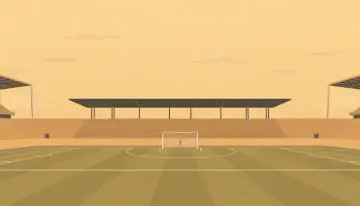
Why is a soccer match two 45-minute halves, 90 minutes in total? Actually, this length wasn't decided on any scientific basis. It's said to have started with a match in 19th-century England, when the two teams agreed, "Let's play about this long today."

Afterward, the custom of 45-minute halves became established as an international rule, and today it's the standard worldwide. Beyond time, there are also rules for the role that holds a team together, and the symbol of that is the captain's armband.

Only one person can wear the captain's armband in order to make clear who the representative is that can deal with the referee. If it's unclear who the negotiator is when questions or clarifications come up during a match, confusion results, so this is a way of making responsibility clear.

Speaking of clear roles, position names carry meaning too. "Volante" (pronounced "boranchi" in Japan) means "steering wheel" in Portuguese, and it took root in Japan as the term for a midfielder who controls the flow of the game, like the one steering a car.
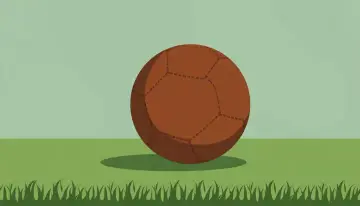
The fact that the same sport is split between being called "soccer" and "football" also comes down to the origins of the words. "Soccer" was originally slang used by British students, a shortening of "Association" from the sport's official name, Association Football.
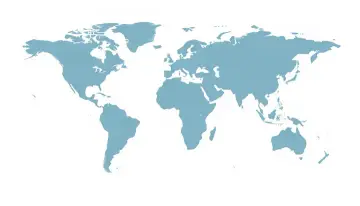
What's interesting is that even in Britain, the sport's homeland, "soccer" was in ordinary use until the mid-20th century. Then, from around the 1980s, people began avoiding it, mistakenly believing it was American English. The countries that still say "soccer" today are ones like the United States that have another football sport. Now for the main event. It turns out the stadium behind the scenes hides some surprising reasons too.

The stripes you see on the grass of a soccer field don't actually come from different types of grass. They're created by changing the direction of the mower on each row, which changes the angle at which light reflects. In other words, they're an optical illusion.
These stripes are also said to serve as markers that help players judge distance and speed, so they have a practical purpose beyond just looking nice. Just like the different shades of grass, there are clear rules for uniform colors too.
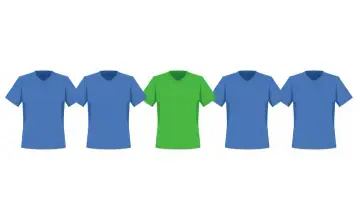
Only the goalkeeper wears a different-colored uniform so that referees can tell them apart instantly. Unlike other players, keepers have a special rule allowing them to use their hands, so a visual distinction is essential for making quick foul calls.

And the familiar combination of pentagons and hexagons on a soccer ball's surface exists to build a shape as close to a sphere as possible from flat pieces. This pattern was chosen as the arrangement that mathematically produces the most beautiful sphere with the least distortion.
Finally, referees are said to run about 10 kilometers in a single match. That's because, to make accurate calls close to the ball and the play, they have to keep adjusting their position to match the players' movements.
Offside, the penalty distance, the card colors, the 90 minutes, position names, and the patterns on the grass and ball. None of these were coincidences; they were all clever designs born from the pursuit of fairness and clarity.

The next time you watch a match, try paying attention to each of these rules and design choices, and you're sure to notice a kind of fun you hadn't before. Which piece of trivia surprised you most? Let us know in the comments.
Sources
- なぜサッカーの試合は90分なの?/イエローカードはいつから使用されるようになったの?(ドキュメント・FAQ)Japanese“Why is a soccer match 90 minutes? / When did yellow cards start being used? (Documents & FAQ)”Japan Football Association
- Laws of the Game – About the LawsThe IFAB
- サッカー競技規則 2026/27Japanese“Laws of the Game 2026/27”Japan Football Association
Spotted a mistake in the article or the translation? Let us know.
Report an error (contact form in Japanese, opens in a new tab)