On this page
A closer look
The eardrum can't do its job unless the pressure on both sides matches
Let's start with the structure of the ear. Here's how the MSD Manual explains it:
The eardrum separates the ear canal from the middle ear. The eardrum can be damaged when the air pressure in the ear canal, which comes from the outside air, and the air pressure inside the middle ear become unbalanced, or when either pressure changes suddenly.
The eardrum is a thin membrane. Its outer side connects to the outside air through the ear canal, but on the inner side, the middle ear is a closed chamber. So how does the pressure in that chamber get matched to the outside?
Normally, the air pressure on both sides of the eardrum is kept equal by letting outside air into the middle ear through the eustachian tube, which connects the middle ear and the back of the nose.
A narrow tube called the eustachian tube connects the middle ear to the back of the nose (the nasopharynx). It's the only passage for equalizing pressure.
The eustachian tube helps keep the air pressure equal on both sides of the eardrum by letting air from outside the body into the middle ear.
The eustachian tube is normally closed. It only opens when you swallow or yawn.
Going up leaves the middle ear at "higher pressure"
Climbing a mountain, taking off in a plane, riding an elevator up: in every case, the outside air pressure drops. But the air trapped in your middle ear stays at the same pressure.
As a result, the middle ear ends up at higher pressure than the outside, and the eardrum gets pushed outward. That's what's behind the ringing and the blocked feeling.
It can happen the other way, too.
When the eustachian tube is blocked, air can't reach the middle ear, so the pressure inside the middle ear drops. When the pressure in the middle ear is lower than the pressure in the ear canal, the eardrum bulges inward. The pressure difference causes pain and can bruise or rupture the eardrum.
When you descend, the outside pressure rises, so the middle ear becomes relatively low-pressure and the eardrum is pushed inward. In other words, the eardrum flexes in opposite directions on the way up and the way down.
In general, going down is said to be harder. On the way up, excess air in the middle ear often leaks out through the eustachian tube on its own. On the way down, though, outside air has to be forced into the eustachian tube, and the tube is built in a way that makes it hard to open from the outside in.
What to do differs going up and going down
The MSD Manual splits its advice into two methods to match this difference in direction. First, going up:
While the outside air pressure is decreasing, such as when a plane is climbing, people should breathe with their mouth open, yawn, chew gum, or swallow. Any of these methods may open the eustachian tube and let air out of the middle ear.
Next, going down:
While the outside air pressure is increasing, such as when a plane is descending or a diver is going deeper, people should try pinching their nose closed, keeping their mouth shut, and gently trying to breathe out through their nose. This method forces air through the blocked eustachian tube.
This is what's known as the Valsalva maneuver. Note the word "gently": straining hard is not recommended.
Switching methods like this works for hiking, too. On the way up, chew gum or drink some water; on the way down, pinch your nose and blow gently. You'll really notice the difference on rides that change altitude quickly, like aerial tramways and funiculars.
Colds make it more likely, and more likely to get worse
The risks listed on the same page connect directly to what many people have experienced:
If the eustachian tube is partially or completely blocked by scarring, a tumor, an infection, a cold, or an allergy, air can't move in and out of the middle ear. The resulting pressure difference causes pain and often hearing loss, and can bruise the eardrum or cause it to tear (rupture) and bleed.
When the back of your nose is swollen from a cold or hay fever, the opening of the eustachian tube gets blocked. That's why flying or hiking with a cold tends to hurt more than usual.
It's very rare, but the page also describes more serious cases:
If the pressure difference is very large, the oval window, the entrance from the middle ear to the inner ear, can also tear, letting fluid leak from the inner ear into the middle ear. This kind of rupture is called a perilymph fistula.
It also spells out a prevention approach:
People who have an infection or allergy of the nose or throat may feel discomfort when flying or diving. They should avoid these activities until the infection or allergy is under control.
And if it's truly necessary:
using a decongestant (for example, nose drops or a nasal spray containing phenylephrine or oxymetazoline, used 30 to 60 minutes before ascent or descent) relieves congestion and helps the eustachian tube open
It even specifies the timing: 30 to 60 minutes beforehand. Whether or not you actually use one, it's worth remembering this connection: "If your nose is clear, your ears are protected."
Related reads
What the video says

When you climb a mountain or a plane gains altitude, you sometimes get that blocked, ringing feeling deep in your ears, right?
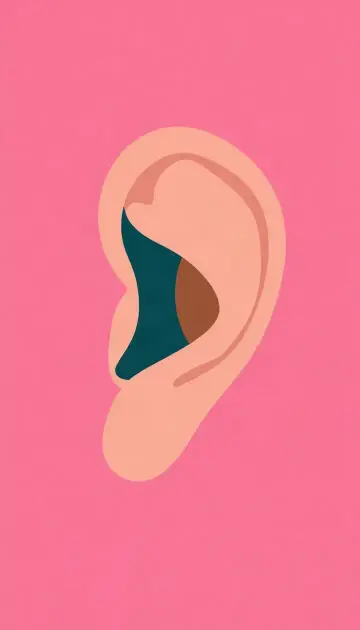
This happens because a difference in air pressure develops between the inside and outside of your ear.

As you go higher, the pressure of the surrounding air drops, but the air inside your ear can't escape right away.

That pressure difference pushes on your eardrum, creating that peculiar blocked feeling, or even pain.

Swallowing or yawning opens a tube at the back of your nose, letting air out of your ear so you feel better.
Sources
- 耳の圧外傷(気圧性中耳炎、航空性中耳炎)Japanese“Barotrauma of the Ear (Barotitis Media, Aerotitis Media)”MSD Manual Consumer Version
- 耳管:気圧を等しく保つJapanese“The Eustachian Tube: Keeping Air Pressure Equal”MSD Manual Consumer Version
Spotted a mistake in the article or the translation? Let us know.
Report an error (contact form in Japanese, opens in a new tab)