On this page
A closer look
If air goes out, the same amount has to come in
An exhaust fan is a device that pushes a room's air outside.
For every bit of air that goes out, the same amount has to come in from somewhere. If it doesn't, the amount of air in the room decreases and the pressure drops.
In practice, things settle into balance with the pressure slightly lowered. That lowered pressure creates a force that draws air in from outside.
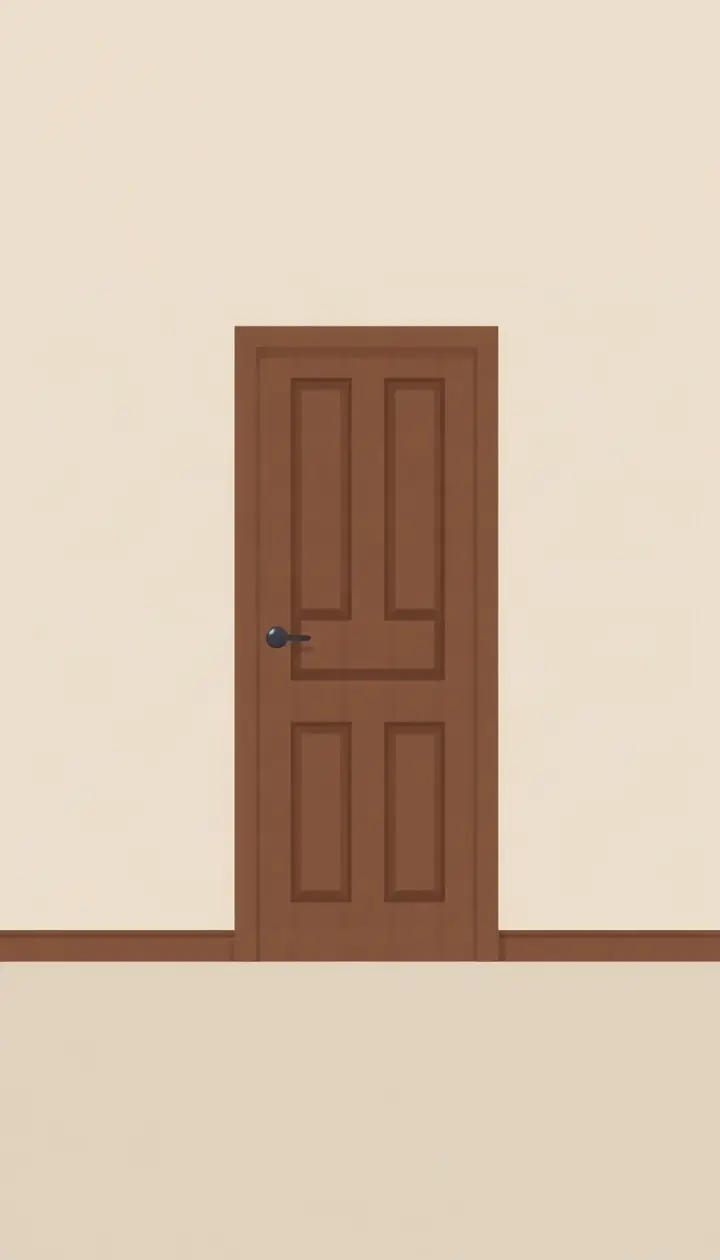
A door is a "big surface"
A pressure difference acts as a force per square meter. Because a door has a large area, even a small pressure difference adds up to a big total force.
A standard door is about 0.8 m wide × 2 m tall = roughly 1.6 square meters.
Even if the pressure difference is just 10 pascals (about 1/100,000 of atmospheric pressure),
10 Pa × 1.6 m² = 16 newtons ≈ the equivalent of 1.6 kg
That means a force about like a fingertip push is constantly acting on the door. With a bigger pressure difference, it becomes several kilograms of force.
If the door is even slightly open, this force can push it open. Even when it's properly shut, it can be pushed open if the latch is weak.
The fewer gaps a house has, the more likely it is to happen
This phenomenon is common in highly airtight homes.
In a drafty house, air to replace what the exhaust fan removes comes in freely through gaps around window frames and in the walls. The pressure barely drops.
But in a house built to be airtight, there are few gaps. With only limited paths to replace the air the fan pushes out, the pressure difference gets bigger.
So things like "doors opening on their own in a new house" or "the door feels heavy when the exhaust fan is on" are, flip it around, a sign that the house performs well.
It can also keep doors from opening
The same effect can show up in the opposite direction.
A door is too heavy to open. When the pressure difference is large, a door that opens by pulling gets pressed shut from outside and won't open. Trying to open the bathroom door while the bathroom fan is running and finding it heavy—that's the same pressure difference.
The front door feels heavy. In an apartment, running the 24-hour ventilation system and the bathroom fan at the same time can press the front door shut with several kilograms of force.
A door slams shut. When a window is open and a breeze is blowing through, a shift in the pressure balance can make a door swing hard.
Air inlets are designed in
That's why modern homes have air inlets.
These are round vents in the wall that let air in from outside. If you close them, the exhaust fan has somewhere to send air out but no path for air to come in.
As a result:
- Ventilation becomes less efficient (the fan can't move as much air)
- The pressure difference grows (doors feel heavy or swing open)
- Air forces its way in through gaps (drafts, noise)
Keeping the air inlets open isn't just for ventilation—it's also to avoid creating pressure differences.
That "muffled" feeling in your ears is the same thing
The same physics works on the human body. Here's how the MSD Manual explains it:
Normally, outside air is sent into the middle ear through the eustachian tube, which connects the middle ear to the back of the nose, keeping the air pressure on the outer and inner sides of the eardrum equal.
The eardrum is a "surface" too. When a pressure difference forms on either side of that thin membrane, the membrane gets pushed.
When the pressure inside the middle ear is lower than the pressure in the ear canal, the eardrum bulges inward.
The muffled feeling deep in your ears when you close a car door happens because the air pressure inside the sealed car rises for just a moment.
A door and an eardrum are vastly different in scale, but the same thing is happening. If there's a pressure difference on either side of a thin partition, a force acts across its whole area.
Pressure differences also cause wind
On a much larger scale, pressure differences are what cause wind.
The wind described in the Japan Meteorological Agency's forecast terminology is air moving from areas of high pressure to areas of low pressure. Both land and sea breezes and typhoons are air being moved by pressure differences.
The pressure difference an exhaust fan creates is like a tiny weather system inside the closed space of a room. When the door opens, that's the work of the "wind" blowing in that space.
Related reading
What the video says
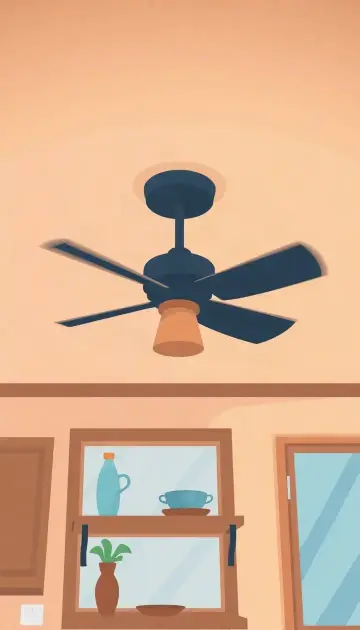
When you turn on the exhaust fan, a door that was supposed to be closed sometimes moves just a little.
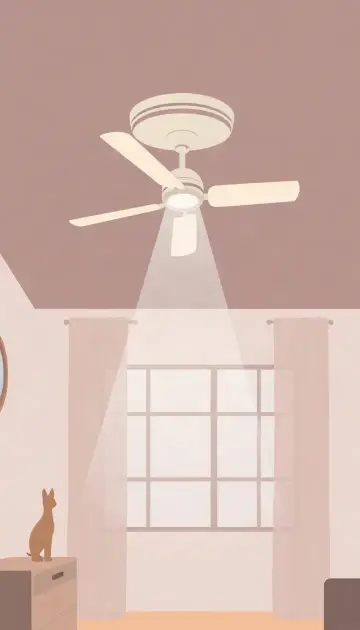
This actually happens because the exhaust fan is sucking the room's air outside.

As air leaves, the air pressure inside the room drops ever so slightly.
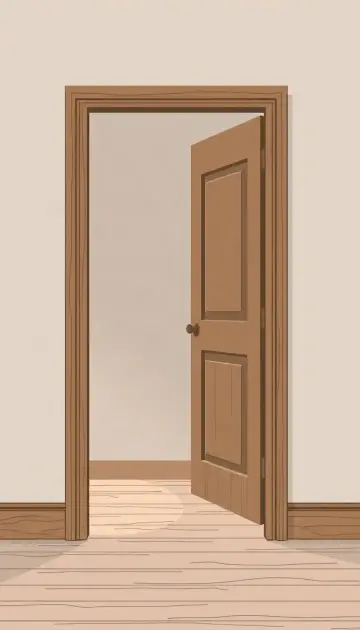
Then outside air tries to push in through the gaps around the door, and the door moves a tiny bit.

Apparently, the more airtight the house, the more often this happens.
Sources
- 風に関する用語(予報用語)Japanese“Terms Related to Wind (Forecast Terminology)”Japan Meteorological Agency
- 耳の圧外傷(気圧性中耳炎、航空性中耳炎)Japanese“Ear Barotrauma (Barotitis Media, Aerotitis Media)”MSD Manual Consumer Version
Spotted a mistake in the article or the translation? Let us know.
Report an error (contact form in Japanese, opens in a new tab)