On this page
A closer look
It's not water vapor that's white, it's water droplets
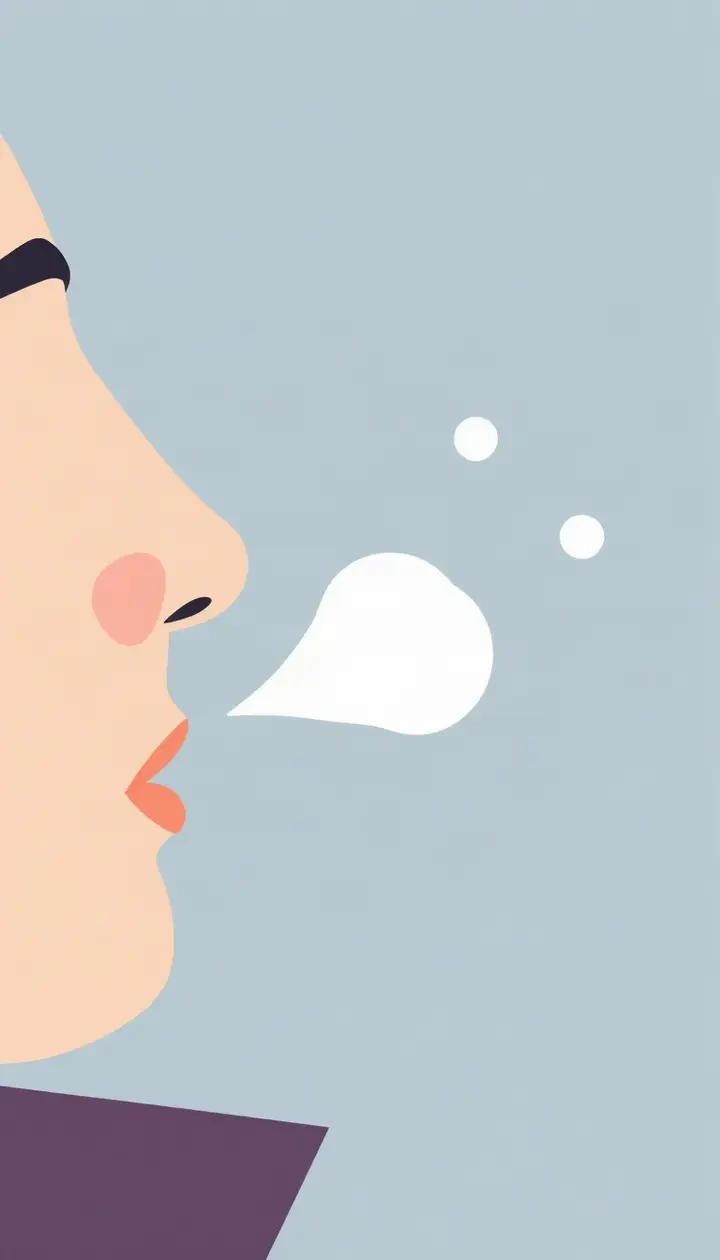
Your breath contains lots of water vapor that has been warmed inside your body. Water vapor is an invisible gas, so on its own it doesn't look white. It only looks white when it cools down and turns into tiny water droplets.
The Japan Meteorological Agency defines the dew point as the temperature at which, as air cools, water vapor begins to condense (change from a gas into liquid water). When your breath is cooled below its dew point, the water vapor it can no longer hold turns into droplets, which look white like a cloud.
When the video says the vapor is "suddenly chilled by the cold outside air and turns into tiny water droplets," this is the process it's describing.
Your breath cools "while mixing"
The key point here is that as your breath cools, it does so while mixing with the outside air.
According to an explanation from the Hong Kong Observatory, the white breath you see in winter is a cloud formed when two bodies of air with different temperatures and different amounts of water vapor mix together: your warm breath, which is nearly full of water vapor, and the cold outside air.
The amount of water vapor air can hold rises sharply as the temperature goes up. If you plot it on a graph, you get not a straight line but a curve that bends upward. The Hong Kong Observatory explains that because this curve bends, mixing two bodies of air, neither of which is full of water vapor, can sometimes produce mixed air that holds more vapor than it can contain (supersaturation). It also notes that if the curve were a straight line, mixing alone would never produce a cloud.
A meteorology course from Penn State likewise lists your breath on a cold day, alongside airplane contrails, as an example of this kind of "mixing cloud."
When the outside air is dry, droplets have a harder time forming
So why are there days when your breath doesn't turn white, even when it's just as cold?
According to the Hong Kong Observatory, if the air being mixed in isn't humid enough, the mixed air never reaches the point where it can't hold any more vapor. In that case, no droplets form, and no cloud forms.
The Penn State course material explains that even a cloud that has already formed will evaporate and disappear if it keeps taking in dry air until the mixed air is once again able to hold all its vapor.
In the video, we said that on dry mornings, the water vapor in your breath "blends into the dry air around it." More precisely, as your breath mixes with the dry air, it either never reaches the limit where droplets form, or the droplets that do form quickly turn back into water vapor. On humid mornings, the surrounding air already contains a lot of water vapor, so droplets form more easily and the ones that form are slower to disappear. That's why white breath lingers longer.
Both temperature and humidity matter
How visible your breath is isn't determined by temperature alone.
The colder the outside air, the more strongly your breath is cooled and the more easily droplets form. The more humid the outside air, the more easily the mixed air goes past its limit, and the longer the droplets last. The combination of these two factors creates days that are "really cold, but your breath doesn't turn white" and days that are "not that cold, but your breath is clearly white."
If you notice on a winter morning that your breath looks different than usual, try checking the humidity along with the temperature, and you'll start to see why.
Contrails and foggy winter windows are part of the same family
White breath isn't the only cloud formed by mixing. The Penn State course material also lists contrails, as well as fog that forms when cold, dry air flows over warm, damp ground after rain, as members of the same family.
The fogging of window glass on winter mornings and the water droplets that form on the outside of a cold glass also belong to the same family as white breath, in the sense that air is cooled below its dew point and water vapor turns into water.
Related reading
What the video says
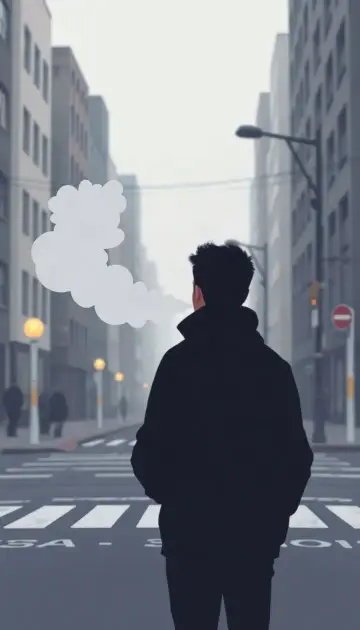
Even on mornings that are equally cold, there are days when you can see your breath and days when you can't.

Your breath looks white because the water vapor in it is suddenly chilled by the cold outside air and turns into tiny water droplets.

Whether those droplets form depends not only on how cold it is, but also on how dry the air is.

When the air is dry, the water vapor in your breath quickly blends into the dry air around it and can disappear before the droplets have a chance to grow.
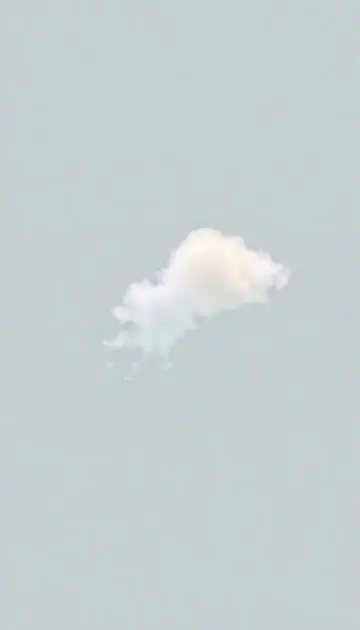
On the other hand, on humid mornings the water vapor has nowhere to go, so your breath tends to form a clear, distinct white cloud.
Sources
- Mixing Cloud in Winter(LEE Boon-ying)Hong Kong Observatory
- 5.3 How can supersaturation be achieved?(METEO 300, William H. Brune)The Pennsylvania State University
- 予報用語(気温、湿度)Japanese“Forecast Terminology (Temperature, Humidity)”Japan Meteorological Agency
Spotted a mistake in the article or the translation? Let us know.
Report an error (contact form in Japanese, opens in a new tab)