On this page
A closer look
The star of the smell isn’t the soil, it’s microbes
Let’s start by sorting out the names. Japan’s National Diet Library’s Collaborative Reference Database has an entry on exactly this question.
It was found that “the smell when rain starts to fall” is called “petrichor,” and “the smell after rain” is called “geosmin.”
Geosmin is a substance made by microbes such as actinomycetes that live in the soil. In other words, the smell comes not from the soil itself but from living things in the soil. How faint it can be and still catch the human nose is covered in another article.
The question here is a different one. Geosmin is in the soil on sunny days, too. So why do we smell it so strongly only after rain?
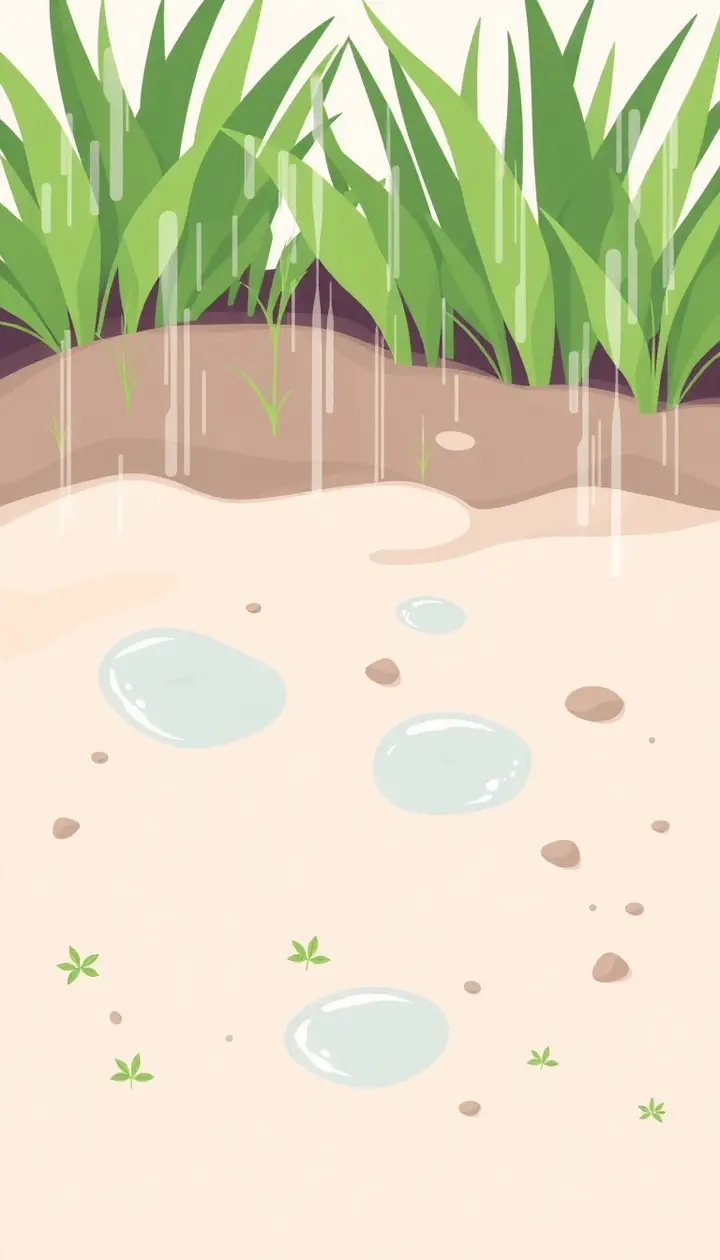
Raindrops “launch” the smell into the air
In 2015, an MIT research team captured that moment with high-speed cameras. Here’s how MIT News described it:
Using high-speed cameras, the researchers observed that when a raindrop hits a porous surface, it traps tiny air bubbles at the point of contact. As in a glass of champagne, the bubbles then shoot upward, ultimately bursting from the drop in a fizz of aerosols.
In other words: when a raindrop hits a porous surface, it traps small air bubbles where it makes contact. Like in a glass of champagne, the bubbles race upward and finally burst out of the drop, spraying a fizz of tiny particles.
The paper’s figure caption sums up this process in three stages:
Aerosol generation after drop impingement on porous media is a three-step process, consisting of bubble formation, bubble growth, and bubble bursting.
Bubbles form, bubbles grow, bubbles burst. Those are the three steps.
The researchers also point out what the scattered particles carry:
The researchers suspect that in natural environments, aerosols may carry aromatic elements, along with bacteria and viruses stored in soil.
In nature, these particles may carry scent compounds stored in the soil, and even bacteria and viruses along with them.
So the after-rain smell isn’t something that just “drifts up from the soil on its own.” Each raindrop is flinging scent-laden particles up into the air.
A gentle drizzle smells stronger than a downpour
This is a finding that matches everyday experience. The team ran experiments changing the intensity of the rain.
In separate experiments, the team deposited single drops of water on each surface, simulating various intensities of rainfall by adjusting the height from which the drops were released. The higher the droplet’s release, the faster its ultimate speed.
They recreated different rain intensities by changing the drop height, and here’s what they found:
From their experiments, the team observed that more aerosols were produced in light and moderate rain, while far fewer aerosols were released during heavy rain.
Light and moderate rain produced more particles, while heavy rain produced far fewer.
If a drop falls too fast, the water spreads out across the surface before it has a chance to trap and grow bubbles. Producing the particles that carry the smell takes just the right speed.
Come to think of it, few of us remember noticing a strong “earthy smell” after a typhoon-level downpour. That scent rises after a summer evening shower or a soft, passing drizzle.
And then the wind carries it
MIT News wraps it up in one sentence:
These aerosols may be released during light or moderate rainfall, and then spread via gusts of wind.
They’re released during light or moderate rain, then spread by gusts of wind.
The team also came up with a formula to predict how much is released. They say it can be calculated from two things: “the velocity of the raindrop and the permeability of the contact surface.” That also means it’s unlikely to happen on surfaces that don’t let water through, like asphalt, and happens readily on surfaces with gaps, like dry soil or fallen leaves.
So we can list the conditions for a strong smell: after a stretch of dry days, rain of moderate intensity falls on a place with soil or fallen leaves, and a breeze passes through. On days when all four line up, the smell reaches us at its richest.
Youngsoo Joung, who led the research, described the significance of the discovery like this:
Until now, people didn’t know that aerosols could be generated from raindrops on soil.
Until 2015, no one knew that raindrops could produce particles from soil. It’s a pretty fun story that for a smell everyone knows, only the way it travels remained a mystery for so long.
Related reading
What the video says
Have you ever been walking down a road after the rain and suddenly caught a strong whiff of earth? This smell actually has a name, and if you trace where it comes from, the story leads all the way to a hidden back-and-forth between invisible bacteria and bugs. Today, we’ll take a careful look at this “smell of rain” and tie it all together from a scientific point of view.

This smell isn’t simply “the smell of dirt.” It’s a complex phenomenon created by several things overlapping: oils evaporating from dry surfaces, substances made by bacteria, and the physics of raindrops bursting. Today, we’ll unravel what it really is, one piece at a time.
That distinctive smell after rain actually has a proper name. In 1964, Australian researchers Isabel Joy Bear and Richard Thomas named it “petrichor” in the scientific journal Nature. It’s a coined word combining the Greek “petra,” meaning stone, and “ichor,” the fluid said to flow in the veins of the gods, so it roughly means “the fluid that flows from stone.”

So what is petrichor made of? During dry spells, plants slowly give off oil-like substances, which gradually build up on the surfaces of rocks and soil. When rain hits them, those accumulated oils are released into the air all at once, and this becomes part of the after-rain smell.
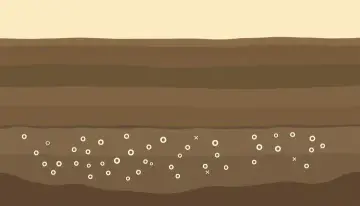
But oils alone can’t explain this complex smell. The other star of the show is the microbes hiding in the soil. In the next part, we’ll look at the real central figure behind the smell: “geosmin.”
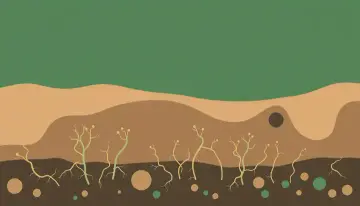
At the heart of the after-rain smell is a substance called geosmin. It’s produced by soil-dwelling bacteria called actinomycetes, such as those in the genus Streptomyces. The name may sound plain, but it leaves a very strong impression on our noses.

What’s surprising is how sensitive we are to it. Humans can detect geosmin at concentrations as tiny as 5 parts per trillion. That’s an overwhelmingly low concentration compared with many other odor compounds. Why the human nose reacts so keenly to this substance still isn’t clearly understood, but it’s thought that it may have meant something important to our ancestors.

By the way, geosmin isn’t just about soil after rain. When tap water or freshwater fish taste muddy, the same substance is the culprit. And the distinctive earthy flavor of beets also comes from geosmin.
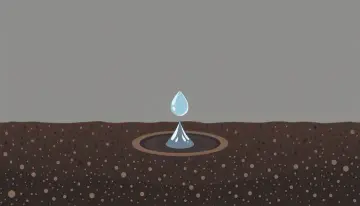
So why does this substance in the soil suddenly spread through the air after rain? This is today’s main topic. The mechanism, a mystery for many years, was actually figured out not that long ago.
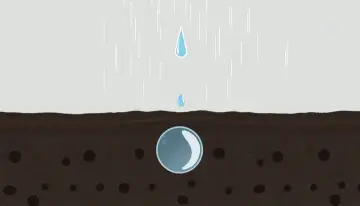
In 2015, an MIT research team in the U.S., Youngsoo Joung and Cullen Buie, tackled this mystery using high-speed cameras. They found that when a raindrop hits a porous surface like soil, tiny air bubbles get trapped inside it.

Those bubbles rise to the surface of the drop and pop. At that moment, water particles too fine to see, called aerosols, shoot out into the air. These aerosols act like tiny vehicles, carrying the odor compounds in the soil up into the air.

In other words, the smell of petrichor isn’t simply blown up by the wind. Raindrops create bubbles, and when those bubbles burst, the smell is carried into the air. A long-standing mystery was solved by this high-speed footage.
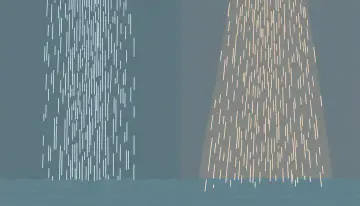
Here’s an interesting finding. How readily these bubbles and aerosols form actually depends on how hard it’s raining. The same study found that the most aerosols are produced during light to moderate rain.
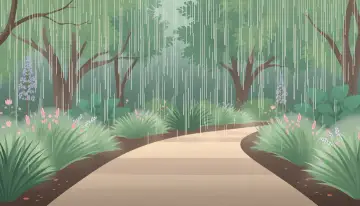
On the other hand, during intense downpours, fewer aerosols are produced. It’s thought that when raindrops hit too hard, the bubbles can’t form properly. That’s why we notice the earthy smell more strongly after a gentle, steady drizzle.
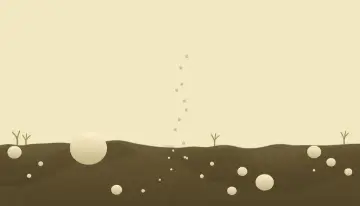
So far, we’ve seen how the smell is “made” and how it “flies.” But one big question remains. Why do bacteria go to all this trouble to make a smell in the first place?
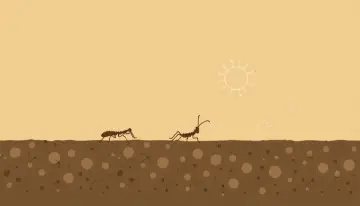
A study published in 2020 in the journal Nature Microbiology answered this question. It showed that tiny soil animals called springtails are attracted to the smell of geosmin.
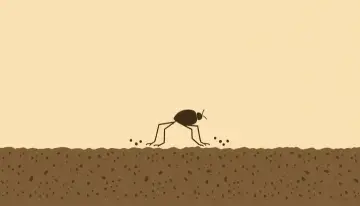
The springtails that are drawn in pick up actinomycete spores on their bodies and carry them all over the place. It’s much like how plants lure insects with nectar to get their pollen carried around, and the same kind of relationship was happening underground, out of sight.

Even more interesting, the genes that make geosmin are known to switch on only when the bacteria are producing spores. So this smell is thought to be a signal from the bacteria saying, “Now’s the time to call in the couriers.” Behind that nostalgic after-rain smell, there was this exchange between tiny living things.
We’ve been tracking down the source of the earthy smell, but it’s not the only rain-related smell. The sharp smell you notice before a thunderstorm comes from ozone. You can smell it because ozone formed high in the sky is carried down near the ground by downdrafts.

Also, the fresh, grassy smell you notice when grass is cut is called “midori no kaori” (“green odor”) in Japanese, and it comes from compounds such as leaf aldehyde. These are released when plants are damaged, through a completely different mechanism from petrichor. Even smells you notice in similar situations each have a different source.

In fact, this idea that “distinctive smells arise when things break down” also applies to the smell of old books. Components in paper called cellulose and lignin slowly break down from light, heat and humidity, releasing volatile organic compounds. An almond-like scent comes from benzaldehyde, and a sweet vanilla-like scent comes from a compound called vanillin.
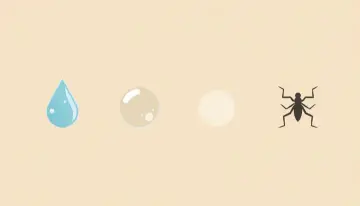
Today, centering on petrichor and geosmin, we’ve tracked down the source of the after-rain smell. The evaporation of dried oils, geosmin made by actinomycetes, the bubbles and aerosols created by raindrops, and the springtails drawn in by the smell. Behind a single smell, all these mechanisms were layered together.

That nostalgic earthy smell after a gentle rain. Next time you notice it, take a moment to remember the world of invisible bubbles and the tiny creatures that move on its signal. When do you notice your favorite rain smell?
Sources
- Rainfall can release aerosols, study findsMIT News
- Aerosol generation by raindrop impact on soilNature Communications
- 雨の日に感じる土のようなにおいについて知りたい。Japanese“I’d like to know about the earthy smell I notice on rainy days.”Collaborative Reference Database (National Diet Library, Japan)
Spotted a mistake in the article or the translation? Let us know.
Report an error (contact form in Japanese, opens in a new tab)