On this page
A closer look
Puddle water vanishes into the sky and the ground
After a rain, puddles seem to disappear before you know it. Broadly speaking, the water goes to two places.
One is the sky. According to the U.S. Geological Survey (USGS), evaporation is the process by which liquid water turns into gaseous water vapor. The Japan Meteorological Agency also explains that wet laundry dries because the water in it turns into vapor and escapes, and that on Earth, water is constantly evaporating from oceans, rivers, moisture in the ground, and more.
The other is into the ground. According to the USGS, some of the rain and snow that falls soaks into the soil and rock beneath the surface. This is called infiltration.
When the video says "water is lost by evaporating from the surface and soaking into the ground," these are the two processes it means.
Evaporation is measured in "depth"
The way evaporation is measured holds a clue to why puddles dry from the edges.
The U.S. National Weather Service (NWS) glossary defines evaporation rate as the amount of water evaporated from a surface over a given period of time, expressed as a depth of liquid water. It's usually given as depth per day or per month. It's the same idea as measuring rainfall as a depth in millimeters.
In other words, evaporation takes water away from the surface as a "thickness," so many millimeters deep. If the sunlight and wind are the same, the thickness of water lost per day is roughly the same in the middle of a puddle as at its edges.
Edges dry first because of the dish shape
The bottom of a puddle is usually shaped like a dish: sunken in the middle and gradually getting shallower toward the edges.
So what happens when water is lost from a puddle like this at the same thickness everywhere? Places like the edges, where the water is only a few millimeters deep, run out of water quickly and the ground peeks through. The deep middle still has water left. As this repeats, the edge of the puddle gradually creeps inward.
On the flip side, in a puddle with a bumpy bottom, shallow spots even near the middle can expose the ground first and form little "islands." What decides the drying order isn't whether a spot is at the edge, but how shallow the water is there.
How fast water soaks in depends on the ground
How water soaks into the ground varies a lot from place to place.
According to the USGS, clay-like soils let in less water, and more slowly, than sandy soils. Soil that's already full of water from earlier rain is like a wet sponge and can't absorb much more. On waterproof surfaces like parking lots and roads, rainwater doesn't soak in and runs off instead.
With a puddle on soil right after rain, the surrounding ground is already holding water, so the rate of soaking in slows down. Puddles on asphalt also have a hard time soaking in, so how fast they shrink depends almost entirely on evaporation.
Sunlight and temperature change how fast puddles dry
According to the USGS, evaporation happens when heat energy breaks the bonds holding water molecules together. Water evaporates quickly at its boiling point of 100°C (212°F), but near 0°C (32°F) it evaporates much more slowly.
When sunlight warms the water and the ground, evaporation happens more easily. That's why a puddle on a sunny summer day vanishes in no time, while a puddle in the shade on a winter day sticks around forever.
Next time you spot a puddle after the rain, try placing a pebble at its edge as a marker. You can see for yourself how quickly the edge moves inward.
Related reading
What the video says
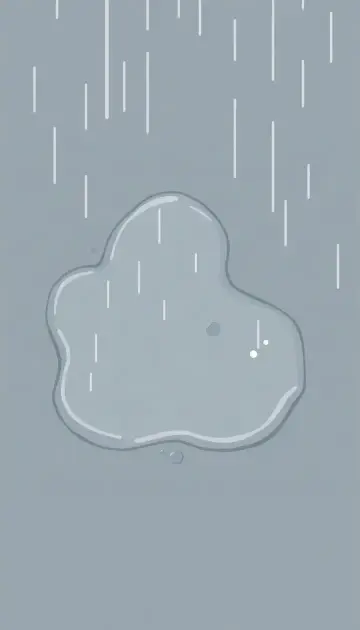
After it rains, puddles often dry out first at their shallow edges.
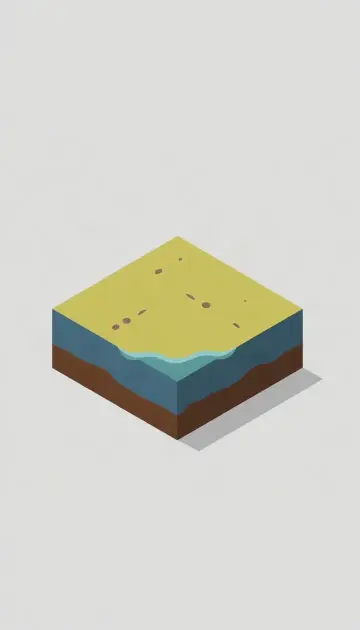
At the edges of a puddle, the layer of water is much thinner than in the middle.
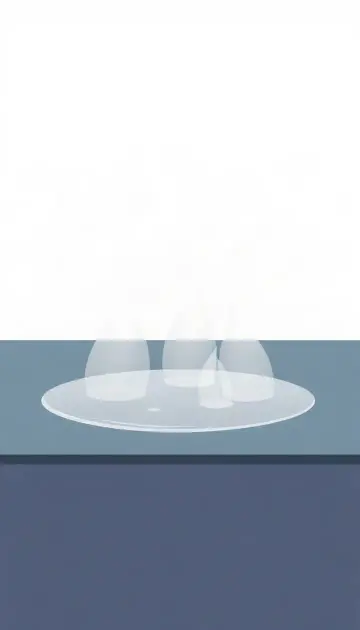
Water is lost by evaporating from the surface and soaking into the ground, so the ground shows through first where the water was thinnest to begin with: the edges.

On top of that, when sunlight warms the ground and the water, evaporation happens even more easily.
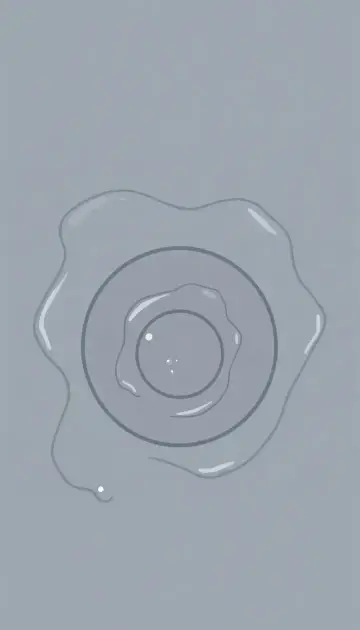
And so the puddle gets smaller bit by bit, starting from its shallow parts, until it's gone.
Sources
- Evaporation and the Water CycleU.S. Geological Survey, Water Science School
- Infiltration and the Water CycleU.S. Geological Survey, Water Science School
- Glossary(Evaporation Rate)NOAA National Weather Service
- 雲をつくる水蒸気はどこからくるの?(はれるんランド)Japanese“Where does the water vapor that forms clouds come from? (Harerun Land)”Japan Meteorological Agency
Spotted a mistake in the article or the translation? Let us know.
Report an error (contact form in Japanese, opens in a new tab)