On this page
A closer look
There are only three pigments
The Forestry and Forest Products Research Institute's explanation starts by narrowing down the number of pigments.
The change in color of a plant's green leaves is called autumn coloration. In most cases, leaves turn red or yellow. This is because the main pigments plants have are three: chlorophyll, carotenoids, and anthocyanins. They are green, yellow, and red, respectively.
Green, yellow, and red. Combinations of just these three are enough to explain the colors of mountains in the fall.
Two of them are already in the leaf from spring.
The chloroplasts, which carry out photosynthesis, contain chlorophyll and carotenoids.
Green chlorophyll and yellow carotenoids are both present in green summer leaves. But there's so much more chlorophyll that the yellow can't be seen.
Yellow is "subtraction," red is "addition"
This is the key difference. First, yellow.
Yellow leaves occur when chlorophyll breaks down in old leaves and the yellow of carotenoids, which had been hidden by the green, appears.
The green just drains away. The yellow was there all along. When a ginkgo turns yellow, it isn't making a new color; it's the result of clearing out the green.
So what about red?
Red leaves occur when an abscission layer forms in places such as the petiole of an aging leaf, blocking the movement of substances between the leaf and the branch, and anthocyanins are made from the photosynthetic products that have accumulated in the leaf.
This isn't subtraction. A partition called the "abscission layer" forms between the leaf and the branch, cutting off the flow of materials, and the leaf uses the photosynthetic products left stranded inside it as raw material to newly synthesize a red pigment called anthocyanin. In other words, it's addition.
In Japanese, both are lumped together under the same word for autumn foliage, but yellow is what's left after chlorophyll disappears, while red is a color made after fall arrives. The processes are completely different.
The explanation also gives typical examples.
The ginkgo is the classic example of yellow leaves, and the Japanese maple of red leaves. Persimmon trees develop a mottled pattern of green, red, and yellow.
The mottling on a persimmon leaf means that within a single leaf, "parts where green remains," "parts where yellow has appeared," and "parts that have made red" are all happening at the same time.
Changing color is part of getting ready to drop
The timing of the color change has a meaning.
These changes in leaf color generally occur before leaves fall. Trees that shed their leaves all at once have a season of red (or yellow) leaves. It comes around the start of fall or the dry season.
Fall color happens right when the leaf is doing its "last job before it's done." The formation of an abscission layer is itself preparation for leaf drop. In the explanation in the Forestry and Forest Products Research Institute's Q&A, it's because a partition forms to detach the leaf that substances lose their way out and become anthocyanins. Fall color is part of the same sequence of events as leaf drop.
As the phrase "around the start of fall or the dry season" suggests, fall isn't the only trigger. Trees that shed their leaves in the dry season also change color before dropping them.
A new view on being "trapped by the abscission layer"
The explanation so far, that "the abscission layer stops the flow, and red pigment forms from the leftover sugars," is widely presented as how fall color works. However, research by Mitsutoshi Kitao and colleagues at the same Forestry and Forest Products Research Institute has produced somewhat different results.
The research group examined fullmoon maples (Acer japonicum) in Hokkaido under a microscope and reported that even after the abscission layer formed, they saw no sign that the vascular bundles (bundles of tubes that carry water and sugar) connecting the leaf and branch had been severed (FY2021 performance report). They suggest that sugar, the raw material for the red pigment, builds up in the leaf because of changes in how sugar and starch are used inside the leaf.
The same report also indicates that the red pigment may play a role in protecting aging leaves from strong light and in making sure the work of recovering nitrogen back into the branches is carried through to the end. Both of these are at the stage of "suggested" or "thought to be," and nothing has been confirmed. How the abscission layer and fall color are connected is still being worked out (we also cover how leaves drop in our article on why autumn leaves fall from branches).
Even evergreens change color, if you look closely
What about trees that don't shed their leaves all at once?
Evergreen trees usually don't drop their leaves all at once, so it's not noticeable, but in trees such as mokkoku (Ternstroemia gymnanthera), you can see red or yellow leaves somewhere in the crown all year round.
Evergreens replace their leaves too. It's just that the timing is scattered, so it never becomes a seasonal scene. If you come across a mokkoku, there should be some red or yellow leaves mixed in somewhere on the tree.
Red leaves in spring might be sunscreen
Finally, there's a surprising note at the end.
There are also plants, such as Japanese photinia, whose new leaves turn red. This red is also the color of anthocyanins and is thought to play roles such as protecting young leaves from ultraviolet light.
Japanese photinia (Photinia glabra), commonly used for hedges in Japan, has bright red new shoots in spring. That's the same anthocyanin as in fall leaves, but its job is the exact opposite. Rather than being the color of a leaf at the end of its life, it's thought to be a sunscreen that protects newborn leaves from UV light.
This also offers a hint about what fall color means. The fact that leaves about to drop go to the trouble of making red pigment could be read as a sign that it's not just a dumping ground for waste but may actually serve some purpose. The "protecting leaves from light" role cited in Kitao and colleagues' research overlaps with this view as well. As the Forestry and Forest Products Research Institute's explanation puts it with "is thought to," the meaning of fall color itself is still under study.
Related reading
What the video says
The yellows and reds of fall foliage are actually created by two completely different mechanisms.
Summer leaves are green thanks to a green pigment called chlorophyll. As temperatures drop and the days get shorter, this chlorophyll breaks down and decreases.
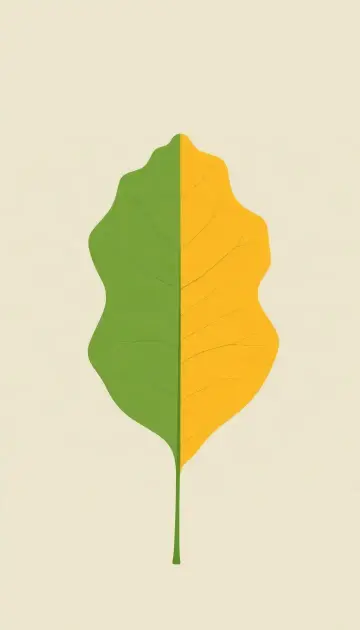
As the green fades, yellow shows through. The yellow comes from pigments called carotenoids. They were actually in the leaf all summer long; they just didn't stand out because the green hid them. That's why ginkgo leaves turn yellow.
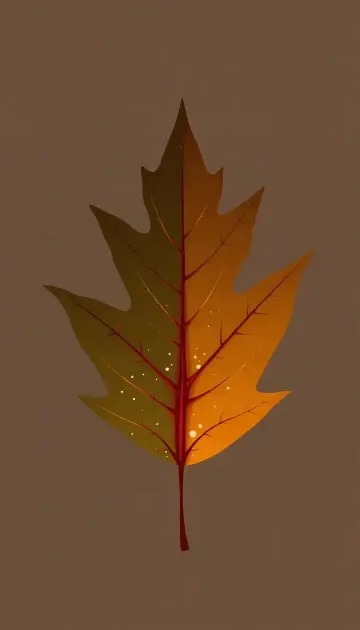
Anthocyanins, the source of red, are a different story. They aren't present in summer; the leaf newly makes them in the fall. They're thought to be synthesized from sugars that have built up in the leaf, and this is how maples turn red.
It isn't fully understood why trees go to the trouble of making red pigment, but a leading theory is that it protects leaves from strong light and cold, and helps the tree recover nutrients before the leaves drop.
Green, yellow, red. Knowing that each color comes from a different mechanism might make this year's leaf-peeping look a little different.
Sources
- 森林の生き物 Q3(紅葉はなぜ起こるのか)Japanese“Forest Life Q3 (Why do leaves change color in autumn?)”Forestry and Forest Products Research Institute (FFPRI)
- 紅葉は樹冠内部の葉を守り、樹冠全体での炭素獲得と窒素回収に貢献する(2021年度 実績報告書)Japanese“Autumn leaf coloration protects leaves inside the crown and contributes to carbon gain and nitrogen recovery across the whole crown (FY2021 Performance Report)”KAKEN: Database of Grants-in-Aid for Scientific Research; Principal Investigator: Mitsutoshi Kitao (Forestry and Forest Products Research Institute)
Spotted a mistake in the article or the translation? Let us know.
Report an error (contact form in Japanese, opens in a new tab)