On this page
A closer look
A "tear here" line at the base of the leaf
According to an explanation from the University of Maine, in autumn a special layer of cells forms where the leaf stalk (petiole) attaches to the branch, gradually separating the leaf from the branch. This layer is called the abscission layer (a layer of cells whose job is to detach the leaf), and it's the reason leaves fall from the tree.
As the abscission layer forms, the tubes running through the leaf (the veins) close off and stop carrying water and other substances.
So leaves don't just weaken and tear off by chance. The tree itself puts in a "tear here" line ahead of time.
Recovering nutrients before letting go
The video showed the abscission layer "closing off the pathways for water and nutrients," but before that happens, there's another important job to do.
According to course material from the UK's Open University, before a leaf falls, nutrients such as nitrogen, phosphorus, and potassium are moved out of the leaf and into other parts of the tree, like the branches and trunk. After that, the tubes that had been supplying the leaf with water and nutrients are closed, and the leaf is cut loose.
Chlorophyll, the pigment that makes leaves green, is broken down too. According to the University of Maine, as the days get shorter and temperatures drop in autumn, leaves stop making chlorophyll, and the chlorophyll that's left gets broken down. That's why the green fades and the yellow and orange pigments that were there all along start to show.
Rather than simply throwing its leaves away, the tree pulls back whatever materials it can still use before letting them go. Fall color is also a sign that this moving-out process is underway.
The cut gets a lid
You might expect a branch to be left with an open wound after its leaf falls.
According to the Open University material, the mechanism that detaches the leaf (the abscission zone) is made up of two layers: a layer of cells where the leaf breaks away, and a protective layer that seals the surface of the branch afterward. The scar left behind after the leaf falls is protected by a covering of cork.
Dropping a leaf wouldn't do much good if water kept escaping through the cut. So the detachment mechanism comes with a built-in step that puts a lid on the cut afterward.
Why drop leaves in winter?
The Open University material explains that water tends to be scarce in winter because it freezes, and plants without a way to conserve water end up losing it. Deciduous trees avoid this problem by dropping their leaves and shutting down photosynthesis.
On the other hand, there are also evergreen trees that keep their leaves through the winter. According to research by Yusuke Onoda and colleagues at Kyoto University, evergreens invest about twice as much carbon in their leaves as deciduous trees do, because they build tough leaves that can withstand winter freezing. They make up for that cost by photosynthesizing for longer, so the carbon balance ends up roughly the same for both.
The research group sums it up this way: deciduous trees "avoid" winter, while evergreens "endure" it. Dropping leaves isn't a sign of weakness. It's one strategy for getting through the winter.
The link between the abscission layer and fall color is still being studied
The red color of autumn leaves is often explained like this: "The abscission layer forms and traps sugar in the leaf, and that sugar is used to make red pigments (anthocyanins)."
However, a research report (fiscal year 2021) by Mitsutoshi Kitao and colleagues at the Forestry and Forest Products Research Institute observed fullmoon maple (Acer japonicum) leaves under a microscope and found no sign that the leaf's tubes had been cut off, even after the abscission layer had formed. The report suggests that the buildup of sugar used to make the red pigments is likely due to changes in how sugar and starch are used inside the leaf.
The same report also suggests that the red pigments may protect leaves from strong light and help ensure that nitrogen is recovered. The connection between the abscission layer and fall color is still being worked out.
You might also like
What the video says

When autumn leaves let go of their branches, it isn't just because they've grown weak and dropped off.

In autumn, a special layer of cells called the "abscission layer" develops at the base of each leaf.
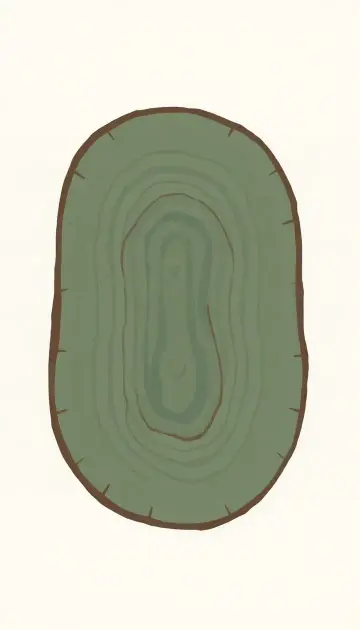
Little by little, this layer divides the cells and closes off the pathways for water and nutrients.
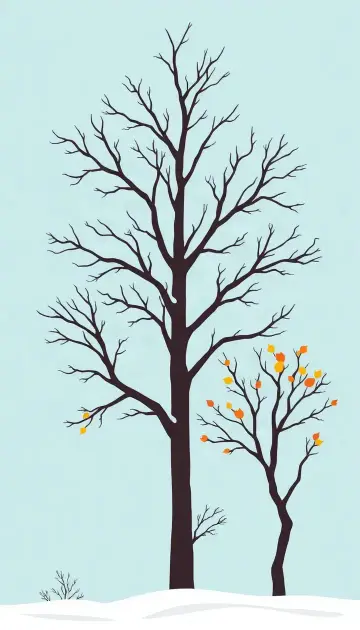
Deciduous trees drop their leaves this way to keep water from evaporating in winter, so the whole tree can make it through the season.

In other words, the reds and yellows of fall aren't just a change in color. They're also a sign that the tree has started getting ready for winter.
Sources
- Bulletin #7078, Facts About Leaf Color in MaineUniversity of Maine Cooperative Extension (revised 2014)
- Surviving the winterThe Open University (UK), OpenLearn
- 紅葉は樹冠内部の葉を守り、樹冠全体での炭素獲得と窒素回収に貢献する(2021年度 実績報告書)Japanese“Autumn leaf coloration protects leaves inside the tree crown and contributes to carbon gain and nitrogen resorption across the whole crown (FY2021 Research Progress Report)”KAKEN (Database of Grants-in-Aid for Scientific Research); Principal Investigator: Mitsutoshi Kitao (Forestry and Forest Products Research Institute)
- 冬を耐える常緑樹と避ける落葉樹が共存する謎を解き明かすJapanese“Solving the mystery of how winter-enduring evergreen trees and winter-avoiding deciduous trees coexist”Kyoto University, 2022
Spotted a mistake in the article or the translation? Let us know.
Report an error (contact form in Japanese, opens in a new tab)