On this page
- A closer look
- The Mid-Autumn Moon is a "calendar date"; the full moon is an "astronomical moment"
- On average, they're already 0.8 days apart
- The moon's orbit is an ellipse, so the moon age at full moon isn't constant
- 2026 was a two-day-gap "izayoi" year
- Why not just make the full moon the Mid-Autumn Moon?
- Related reads
- What the video says
- Sources
A closer look
The Mid-Autumn Moon is a "calendar date"; the full moon is an "astronomical moment"
The reason they drift apart is that the two terms refer to completely different things. Here's how the Koyomi Wiki (calendar wiki) from the National Astronomical Observatory of Japan opens:
Defining the meigetsu as the moon of the fifteenth night, meaning the moon that rises on the evening of the 15th day of the lunar calendar, is simple, but it does not necessarily fall on the same day as the full moon, that is, the moment when the moon and the sun are on opposite sides of the Earth.
The Mid-Autumn Moon is set by a date. It's the moon that rises on the evening of the 15th day of the 8th month in the old lunar calendar. The full moon, on the other hand, is a moment. It refers to the single point in time when the moon and the sun line up on exact opposite sides of the Earth.
When you compare a date with a moment, it would be stranger if they didn't drift apart.
On average, they're already 0.8 days apart
The same page even shows which direction the gap tends to go.
The 15th day of the lunar calendar is the day that contains moon age 14.0, and half of the lunar phase cycle is 29.5 ÷ 2 ≈ 14.8, so the full moon often comes later.
The 15th day of the lunar calendar is the day with moon age 14.0. But the average moon age at full moon is 14.8. That means a 0.8-day gap is built in from the start. So it's more common for the full moon to come after the Mid-Autumn Moon.
The page then breaks the cause down into two parts.
The causes of the gap fall broadly into two categories. The first is an apparent issue arising from how days are divided, and the second is an essential factor: the moon age at full moon changes.
The moon's orbit is an ellipse, so the moon age at full moon isn't constant
The second, "essential factor" is what determines how big the gap is each year. Another page of the Koyomi Wiki goes into detail.
The moon moves in an elliptical path around the Earth, moving faster when it is close to the Earth and slower when it is far away.
Because of Kepler's second law, the time it takes to go from new moon to full moon changes depending on where the moon is in its orbit.
For example, if perigee falls between the new moon and the full moon, the interval becomes shorter; if apogee falls in between, it becomes longer.
The range of variation is pretty large.
On average, about 29.5 ÷ 2 ≈ 14.75 days Roughly 13.9 to 15.6 days (varying by just under ±1 day)
In some years it takes only 13.9 days from new moon to full moon; in others it takes 15.6. With a spread of 1.7 days, you get years where the full moon matches the fixed date of "the 15th of the lunar month," years where it's one day off, and years where it's two days off.
2026 was a two-day-gap "izayoi" year
The Koyomi Wiki has a table listing the Mid-Autumn Moon and the full moon for each year. Here are the years around 2026:
| Year | Mid-Autumn Moon | Full moon | Moon night |
|---|---|---|---|
| 2024 | Sept. 17 | Sept. 18, 11:34 | 15th–16th night |
| 2025 | Oct. 06 | Oct. 07, 12:48 | 15th–16th night |
| 2026 | Sept. 25 | Sept. 27, 01:49 | 16th night (izayoi) |
| 2027 | Sept. 15 | Sept. 16, 08:04 | 15th–16th night |
| 2028 | Oct. 03 | Oct. 04, 01:25 | 15th night |
In 2026, the Mid-Autumn Moon is on September 25, and the full moon is at 1:49 a.m. on September 27. That's a two-day gap. The "Moon night" column reads "16th night" (izayoi), meaning that the moon visible on the night of the Mid-Autumn Moon was, in terms of its phase, closer to a sixteenth-night moon.
A gap that widens to two days is on the rarer side; tracing through the table, you'll see "16th night" appearing back to back in 2016 and 2017 as well. In a two-day-gap year, the moon on Mid-Autumn Moon night is still slightly less than full, and it looks closer to a perfect circle two days later.
Why not just make the full moon the Mid-Autumn Moon?
The Koyomi Wiki answers this natural question too.
So should the full moon be made the meigetsu? The widely circulated kana calendars did not list the date and time of the full moon. The full moon is determined solely by the positions of the sun and the moon, and the moon is not necessarily visible in Japan at that moment.
(Kana calendars were popular almanacs written in simple Japanese script.)
2026 is exactly that case. The moment of full moon is 1:49 a.m. on September 27, in the middle of the night. If the tradition were "view the moon on the day of the full moon," in some years that moment would land at midday or dawn.
On the evening of the 15th lunar day, though, the moon is always up, every year. Deciding by calendar date was a design that gave up precision in exchange for "you can actually see it every year." The Mid-Autumn Moon not being full isn't a flaw in the calendar; it's a feature.
Related reads
What the video says
The 2026 Mid-Autumn Moon is on September 25. But the real full moon comes two days later, on September 27.
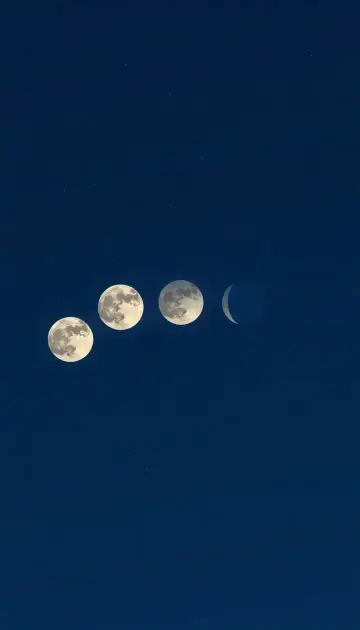
The term "Mid-Autumn Moon" actually refers to the moon on the night of the 15th day of the 8th month of the old lunar calendar, so it's decided by a different standard than the full moon.
So it doesn't always match the full moon exactly, and a gap of a whole two days is actually a bit unusual.
By the way, Japan also has its own custom called "jusanya," or the "thirteenth night," when people view the moon on the 13th night of the 9th lunar month. In 2026, it falls on October 23.
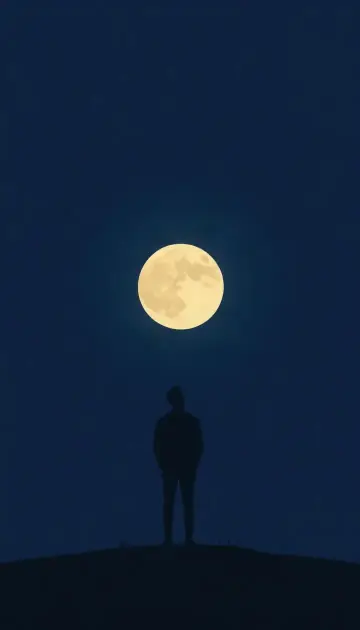
Even if it isn't full, the Mid-Autumn Moon has a beauty all its own. Why not take a moment to look up at the night sky this year?
Sources
- 暦Wiki/中秋の名月とは/名月必ずしも満月ならずJapanese“Koyomi Wiki / What Is the Mid-Autumn Moon? / The Meigetsu Is Not Always a Full Moon”National Astronomical Observatory of Japan (NAOJ), Ephemeris Computation Office
- 暦Wiki/月の満ち欠け/月齢と満ち欠けJapanese“Koyomi Wiki / Phases of the Moon / Moon Age and Phases”National Astronomical Observatory of Japan (NAOJ), Ephemeris Computation Office
Spotted a mistake in the article or the translation? Let us know.
Report an error (contact form in Japanese, opens in a new tab)