On this page
A closer look
It all comes down to one number: the dew point
In the video, we said that "the cooled air can't hold all its water vapor anymore." That "can't hold it anymore" temperature has a name. The Japan Meteorological Agency's forecast terminology defines it like this:
Dew point temperature: The temperature at which relative humidity reaches 100% when air is cooled while its water vapor pressure stays constant. The temperature at which water vapor in the air condenses into dew.
Whether a glass gets wet is decided by comparing it to this single number. If the glass's surface temperature is lower than the dew point of the surrounding air, it gets wet. If it's higher, it doesn't.
Look at the dew point, not the humidity
Here's the practical takeaway. "High humidity makes things wet more easily" is roughly true, but humidity is a number whose meaning changes with the air temperature.
As the Japan Meteorological Agency defines it, relative humidity is "the ratio of the amount of water vapor to the saturation amount of water vapor at the current temperature." Even at the same 60% humidity, air at 30°C (86°F) and air at 10°C (50°F) contain completely different amounts of water vapor.
The dew point converts that "amount of water vapor actually in the air" into a temperature, so it isn't swayed by the air temperature. That's why the dew point is better for predicting condensation.
Glasses get soaking wet so fast in summer because the dew point is high (the air is packed with water vapor). Set out the same glass of ice water in winter, and it won't get very wet, because the dew point is low.
That's why lukewarm drinks stay dry
The same idea ties together a bunch of everyday observations:
- A glass of ice water gets wet: Its surface drops close to 0°C (32°F), lower than most dew points
- Room-temperature drinks stay dry: Their surface temperature stays above the dew point
- Coasters help: Not by preventing the wetness, but by catching the water that drips down
- Pouring into a pre-chilled glass makes it extra wet: The surface temperature has already been lowered
The misconception that "the water inside is seeping out" is easy to fall into because the amount of water is surprisingly large. Water vapor in the air is invisible, but whenever there's a surface below the dew point, it collects there and becomes visible.
Below 0°C, you get frost instead of dew
According to the Japan Meteorological Agency's "Guide to Meteorological Observations," below 0°C the temperature at which air becomes saturated with respect to ice is called the frost point, because frost forms instead of dew.
That's why things you take out of the freezer get coated in white frost rather than water droplets. It's the same principle, but past that temperature threshold, both the name and the appearance change.
Related reads
What the video says
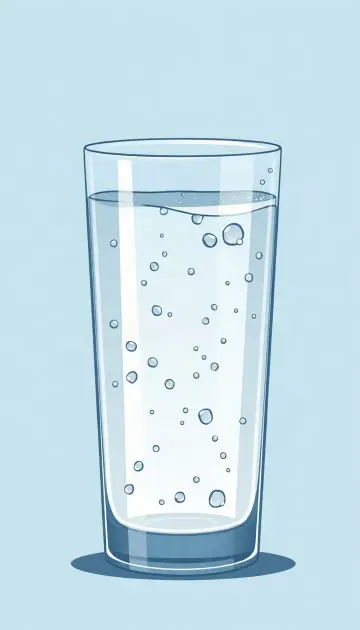
When the outside of a glass with a cold drink gets wet, it's not actually the water inside seeping through.

Those droplets are really water vapor that was already in the air.

Warmer air can hold more water vapor, but when it touches a cold glass, it cools down suddenly.
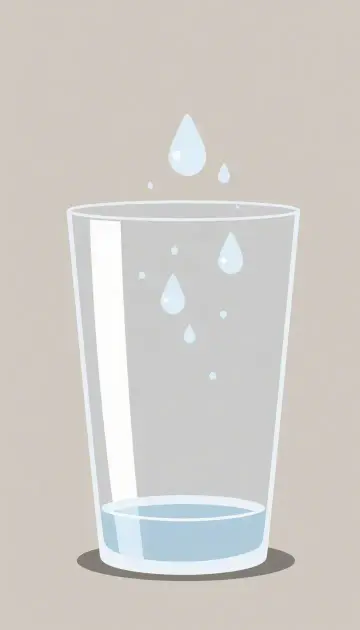
The cooled air can't hold all its water vapor anymore, so the extra turns into droplets on the glass's surface.

So in summer, drinks get dripping wet so quickly because there's so much water vapor in the air.
Sources
- 予報用語(気温、湿度)Japanese“Forecast Terminology (Temperature, Humidity)”Japan Meteorological Agency
- 気象観測の手引きJapanese“Guide to Meteorological Observations”Japan Meteorological Agency
Spotted a mistake in the article or the translation? Let us know.
Report an error (contact form in Japanese, opens in a new tab)