On this page
A closer look
The real one lives in Zurich
Here's an announcement from the FIFA Museum.
The FIFA World Cup™ Original Trophy is back on display in our iconic FIFA World Cup™ Gallery at the FIFA Museum in Zurich, Switzerland – now featuring an updated base plate.
In other words, the real trophy is on display in the "FIFA World Cup Gallery" at the FIFA Museum in Zurich, Switzerland, and it now has a new base.
Visitors can once again see the FIFA World Cup Original Trophy in the FIFA World Cup™ Gallery.
If you visit, you can see the real thing. That means the original isn't kept in the winning country.
Winners' names get engraved on the base
The announcement also describes the updated base.
The name of 2026 FIFA World Cup™ winners Spain has been added to the existing engravings, joining all previous champions since 1974, when the FIFA World Cup Trophy was first used.
So the name of Spain, winner of the 2026 tournament, was added to the existing engravings, alongside every champion since 1974.
This gets to the heart of why the trophy can't be taken home. It's a single object that keeps a running record of every World Cup winner. If a champion took it home, there'd be no way to engrave the next tournament's result.
The announcement explains how the base is handled, too.
Following each FIFA World Cup™ tournament, a new base plate is created to reflect the latest winner. The previous base plate is preserved as part of the FIFA Museum collection, documenting another chapter in the history of football's most iconic trophy.
A new base is made after each tournament, and the old one is preserved in the museum's collection. Both the trophy itself and its bases serve as a record.
Why 1974?
The engravings start in 1974 because that's the first tournament where this trophy was used.
all previous champions since 1974, when the FIFA World Cup Trophy was first used
So what did they use before that? The Japan Football Association's Q&A covers the tournament's history.
The first tournament was held in Uruguay in 1930 at the proposal of Jules Rimet, the Frenchman who was then president of the Fédération Internationale de Football Association (FIFA), and 13 teams took part.
The original trophy was named after Jules Rimet, the man who proposed the first tournament: the "Jules Rimet Trophy."
That trophy came with a rule that any country winning three times could keep it permanently. Brazil met that condition by winning in 1958, 1962, and 1970, and took it home.
The JFA's description also confirms Brazil's number of titles.
The winning nations are Brazil (5 times), Italy and Germany (4 times each), Argentina, Uruguay, France, and Spain (2 times each), and England, for a total of eight countries.
Because the original trophy now belonged to Brazil, a new one was needed starting with the 1974 tournament. That's the FIFA World Cup Trophy used today.
And the original was lost
The original trophy kept by Brazil was stolen in 1983 and is still considered missing. It's believed to have been melted down.
It seems natural to think this incident shaped how the current trophy is handled. Letting a country keep it permanently led to the loss of a symbol of soccer history. To avoid repeating that, FIFA keeps the real one and looks after it in a museum.
By the way, 1983 wasn't the first time the original trophy was stolen. It was also stolen in London before the 1966 World Cup in England, and that time it turned up a few days later. The risks of passing a one-of-a-kind treasure from country to country showed up early on.
What the winners actually lift
So what are the players holding up at the awards ceremony?
The winning country is said to receive a gold-plated copy (the Winner's Trophy) to keep permanently. The real one goes back to FIFA after the celebrations and photos.
That said, we weren't able to find any official statement from FIFA itself about this copy's material or weight. Descriptions like "gold-plated brass" or "gold-plated bronze" circulate, but we couldn't find them in any form with a traceable source. So we'll avoid stating anything definite here.
What is certain is that the FIFA Museum uses the term "Original Trophy" to distinguish the real one, and that it's on display in Zurich. There's an original and a copy, and the winning country keeps the copy—at least that much can be read from the official statements.
The tournament itself keeps growing
While we're at it, let's look at the scale of the history this trophy has recorded. Here's the JFA's explanation.
From 1930 to '78, 16 teams took part; from 1979 to 1994, 24 teams; and from 1995 to 2022, 32 teams. Starting with the 2026 tournament, the field has been expanded to 48 teams.
The 2026 tournament was co-hosted by three countries: the United States, Canada, and Mexico. The 2030 tournament will be co-hosted by three countries, Spain, Portugal, and Morocco, but to commemorate the 100th anniversary of the World Cup, one match each is set to be played in Uruguay, host of the first tournament, as well as in Argentina and Paraguay.
A tournament that started with 13 teams has grown to 48, and the trophy's base lists every champion since 1974. In short, you could say the reason the trophy can't be taken home is to protect that continuity.
Related reads
What the video says

When a team wins the World Cup, there's that moment when they lift the golden trophy, right?

But actually, what the winning team gets to take home isn't the real thing. It's a carefully crafted replica.

The real trophy goes back to the organizing body right after the tournament and is kept under tight security in a vault-like place.
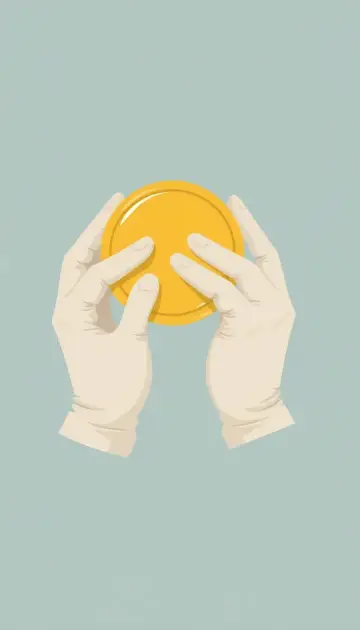
The reason is simple: the trophy itself is a one-of-a-kind object of enormous value. It's about protecting it from damage or loss.
Next time you watch a victory celebration, it's fun to think there's another story hidden behind it.
Sources
- FIFA World Cup™ Original Trophy back on display in ZurichFIFA Museum
- FIFAワールドカップってどんな大会?(ドキュメント・FAQ)Japanese“What kind of tournament is the FIFA World Cup? (Documents & FAQ)”Japan Football Association
Spotted a mistake in the article or the translation? Let us know.
Report an error (contact form in Japanese, opens in a new tab)