On this page
A closer look
"No water" doesn't mean "a small amount of water"
First, let's clear up a common misunderstanding. Microbes can't multiply not because the amount of water is small.
A glossary entry from the Japan Society of Refrigerating and Air Conditioning Engineers explains water by dividing it into two types.
Water consists of free water, whose molecules can move around freely and which microorganisms can use, and bound water, which is linked by hydrogen bonds to other components in the food (such as proteins and carbohydrates), has its molecular motion restricted, and is not used by microorganisms.
Free water is water that can move freely and that microbes can use. Bound water is water that's attached to other components and can't move.
Even if a food contains water, microbes can't use it if it's all bound water. The measure of this proportion is water activity.
In 1957, Scott proposed water activity as an indicator of the proportion of free water in food and showed the relationship between water activity and the growth limits of microorganisms.
The definition is clear-cut, too.
Water Activity (Aw) = P/Po Po: the equilibrium vapor pressure when pure water is placed in a sealed container and allowed to evaporate under constant temperature conditions P: the equilibrium vapor pressure of the test food under the same conditions
And here's what it means in practice:
Because water activity indicates the growth limit (lower limit) of food microorganisms, in Japan it is used in the manufacturing standards under the Food Sanitation Act for pressure-and-heat-sterilized foods in containers and packaging, soft drinks, fish paste products, and meat products.
It's an indicator used in legal standards. This isn't just a matter of gut feeling.
The three foods simply use different methods
Honey, rice, and salt. These three reach the same goal by different routes.
Honey: tying up water with sugar
A consumer Q&A from Japan's Ministry of Agriculture, Forestry and Fisheries describes what's in honey like this:
Of glucose and fructose, the main components of honey,
Because there's so much sugar, water molecules are surrounded by sugar and can't move. The extremely high sugar concentration is also why crystals form.
Therefore, the more glucose a honey contains, the more easily it crystallizes.
It's so concentrated that sugar that can't stay dissolved turns into crystals. In other words, there's almost no free water.
Rice: drying to reduce water
Here's the Ministry of Agriculture, Forestry and Fisheries' explanation of the JAS (Japanese Agricultural Standard) for milled rice:
Moisture content affects storability and the growth of mold and the like when milled rice is stored at room temperature.
The standard is 15.0% or less. The remaining water is bound water attached to starch and proteins, which microbes can't use.
Salt: no water to begin with
Salt doesn't contain water. And salt itself strongly attracts water. Salting works as a preservation method because salt pulls free water out of food.
Canned food alone uses a completely different method
This is the interesting part that ties the video together. Canned food works on a different principle from these three.
Here's the explanation from the Japan Canners Association:
Canned foods, bottled foods, and retort pouch foods are sealed so that air, water, bacteria, and the like absolutely cannot get in, and their contents are fully heat-sterilized, so there is no risk of them causing food poisoning. Of course, no food additives such as sterilizing agents or preservatives are used.
The contents of a can are full of moisture. Whether it's simmered fish or fruit, there's plenty of free water. It's exactly the kind of environment where microbes can multiply.
So why doesn't it spoil? Because there are no microbes.
For sterilizing canned foods (seafood, agricultural products, meat, prepared dishes, etc.), some bottled foods, and retort pouch foods, high-temperature, high-pressure sterilization at 120°C or higher for 4 minutes or longer is generally performed using a "retort" (high-pressure kettle).
In other words, there are two approaches to preservation.
| Method | Idea | Examples |
|---|---|---|
| Take away the environment | Microbes may be present but can't multiply | Honey, rice, salt, dried fish, jam |
| Eliminate the microbes | The environment allows growth, but there's nothing to grow | Canned food, retort pouches, bottled food |
And these two approaches are connected in the law
What's even more interesting is that these two approaches are combined within the regulations. Take a look at the Food Sanitation Act standard cited in the Japan Society of Refrigerating and Air Conditioning Engineers' glossary entry.
"For pressure-and-heat-sterilized foods in containers and packaging with a pH exceeding 4.6 and a water activity exceeding 0.94, the method shall be heating so that the temperature at the center reaches 120°C for 4 minutes, or a method with equal or greater effectiveness."
The sterilization conditions for canned and retort foods are split by water activity value. The reason is spelled out as well.
This indicates that when the water activity is at or below 0.94 (or pH 4.6), the lower limit for the growth of Clostridium botulinum, botulinum need not be considered a target of sterilization.
If the water activity is 0.94 or below, botulinum can't multiply, so such strict heating isn't necessary. If the water activity exceeds 0.94, 120°C for 4 minutes is required.
The "take away the environment" method and the "eliminate the microbes" method aren't separate techniques. Their relationship is that how much of the environment you've taken away determines how much you need to eliminate.
Nearly every food preservation method is an application of this
Looking at things from this angle, everyday preservation methods sort themselves out neatly.
- Dried fish, dried noodles, kiriboshi daikon (dried shredded daikon radish) → Reduce free water by drying (same as rice)
- Jam, yokan (a sweet bean jelly), condensed milk → Tie up water with sugar (same as honey)
- Shiokara (salted fermented seafood), salted wakame seaweed, miso → Draw out water with salt (same as salt)
- Canned food, retort pouches, bottled food → Seal and heat-sterilize
- Freezing → Freeze the water so it can't move
- Pickling in vinegar → Lower the pH so microbes can't survive
Pickling in vinegar is the only one based on acidity rather than water activity, but that too showed up in the Food Sanitation Act standard above as "pH 4.6." It's quite satisfying how traditional preserved foods connect directly to the indicators of modern food safety.
Related reading
What the video says

Honey doesn't spoil, salt has no best-before date, and canned food lasts for years. These are well-known facts, but they're actually all connected by the same single principle.
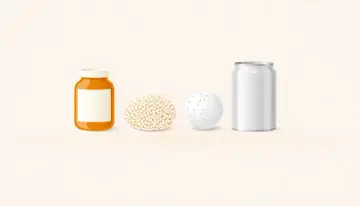
These four foods look completely different and are made in completely different ways. But peel back the reasons they don't spoil one by one, and a surprisingly simple common thread appears. Today, let's uncover what it is, step by step.

First of all, what does it mean for food to spoil? It's what happens when microorganisms like bacteria, mold, and yeast multiply on food and break down its components. In other words, stopping spoilage comes down to one thing: keeping microbes from multiplying.

So under what conditions do microbes multiply? The answer is whether there's usable water. Even if a food contains moisture, if that water isn't freely available to microbes, the switch for growth never gets flipped.

The measure of how much water microbes can use is called water activity, or Aw for short. The closer the value is to 1.00, the more free water there is, and the more vigorously microbes grow. And it's known that once this value drops to 0.70 or below, most microbes can no longer multiply.

This single yardstick, water activity, is the thread we'll be following today. Honey, rice, salt, and canned food each either lower this value in their own way or lock out microbes by some other means. Let's look at them one at a time.

Let's start with honey. Flower nectar naturally contains a lot of water, but bees process it in their bodies and fan air through the hive, concentrating it until the water content is 20% or less. At this stage, the water activity drops to around 0.6, below that 0.70 barrier we just mentioned.

And that's not honey's only weapon. Because its sugar concentration is so high, it draws water out of nearby bacteria through osmotic pressure. You could say it's an environment where the bacteria themselves dry out.

On top of that, honey is mildly acidic, with a pH of about 3 to 4, which also makes it hard for bacteria to be active. Plus, enzymes in honey even produce tiny amounts of hydrogen peroxide. In other words, honey prevents spoilage not with one mechanism, but with several stacked together at once.

By the way, honey sometimes turns white and solid in winter, but that isn't spoilage. It's just the glucose dissolved in it crystallizing, and if you warm it up, it goes back to its original clear state.
But here's an important caution. Honey not spoiling doesn't mean it's sterile. Honey can contain spores of Clostridium botulinum, the bacterium that causes botulism, and it's said that it must never be given to infants under one year old. This is the one point we really want you to remember.

Next is rice. After harvest, rice is dried to bring its moisture content down to about 15%. This lowers its water activity and makes it hard for microbes to grow, which is why it can be stored at room temperature for a long time.

However, rice not spoiling and rice not deteriorating are two different things. Over time, its fats oxidize and its smell changes, and depending on how it's stored, it can even attract bugs. The mechanism that prevents spoilage and the one that preserves quality are actually separate.
Next up is salt. Salt is an inorganic substance to begin with, so it isn't food for microbes. It also contains almost no water, so its quality barely changes over time. That's exactly why many salt products skip the best-before date label altogether.

Now we get to the heart of today's topic. Honey, rice, and salt prevented spoilage by reducing water or cutting off microbes' nutrients. But canned food achieves the same goal with a completely different idea.
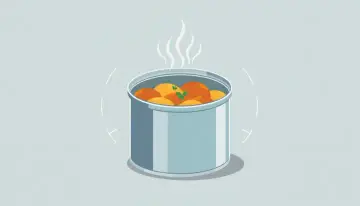
The principle behind canned food is very simple. First, the food is sealed inside the can, and then it's heated in that state to sterilize it. This kills the microbes inside while also blocking any new microbes from getting in from outside. With both of these in place, it can be stored at room temperature for a long time without preservatives.

This invention has a surprising history. In 1804, a Frenchman named Nicolas Appert came up with a method of packing food into glass bottles, sealing them, and heating them. This was in response to a public competition seeking long-term preservation methods at the time, and he received prize money for his achievement.
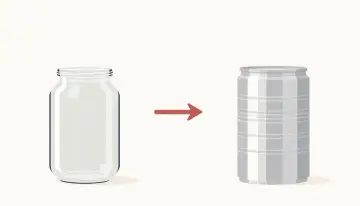
Six years later, in 1810, Peter Durand of England obtained a patent for a method using tin cans. Then in 1812, the world's first cannery opened in England. From glass bottles to tin cans, preservation technology gradually changed shape.

Here's one more surprising fact. Canned food itself appeared in the early 19th century, but the can opener wasn't invented until 1858. That means for about half a century after canned food was born, people pried cans open with chisels and hammers.

Let's sum up what we've covered. Spoiling means microbes multiplying, and to stop it, you either reduce the water, cut off nutrients, or seal the food off from the outside. Honey got there with sugar and acid, rice and salt with dryness and being inorganic, and canned food with sealing and heating, each arriving at this same principle.

Four foods that look and are made completely differently were actually connected by the same single science. That's the real story behind "foods that don't spoil." But not spoiling isn't the same as being safe forever. Things change once a package is opened or water gets in, and honey can't be given to infants.

The next time you see these four in your kitchen, they might look less like ordinary pantry staples and more like "crystals of science," each reaching the same goal through a different strategy. We hope today's story has brought a small discovery to your everyday life.
Sources
- 水分活性(学会誌「冷凍」用語解説)Japanese“Water Activity (Glossary, journal "Refrigeration")”Japan Society of Refrigerating and Air Conditioning Engineers
- 精米JAS(日本農林規格)についてJapanese“About the JAS (Japanese Agricultural Standard) for Milled Rice”Ministry of Agriculture, Forestry and Fisheries (Japan)
- ハチミツが白く固まってしまったのですが、大丈夫でしょうか。(消費者相談)Japanese“My honey has turned white and solid. Is it okay? (Consumer Inquiries)”Ministry of Agriculture, Forestry and Fisheries (Japan)
- 缶詰、びん詰、レトルト食品の特徴Japanese“Features of Canned, Bottled, and Retort Pouch Foods”Japan Canners Association
Spotted a mistake in the article or the translation? Let us know.
Report an error (contact form in Japanese, opens in a new tab)