On this page
A closer look
Honey holds more sugar than it "should"
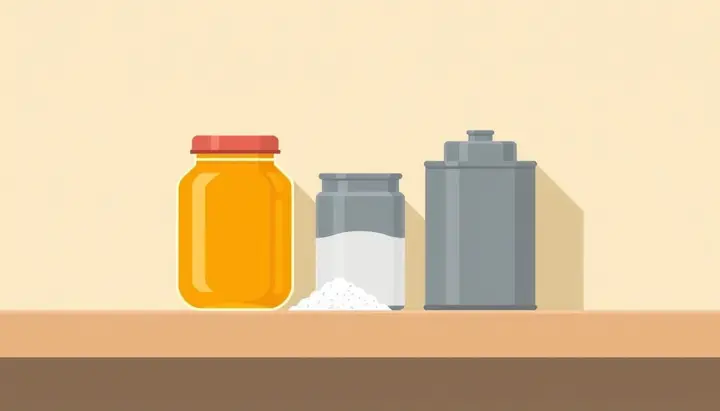
Honey is almost entirely sugar and water. And the sugar concentration is extremely high, beyond the limit of what the water can actually dissolve. This state is called supersaturation.
Supersaturation is unstable and can break down at any moment. Given a trigger, the sugar that can't stay dissolved comes out as crystals. So crystallization isn't something going wrong. It's more accurate to see it as honey returning to its natural state.
Only one of the two sugars crystallizes
A consumer Q&A from Japan's Ministry of Agriculture, Forestry and Fisheries sums up the key point:
It is caused by glucose, one of honey's main components along with fructose. Therefore, the more glucose a honey contains, the more easily it crystallizes.
The sugars in honey are mainly glucose and fructose. Of these, only glucose forms crystals. Fructose dissolves in water very easily, so it doesn't crystallize.
That means how easily honey solidifies depends on the ratio of the two sugars. Honey high in glucose solidifies easily; honey high in fructose resists it.
This ratio depends on which flowers the bees visited. Acacia honey is said to resist crystallizing because it has a high proportion of fructose. Rapeseed (canola) honey, on the other hand, is high in glucose and solidifies readily.
There is also research comparing how crystallization progresses in different single-flower (monofloral) honeys. A study in the journal Foods that examined the physicochemical and rheological properties of monofloral honeys looks at how the speed of crystallization differs depending on the floral source.
Around 15°C (59°F) is the sweet spot for solidifying
Temperature matters too:
It is also affected by storage temperature, and tends to crystallize from around 15°C.
This is where it gets a little tricky. Colder doesn't simply mean more solid.
Crystals need two conditions to form. First, the sugar has to be unable to stay dissolved (at low temperatures, solubility drops). Second, the sugar molecules have to be able to move and line up into crystals (at low temperatures, the honey gets thicker and the molecules can't move).
These two factors respond to temperature in opposite directions. So crystallization progresses fastest in a middle range where both are reasonably satisfied: around 15°C.
In practical terms, it looks like this:
| Storage temperature | Crystallization |
|---|---|
| 30°C (86°F) or higher | Hardly happens (high solubility) |
| Around 15°C (59°F) | Happens the most |
| Frozen | Slow to happen (too thick for molecules to move) |
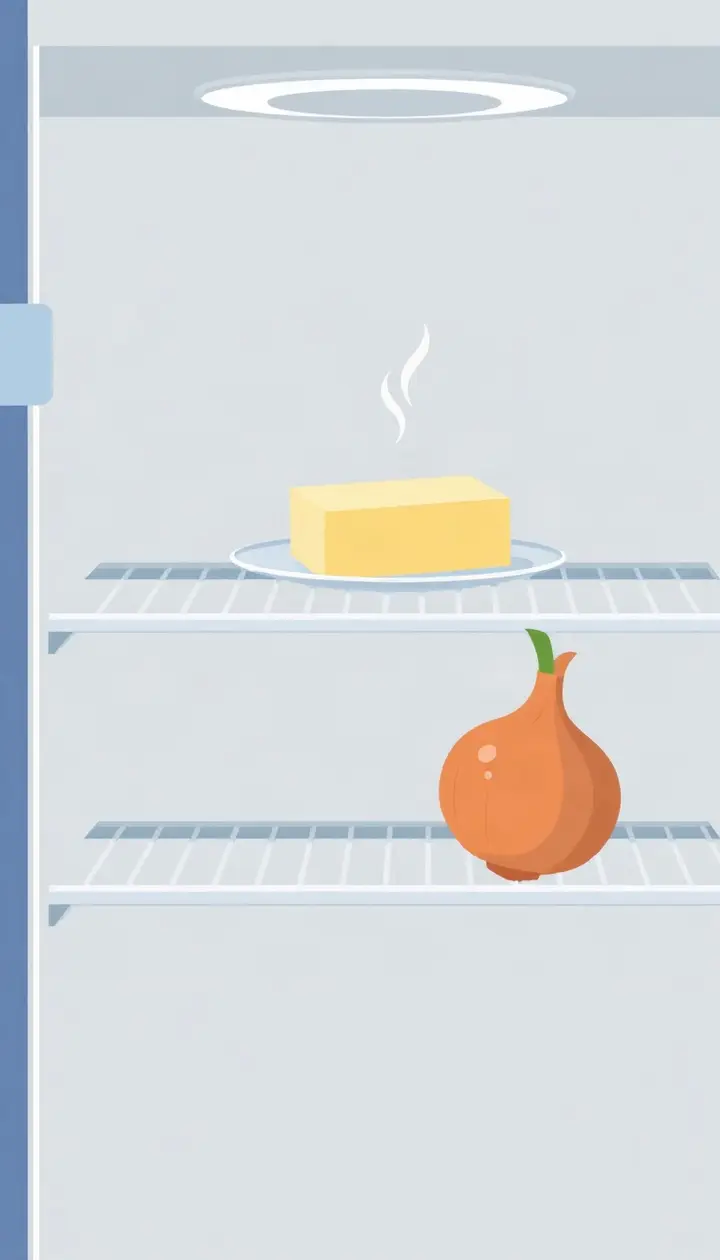
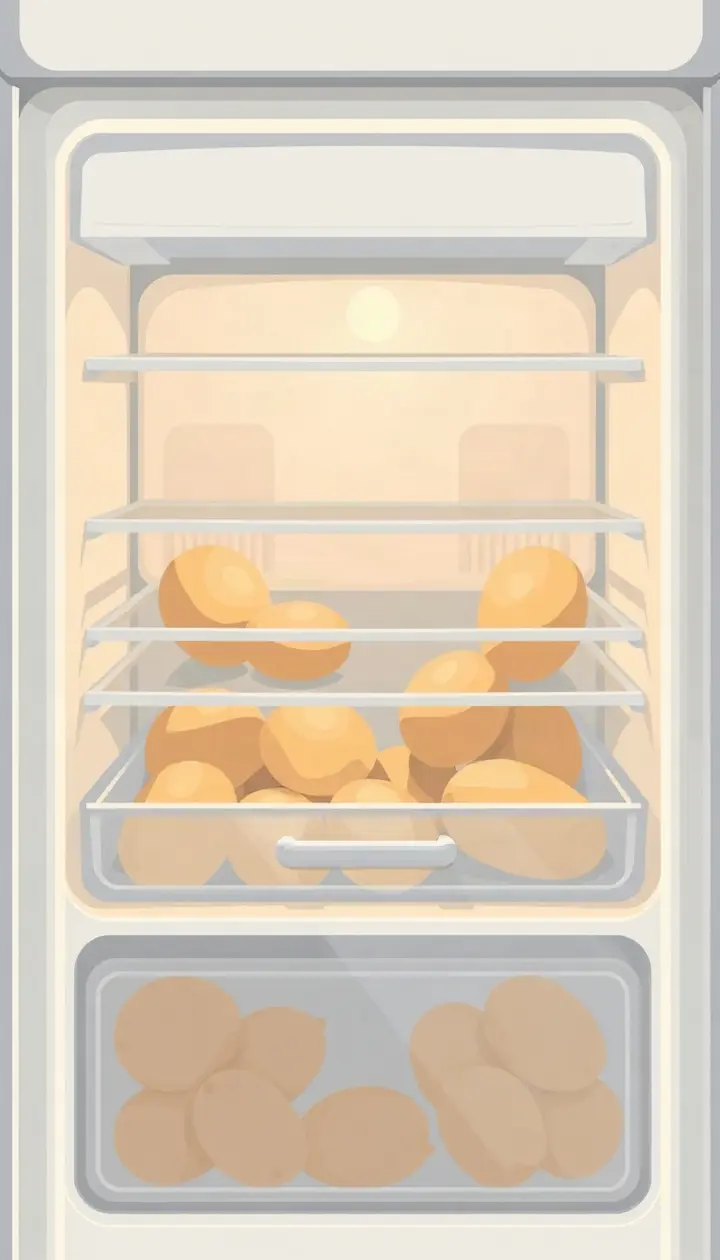
Honey solidifies in winter because kitchen temperatures fall right into that range.
Solid honey hasn't changed
On the question of quality, the ministry's answer is clear:
Crystallizing does not mean its components have changed.
What was dissolved has simply lined up into crystals. Nothing has broken down or spoiled. The nutrition and flavor stay the same.
In fact, crystallizing easily is a trait of pure honey. "Sweetened honey" with added starch syrup or fructose has a lower proportion of glucose, so it solidifies less easily. Honey that never solidifies is not necessarily better.
To restore it: a slow warm water bath
The ministry's answer also covers how to melt it:
It takes a little time to dissolve these crystals, but
Loosen the lid and warm the container slowly in a hot water bath. Once it reaches a temperature where the glucose crystals melt, the honey returns to its original clear state.
Quick heating in a microwave isn't recommended. It creates hot spots that can ruin honey's natural flavor and smooth texture. The enzymes and aroma compounds in honey are sensitive to heat, so it's best to avoid anything close to boiling.
Aim for a water bath of about 50–60°C (122–140°F) and take your time.
Honey doesn't spoil for the same reason: too much sugar
The interesting part is that the reason honey turns white and solid and the reason it doesn't spoil come from the same place.
Both trace back to one thing: the sugar concentration is extremely high. There's too much sugar to stay dissolved, so it crystallizes. There's so much sugar that water can't move freely, so microbes can't grow.
Crystallization may look like a flaw, but it's really the flip side of honey's long shelf life.
Related reads
What the video says

In winter, have you ever found the honey in your jar turned solid white?
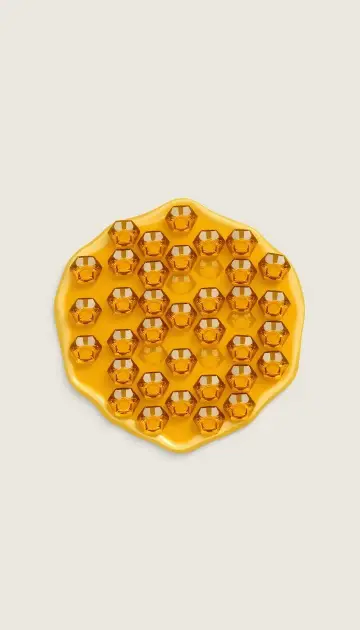
It hasn't gone bad. It's actually a natural process called crystallization.
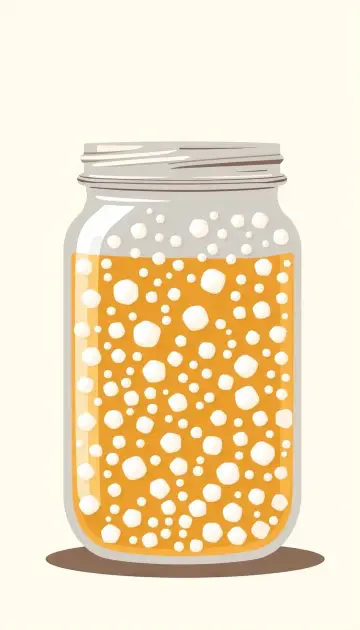
Honey is packed with dissolved sugar, and honeys with more glucose than fructose are especially quick to solidify.
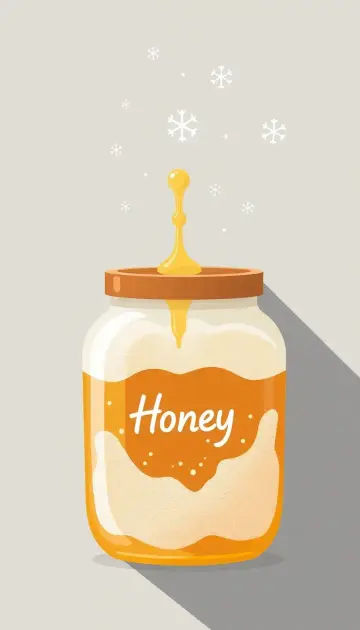
When it gets colder, the glucose can't stay fully dissolved, so it forms tiny crystals and hardens.

Solid honey is perfectly fine. Just warm the jar gently in a hot water bath, and it'll turn smooth and runny again.
Sources
- ハチミツが白く固まってしまったのですが、大丈夫でしょうか。(消費者相談)Japanese“My honey has turned white and solid. Is it okay? (Consumer Inquiries)”Ministry of Agriculture, Forestry and Fisheries (Japan)
- Physicochemical and Rheological Characteristics of Monofloral Honeys—Kinetics of Creaming–CrystallizationFoods (PMC)
Spotted a mistake in the article or the translation? Let us know.
Report an error (contact form in Japanese, opens in a new tab)