On this page
A closer look
The keywords are just "sealing" and "heat sterilization"
The association's explanation starts with the definition itself.
Food that has been packed into a can or bottle and sealed, after which the microorganisms that cause the food to spoil are killed by heating (heat sterilization), giving it the ability to be stored for long periods at room temperature.
And it sums up the main point like this:
The keywords are "sealing" and "heat sterilization."
That is, by "sealing" food in a container and then applying "heat sterilization," the microorganisms that spoil food or cause food poisoning are killed. With this method, as long as the seal isn't broken, canned foods, bottled foods, and retort-pouch foods do not spoil.
The order matters. Seal first, then heat. If you sterilized first and packed afterward, germs would get in during packing. Instead, the food goes into the container, the container is sealed, and then the whole container is heated. That's why no germs remain inside, and none can get in later.
Preservatives aren't allowed by law
This is a surprisingly little-known point.
Because canned foods, bottled foods, and retort-pouch foods can be stored at room temperature for long periods, people often assume they contain additives such as preservatives or sterilizing agents. However, the Food Sanitation Act stipulates that preservatives and sterilizing agents must not be used in canned foods, bottled foods, and retort-pouch foods (legally called "pressure- and heat-sterilized foods packed in containers").
It's not that they just don't use them. They're not allowed to. And the reason is simple:
As described above, heat sterilization leaves the contents in a sterile state, so you can see that there's no need for preservatives or sterilizing agents in the first place.
They're banned because they're unnecessary. If anything, a product that needed preservatives would be one where the sealing and heat sterilization hadn't been done properly.
The temperature and time are set by law
The sterilization conditions are specific.
For sterilizing canned foods (seafood, produce, meat, prepared dishes, etc.) and some bottled and retort-pouch foods, high-temperature, high-pressure sterilization is generally carried out in a "retort (high-pressure vessel)" at 120°C or higher for at least 4 minutes.
At least 120°C (248°F) for at least 4 minutes. There's a basis for these numbers. A glossary entry from the Japan Society of Refrigerating and Air Conditioning Engineers cites the standard in the Food Sanitation Act.
For example, for pressure- and heat-sterilized foods packed in containers (canned and retort-pouch foods), it is stipulated that "for pressure- and heat-sterilized foods packed in containers with a pH above 4.6 and a water activity above 0.94, the method shall be heating the center to 120°C for 4 minutes, or a method with equivalent or greater effect."
It also names the target:
This indicates that when water activity is 0.94 or below (or pH is 4.6 or below), the lower limit for the growth of Clostridium botulinum, botulinum bacteria need not be considered a target of sterilization.
The target is Clostridium botulinum, the bacterium behind botulism. It forms heat-resistant spores, so ordinary heating won't kill it. The 120°C temperature is needed because this is the opponent it's designed for.
On the flip side, botulinum bacteria don't grow in acidic foods (pH 4.6 or below) or foods with low water activity. That's why the association's explanation includes an exception:
Canned, bottled, and retort-pouch foods, except for acidic foods such as fruit, are usually heat-sterilized at high temperatures of 110–120°C, so
Canned fruit is acidic, so it doesn't need to be heated all the way to 120°C.
Going above 100°C takes pressure
Water boils at 100°C (212°F), so ordinary boiling won't get you to 120°C. The association's explanation describes the solution.
Incidentally, "retort sterilization" means sterilizing at high temperatures above 100°C. The high temperature is achieved by applying pressure (the same as a pressure cooker).
Same principle as a pressure cooker. A "retort" is essentially a giant industrial pressure cooker.
One more step: "deaeration"
There's one more unglamorous but important step in making canned food.
Raw materials → washing → cooking → filling and adding liquid → deaeration → sealing → sterilization and cooling → inspection and packing → finished product
Right before sealing comes "deaeration." Three purposes are listed:
Before sealing, the air is removed from filled cans and pouches. This is done for purposes such as (1) preventing cans from deforming or pouches from bursting due to air expanding inside the container during heat sterilization, (2) preventing corrosion of the can's inner surface during storage, and (3) preventing changes in the contents' color, aroma, flavor, vitamins, and other nutrients.
Number (3) ties directly to shelf life. Removing the air (oxygen) keeps the contents from oxidizing, so the color and flavor hold up well even during long storage.
The association says this helps with nutrition, too.
Compared with fresh food, there is certainly some effect from heating, but because the air is removed, the container is sealed, and the food is heat-sterilized in a vacuum, many studies have shown that it retains more vitamins and other nutrients than food cooked at home.
A record of 114-year-old canned food being eaten
The association introduces an extreme example of how well canned food keeps.
There is a record from 1938 in England of opening and examining canned beef and vegetables that had been stored for 114 years, probably the oldest canned food in the world. According to the report from the tasting, the aroma and flavor weren't that bad, and it was perfectly edible. This is an extreme example, but it shows just how well canned food keeps.
Cans made in 1824, opened in 1938. That's 114 years.
Of course, this is a record, not a recommendation. Canned foods carry a best-before date, which is a guideline for how long they'll taste good.
But only "as long as the seal isn't broken"
The association's wording comes with a condition: "as long as the seal isn't broken." So it also spells out what to watch for.
Also, if a can that has become hot is still bulging after it returns to room temperature, do not eat it; throw it away.
A bulging can means gas is being produced inside. In other words, something is alive in there. This visible warning sign is worth remembering.
A word on storage, too:
So even if a product is left somewhere that gets hot in summer, about 3 days won't significantly affect its quality. If such conditions continue for a long time, however, the things that make it "taste good," like flavor, aroma, and color, will deteriorate faster, so please be careful.
If a can gets rusty or dented, the seal may break. "Doesn't spoil" only holds while the can is intact. It's a conditional claim.
Related reads
What the video says
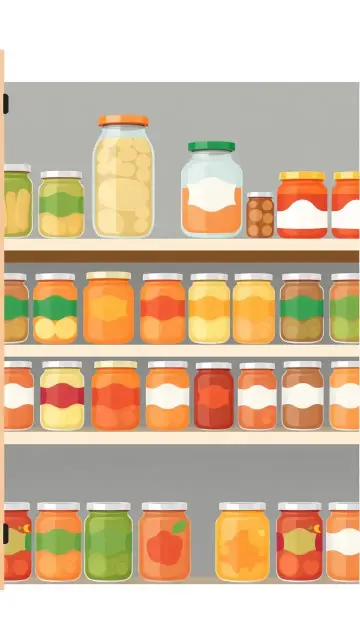
Canned food just sits on a shelf at room temperature, yet it doesn't spoil for years, right? There's actually a good reason for that.
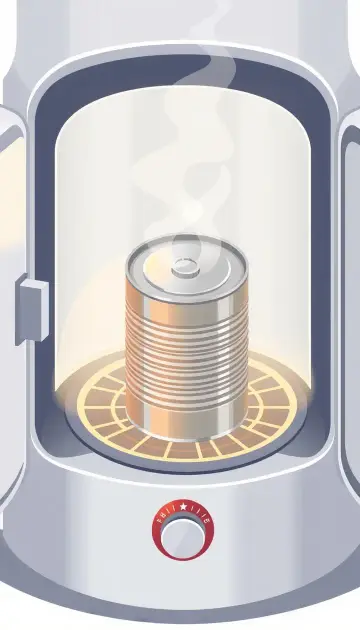
Before sealing, canned food is heat-sterilized at high temperatures. This kills off nearly all the bacteria and mold inside.

On top of that, the can is completely airtight, so no new germs or air can get in from outside.

In other words, the contents are basically vacuum-packed in a sterile state. That's why their quality holds up for years, even at room temperature.

But if a can gets dented or rusty, the seal can break, so that's the one thing to watch out for.
Sources
- 缶詰、びん詰、レトルト食品の作り方Japanese“How Canned, Bottled, and Retort-Pouch Foods Are Made”Japan Canners Association
- 缶詰、びん詰、レトルト食品の特徴Japanese“Characteristics of Canned, Bottled, and Retort-Pouch Foods”Japan Canners Association
- 水分活性(学会誌「冷凍」用語解説)Japanese“Water Activity (Glossary from the society journal "Refrigeration")”Japan Society of Refrigerating and Air Conditioning Engineers
Spotted a mistake in the article or the translation? Let us know.
Report an error (contact form in Japanese, opens in a new tab)