On this page
A closer look
The answer lies in how it's made
An explanation from the Japan Light Metal Association lays out exactly how it works.
Did you know aluminum foil has a front and a back? Aluminum foil is made by stacking two sheets of thick aluminum foil, squeezing them between rollers to stretch them out, and finishing them thin (rolling). During this process, the side that touched the rollers becomes shiny from friction (the bright side), while the sides where the aluminum was pressed against aluminum end up without a sheen (the matte side).
To break it down:
- Stack two sheets of thick aluminum foil
- Squeeze them between rollers to stretch them out (rolling)
- The side that touched the rollers → polished by friction until shiny (bright side)
- The sides where aluminum met aluminum → no sheen (matte side)
- Finally, peel the two sheets apart
Each peeled sheet has one side that touched the rollers (shiny) and one side that touched the other sheet of aluminum (not shiny). That's why only one side is shiny.
Why stack two sheets?
This is the interesting part of the process.
The aluminum foil used for household aluminum foil is a mere 12 μm thick.
Twelve micrometers. That's 0.012 mm, less than one-tenth the thickness of a human hair.
If you tried to roll something this thin as a single sheet, it couldn't withstand the force of the rollers and would tear. So two sheets are stacked to effectively double the thickness during rolling, and the result is finished so that each sheet ends up 12 μm thick.
In other words, the difference in shine between the two sides is a byproduct of the process used to make ultra-thin aluminum foil. It isn't a deliberately designed difference.
Materials from the Japan Aluminium Association also confirm that the foil manufacturing process includes a step called "doubling" (rolling sheets stacked together).
The range of foil thicknesses
Here's how the Japan Aluminium Association defines it: aluminum foil is aluminum that has been rolled out thin, to a thickness between 0.2 mm and 0.006 mm.
Foil for packaging is often 6–9 μm, while typical household aluminum foil is about 12 μm. Household foil is actually on the thicker side.
There's no right answer to "which side should I use?"
You often hear tips like "put the shiny side out to reflect heat" or "put food on the matte side so it's less likely to stick."
But if you think about how it works, both sides are the same aluminum. The only difference is the fine roughness of the surface; the composition is identical.
Surface roughness affects how light is reflected, so the two sides do look different in brightness. However, when it comes to how heat transfers, which is what matters in cooking, there's practically no difference at a thickness of just 12 μm.
It makes little difference which side you use: that's the answer that follows from how it works. Since it's a byproduct of manufacturing, the difference wasn't created for you to use the sides differently.
There is one exception, though. Products with a release coating such as silicone on one side (the non-stick type) are intentionally made with distinct front and back sides. In that case, you need to follow the instructions on the package. Go by whether the side is coated, not by how shiny it looks.
Aluminum's strengths as packaging
The same explanation also describes why aluminum is chosen for packaging.
Aluminum is odorless and hygienic (it contains no substances harmful to the human body). Because of these properties, aluminum foil is used as a packaging material and in foil containers for food and pharmaceuticals.
Being odorless is an important property for a packaging material. As we mentioned in the piece about odors transferring in the fridge, thin plastic bags let odor molecules pass through. Metal foil blocks odors, light, and water vapor almost completely.
This barrier property is why aluminum foil is used in blister packs for medicine and in retort pouches (sealed pouches for ready-to-eat foods). A 12 μm layer of metal cuts the contents off from the outside world.
The difference in shine is "proof of thinness"
To sum up, the difference between the two sides of aluminum foil is:
- Bright side = the side polished by the rollers
- Matte side = the side that faced the other sheet of aluminum
And the very existence of this difference is evidence that the foil is made so thin it has to be rolled two sheets at a time. When you notice the difference in shine, you're looking at a trace of that 12 μm thinness.
Related reading
What the video says

If you look closely at aluminum foil, one side is shiny and the other side is matte and dull, right?

That actually has to do with the way the foil is made.
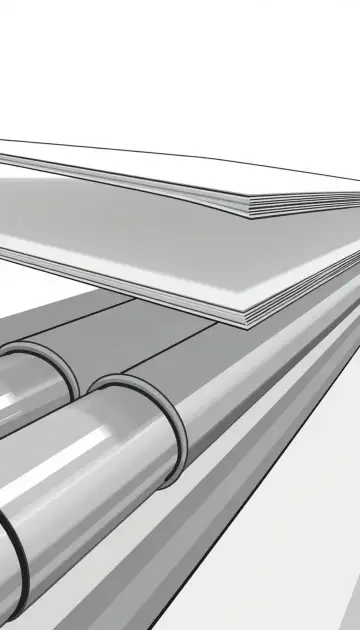
Aluminum foil is so thin that it's stretched out by running two sheets stacked together through a machine's rollers.
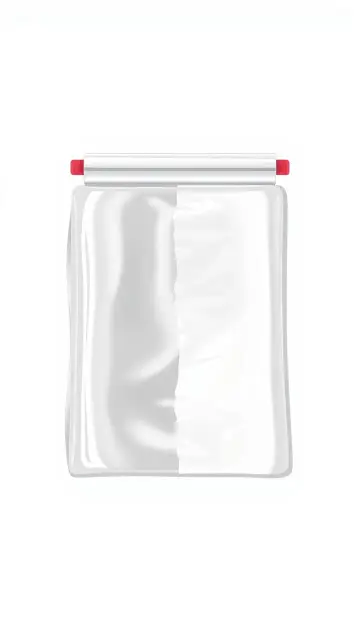
The side that touches the rollers directly comes out shiny, while the inner sides that were pressed together come out matte.

In other words, the difference in shine has nothing to do with quality. It's just a leftover from the manufacturing process.
Sources
- 食品や医薬品包装材で(軽金属のお話)Japanese“In Food and Pharmaceutical Packaging (Stories About Light Metals)”Japan Light Metal Association
- 社会に貢献するアルミ箔の世界Japanese“The World of Aluminum Foil Contributing to Society”Japan Aluminium Association
Spotted a mistake in the article or the translation? Let us know.
Report an error (contact form in Japanese, opens in a new tab)