On this page
- A closer look
- Bubbles pop because their film gets thinner
- Slower evaporation: it's colder
- Slower evaporation: the air can't take in as much
- Slower draining: higher viscosity
- The colors change more slowly, too
- Below freezing, bubbles can freeze
- How long it takes to fall changes, too
- Set up the right conditions and bubbles last longer even in summer
- Related reading
- What the video says
- Sources
A closer look
Bubbles pop because their film gets thinner
First, let's look at what happens before a bubble pops.
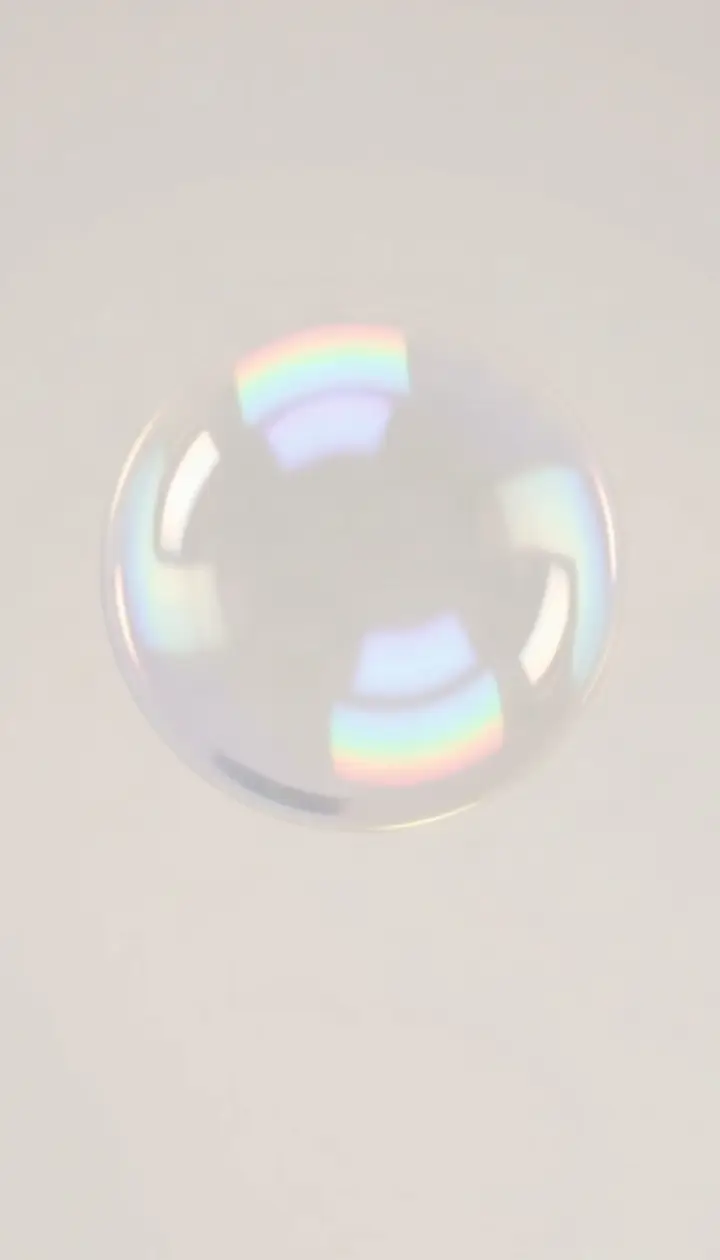
A soap bubble's film is a layer of water sandwiched on both sides by surfactant molecules. As this film gets thinner and hits its limit, it breaks.
The film thins in two ways:
- Water evaporates
- Gravity pulls water down and it drains away
In winter, both of these slow down.
Slower evaporation: it's colder
Evaporation is water molecules escaping from the surface. Escaping takes energy, and that energy comes from heat.
When it's colder, fewer molecules have enough energy to break free. So evaporation slows down.
Slower evaporation: the air can't take in as much
There's another factor on the air's side. Here's the Japan Meteorological Agency's definition:
Dew point temperature: The temperature at which relative humidity reaches 100% when the air is cooled while its water vapor pressure is held constant. The temperature at which water vapor in the air condenses to form dew.
Read in reverse, this means the lower the temperature, the smaller the maximum amount of water vapor the air can hold.
Even if winter air looks dry in terms of "relative humidity," the absolute amount of water vapor it can actually hold is small. So the water vapor coming off the film quickly builds up around it, making further evaporation harder.
This might seem to contradict the story of why skin gets dry in winter, but it doesn't. Dry skin comes from heated, dry indoor air and the effect of wind. Cold outdoor air itself has little room to take in water vapor. That's why bubbles outdoors last longer.
Slower draining: higher viscosity
Here's the third effect. Water becomes more viscous as its temperature drops.
Cold water isn't quite as runny; it's slightly thicker. So the water in the film drains downward more slowly, too.
If the top of the film thins more slowly, it takes longer before it breaks there.
The colors change more slowly, too
These three effects also show up in how bubbles look.
As Toho University explains, a soap bubble's colors come from thin-film interference.
The A2 and B1 light waves interfere with each other, producing effects where they either reinforce or cancel each other out.
Which colors get reinforced depends on the film's thickness, so the colors change as the film thins. If the film thins slowly, the colors change slowly.
That's why you can watch the colors of a winter bubble shift at a leisurely pace. The way colors swirl right before a bubble pops can look almost frame-by-frame in winter.
Below freezing, bubbles can freeze
If it's cold enough, the bubble itself freezes.
Once the water in the film turns to ice, both draining and evaporation stop. Water vapor still leaves the ice surface through sublimation, but far more slowly than liquid evaporates.
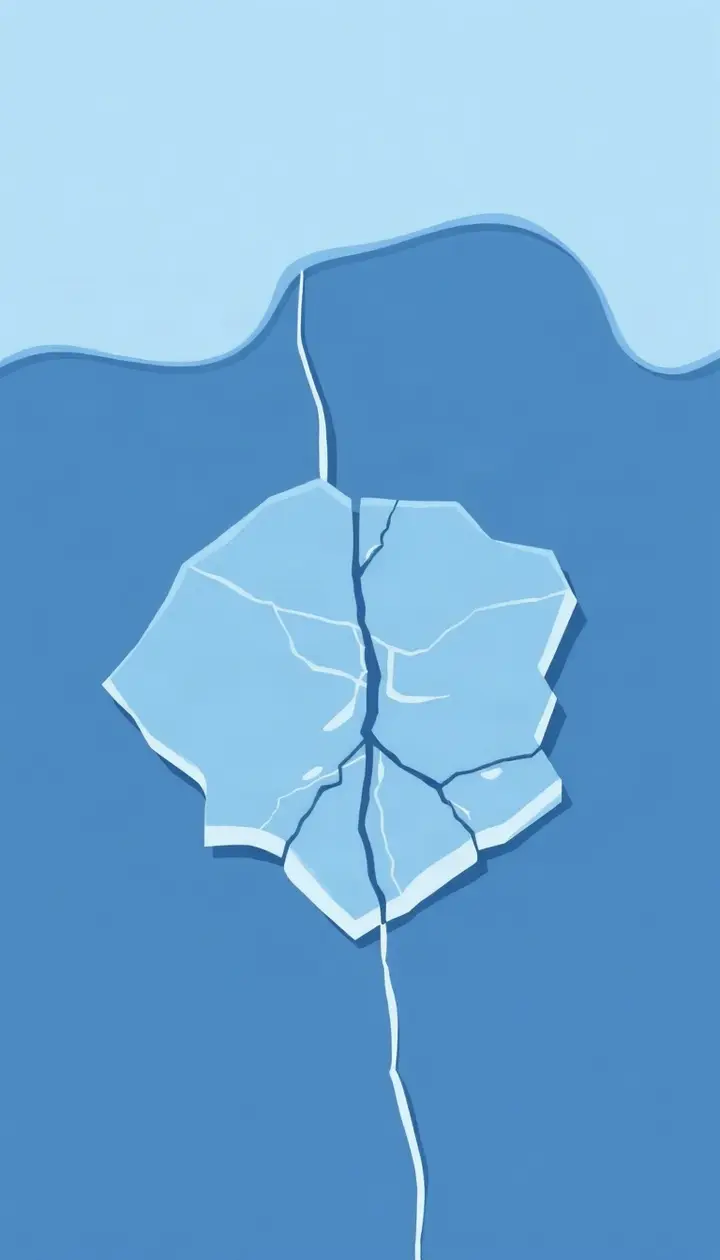
When a frozen bubble breaks, it either deflates while keeping its round shape or shatters into fragments. Patterns of growing frost crystals appear on its surface. It's hard to pull off unless it's below -10°C (14°F), so in Japan it's a deep-winter activity in Hokkaido and inland areas.
How long it takes to fall changes, too
There's one more winter condition.
Cold air is denser, so a bubble of the same size gets slightly more buoyancy than in summer. But the effect is very small and isn't the main reason bubbles feel like they "last longer."
The main reason is still that the film doesn't thin as easily.
Set up the right conditions and bubbles last longer even in summer
Once you understand how it works, you can make bubbles last longer in any season.
- Raise the humidity: Suppresses evaporation (in a bathroom or a humidified room)
- Avoid wind: Wind carries away the moist air at the surface and speeds up evaporation
- Add sugar or glycerin: Raises the water's viscosity and helps it retain moisture
Store-bought bubble solution contains glycerin to make the water in the film evaporate less easily. It's using an additive to recreate what winter's cold does naturally.
Related reading
What the video says
Did you know that how easily soap bubbles pop actually depends on the temperature?
A soap bubble's film is a thin liquid layer made of water and soap. When the water evaporates, the film gets thinner and the bubble pops.
In summer, the air is dry and evaporation is fast, so the film thins quickly and bubbles pop easily.
In winter, on the other hand, the air is cool and tends to hold onto its humidity, so water evaporates slowly. That keeps the film from thinning, so bubbles don't pop as easily.
Next time you blow bubbles outside, see if you can feel the difference between seasons.
Sources
- 気温、湿度に関する用語(予報用語)Japanese“Terms related to temperature and humidity (forecast terminology)”Japan Meteorological Agency
- 青い魚はなぜ青い-魚の体色変化の不思議を探る-(薄膜干渉)Japanese“Why are blue fish blue? Exploring the mysteries of color change in fish (thin-film interference)”Toho University Virtual Laboratory
Spotted a mistake in the article or the translation? Let us know.
Report an error (contact form in Japanese, opens in a new tab)