On this page
A closer look
Today's rules say "11 m (12 yards)"
The rules of soccer (the Laws of the Game) are set by an organization called the IFAB (International Football Association Board). Law 1 states that inside the penalty area, a penalty mark is placed 11 m (12 yards) from the midpoint between the goalposts. The distance is measured from the center of the mark to the back edge of the goal line.
Law 14 says that for a penalty kick, the ball must be stationary and placed so that it touches or is on top of the center of this mark. In a penalty shootout after the match (Law 10), the in-game rules apply unless otherwise specified, so the kicks are taken from the same mark.
What's interesting is that even today's rulebook writes meters and yards side by side, as in "11 m (12 yards)." Other lengths are written the same way:
- Penalty area: 16.5 m (18 yards)
- Goal area: 5.5 m (6 yards)
- Radius of the arc around the penalty mark: 9.15 m (10 yards)
- Goal width: 7.32 m (8 yards); height: 2.44 m (8 feet)
12 yards is about 10.97 m
One yard is 0.9144 m, so 12 yards is 10.9728 m. As the video says, 11 m is that number rounded to something tidy.
However, not everything is rounded the same way. For example, 10 yards (9.144 m) is written as "9.15 m," not "9 m," and 8 yards (7.3152 m) as "7.32 m." How much rounding is applied varies by length.
Also, the video opened by saying "this distance didn't start out as 11 meters," but to be precise, the distance itself has stayed at 12 yards; what changed is the unit used to write it down. The difference between 11 m and 12 yards is only about 3 cm.
The penalty kick was born in 1891
FIFA says the penalty kick was added to the rules in 1891. At the time it was also called the "kick of death." Before that, according to FIFA, it was believed that "a true gentleman would never deliberately commit a foul." The video's explanation that it was "introduced to prevent rough play in front of the goal" fits with this background.
The idea for the penalty kick is often credited to William McCrum, a goalkeeper from Ireland (in what is now Northern Ireland). However, we couldn't find contemporary documents (such as meeting records) that confirm this. It's probably best to take it as "McCrum is said to have come up with it."
The "spot" for the ball came later
It's often said that when the rule was first introduced, there was no "spot" mark like today's, and the kick could be taken from anywhere along a line 12 yards from the goal. However, the original text of the 1891 rules wasn't among the materials we were able to check.
What we could confirm is the oldest rulebook the IFAB has published, the 1903/04 edition. It already included the following:
- The area enclosed by lines 18 yards from the goalposts is the "penalty area."
- A mark is made 12 yards from the goal line, directly in front of the center of the goal, and is called the "penalty kick mark."
- The penalty kick is taken from this mark.
So by 1903 at the latest, a "12-yard mark" almost the same as today's was already in place. All lengths are written in yards and feet, and meters don't appear at all. On this point, the video's explanation of "a leftover from British-born yard measurements" holds up.
On the other hand, the finer details of the rules were quite different from today. For example, the 1903/04 edition only required the goalkeeper to be "within the goal area" rather than on the goal line, so they could set up a little in front. Today, the goalkeeper must have at least part of one foot touching, in line with, or behind the goal line at the moment the ball is kicked.
Why "12 yards"? Nobody really knows
Finally, the question you're probably most curious about: why 12 yards? It's tempting to think it was chosen as a distance that gives both the goalkeeper and the kicker a chance, but we couldn't find any contemporary documents explaining why this length was chosen. The honest answer is that the reason is unclear.
What we can say for sure is that the 12-yard length has been in continuous use since at least the 1903 rulebook, and that it's written as 11 m when expressed in meters.
Related reading
What the video says
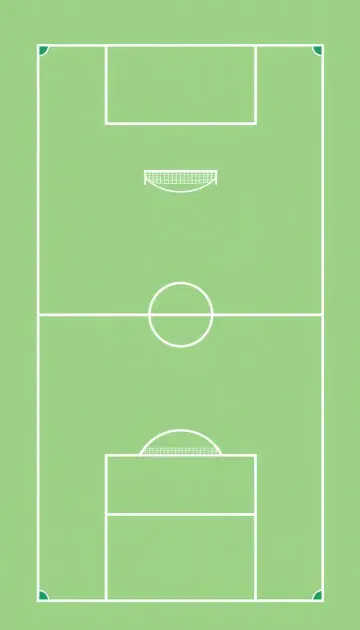
In a soccer penalty kick, the ball is placed about 11 meters from the goal, right? But this distance actually didn't start out as 11 meters.

The penalty kick was born in Britain in the late 19th century. It was introduced as a rule to prevent rough play in front of the goal.
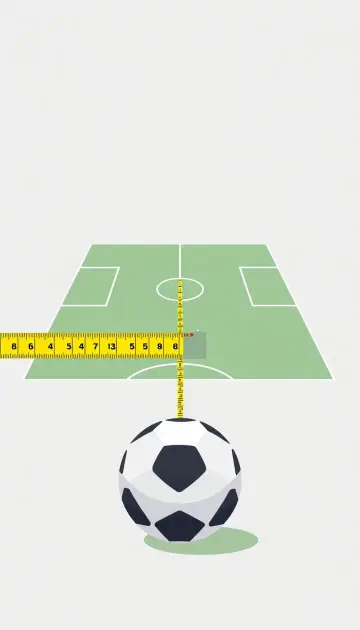
The original distance was "12 yards from the goal line." Convert that to meters and you get about 10.97 meters. Rounded off, it came to be treated as 11 meters.
In other words, this 11-meter figure is a leftover from history: British-born yard measurements converted to the metric system for international use.
Sources
- Law 1 - The Field of PlayThe International Football Association Board (IFAB)
- Law 14 - The Penalty KickThe International Football Association Board (IFAB)
- Law 10 - Determining the Outcome of a MatchThe International Football Association Board (IFAB)
- Laws of the Game 1903/04The International Football Association Board (IFAB)
- London's football history: Laws of the GameFIFA (2017)
Spotted a mistake in the article or the translation? Let us know.
Report an error (contact form in Japanese, opens in a new tab)