On this page
A closer look
Before cards, warnings were given out loud
The Japan Football Association's Q&A describes what things were like before cards were introduced.
The yellow card is shown by the referee when issuing a "caution" to a player who commits a serious foul or unsporting behavior, but until the 1960s, referees delivered the "caution" verbally.
Verbally. The referee would call the player over and tell him, "I'm cautioning you."
That works fine in a domestic league. But at international tournaments, the referee and the players have different native languages. Even if a player is told "You are cautioned" in English, nobody on the field can be sure whether he actually understood it as a caution.
An even bigger problem is that the bench, the spectators, and the press have no way of knowing who has been cautioned. For a system where two cautions mean a sending-off to work, the first one has to be shared as a matter of record.
Colors don't need words
The solution was colored cards. Here's the entry from the Britannica International Encyclopedia (as collected on Kotobank, a Japanese online reference site):
Mainly in soccer, when a (card) is shown to a player who is being cautioned, that player receives a caution. It was devised in 1976 so that (spectators) could also understand cautions, and has since been adopted by (other sports) and other sports as well.
"So that spectators could also understand cautions." That is given as the motivation behind the idea.
The yellow-and-red combination is the same as traffic lights: yellow means caution, red means stop. The widely told explanation is that the cards borrowed a color code understood almost universally around the world.
This way, just by the referee holding a card up high, everyone gets the same information at the same moment: the players, the bench, the spectators, and even viewers on the other side of the camera. It overcomes both the language barrier and the distance barrier.
The year of introduction differs by source
I'll be upfront about this: reliable sources don't agree on when the cards were introduced.
| Source | When introduced |
|---|---|
| Japan Football Association Q&A | 1968 Mexico City Olympics |
| Nipponica (Encyclopedia of Japan) | From the 1970 Mexico tournament (World Cup) |
| Britannica International Encyclopedia | Devised in 1976 |
Here's what the JFA says:
The yellow card was first introduced at the 1968 Mexico City Olympics. After that, it came to be used at international tournaments organized by FIFA, and national associations/federations followed suit. Reference: Soccer Encyclopedia (Sakkā Daijiten)
It even cites a reference. Meanwhile, Nipponica says the cards were used from the 1970 World Cup in Mexico, and Britannica says they were devised in 1976.
The discrepancy probably comes down to differences in "what counts as introduction." The first tournament where they were used on a trial basis, the first World Cup where they were officially used, the year they were written into the Laws of the Game: the answer changes depending on which you choose. The 1968 Mexico City Olympics and the 1970 Mexico World Cup were back-to-back tournaments in the same country, which probably also makes the two easy to mix up.
As for the often-told anecdote that "after the confusion at the 1966 World Cup, referee Ken Aston came up with the idea while looking at a traffic light," none of the official Japanese-language sources I was able to check mention it. It's a widely circulated story, but I'll avoid stating it as fact here.
Today they're spelled out in the Laws of the Game
Whatever the history, cards today have a clearly defined place in the Laws of the Game. Here's Law 5:
has the power to show yellow or red cards and, where competition rules permit, temporarily dismiss a player, from entering the field of play at the start of the match until after the match has ended, including during the half-time interval, extra time and penalties (penalty shoot-out)
The power to show yellow or red cards belongs to the referee. And it doesn't just apply to players on the pitch.
takes action against team officials who fail to act in a responsible manner and warns or shows a yellow card for a caution or a red card for a sending-off from the field of play and its immediate surrounds, including the technical area; if the offender cannot be identified, the senior coach present in the technical area will receive the sanction.
The referee also shows yellow or red cards to team officials who fail to act responsibly. And if the offender can't be identified, the senior coach in the technical area receives the sanction.
Cards have been shown to managers since 2019, and this too is an extension of the same idea: making it visible who is being sanctioned.
Two cards and you're out: built in from the start
The Britannica entry also describes the two-card rule.
A player who commits an extremely serious foul, such as assaulting an opponent or illegally preventing the opposing team's obvious goal-scoring opportunity, is sent off, and the referee shows a red card. A player who receives two cautions in the same match is sent off from that (match).
Two cards and you're off. This system can't be separated from making cautions visible. With verbal warnings, it's unclear whether something counts as the "second" one, but with cards, everyone can keep count.
In fact, Law 12 of the Laws of the Game lists "receiving a second caution in the same match" as a sending-off offense. What makes this work is the fact that the first card was recorded in plain sight of everyone.
A device meant to get past the language barrier ended up making the rules themselves workable. Cards aren't just a tool; they've become part of the system.
You might also like
What the video says

You see yellow and red cards in every soccer match. But this system actually came about because of a "misunderstanding" at one tournament.
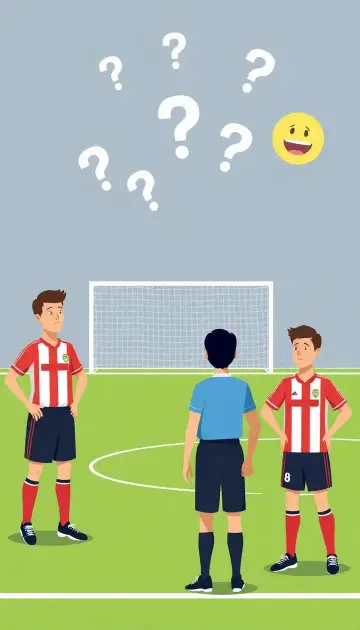
At the 1966 World Cup, the language barrier caused confusion: players who had been cautioned didn't even realize it, and the match just kept going.

Precisely because international tournaments bring together people who don't share a language, it was thought that a signal anyone could understand was needed.
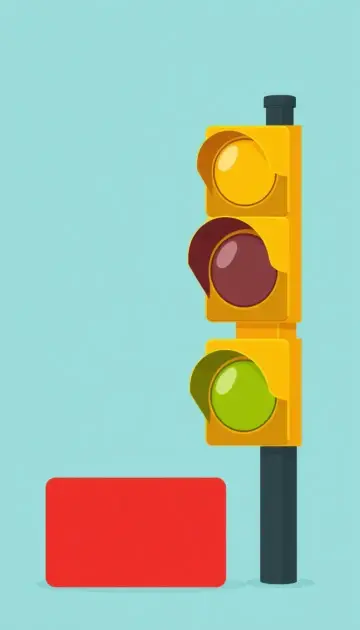
So, taking a cue from traffic lights, a color scheme was devised, yellow for a caution and red for a sending-off, and it was first introduced at the 1970 World Cup in Mexico.

The idea of communicating with colors instead of words has now become a rule used all over the world.
Sources
- イエローカードはいつから使用されるようになったの?(ドキュメント・FAQ)Japanese“When did the yellow card start being used? (Documents / FAQ)”Japan Football Association
- イエローカード(デジタル大辞泉・ブリタニカ国際大百科事典)Japanese“Yellow card (Digital Daijisen / Britannica International Encyclopedia)”Kotobank
- Laws of the Game – Law 5, The RefereeThe IFAB
Spotted a mistake in the article or the translation? Let us know.
Report an error (contact form in Japanese, opens in a new tab)